

Choosing Carbon Fiber Grades for Aerospace Structures
- Selecting the Right Carbon Fiber for High-Performance Aerospace Components
- Why grade selection matters for carbon fiber for aerospace applications
- Key performance metrics to prioritize
- Carbon fiber families and their aerospace roles
- Common aerospace-oriented carbon fiber grades and practical differences
- Balancing stiffness vs. damage tolerance in carbon fiber for aerospace applications
- Design strategy
- Process compatibility and manufacturing considerations
- Certification, traceability and testing requirements
- Cost considerations: not just $/kg
- Supply chain and long-lead planning
- Comparison matrix: choosing a grade for a given aerospace application
- Testing and verification: minimum recommended tests for qualification
- Supplier selection and customization (practical steps)
- Supreem Carbon: customized carbon fiber parts and capabilities
- Practical checklist for engineers specifying carbon fiber grades
- Frequently Asked Questions (FAQ)
- 1. What is the best carbon fiber grade for primary aircraft structures?
- 2. Are ultra-high-modulus fibers (pitch-based) used in aircraft?
- 3. How do I ensure the carbon fiber batch is acceptable for aviation use?
- 4. Can carbon fiber grades be hybridized within a laminate?
- 5. How much does grade selection typically affect component cost?
- 6. Where can I buy aerospace-grade carbon fiber or get parts customized?
- Contact, consultation and product viewing
- References and further reading
Selecting the Right Carbon Fiber for High-Performance Aerospace Components
Choosing the correct carbon fiber grade is one of the most consequential technical and commercial decisions in designing aerospace structures. Engineers must balance strength, stiffness, density, damage tolerance, cost, manufacturability and certification risk — all while meeting flight-safety and lifecycle requirements. This article explains how to evaluate carbon fiber for aerospace applications, compares common grades and families, summarizes test and certification considerations, and gives practical advice for supplier selection and customization.
Why grade selection matters for carbon fiber for aerospace applications
Carbon fiber for aerospace applications is not a single material but a family of fibers with widely varying mechanical properties and processing behaviors. The wrong grade can compromise fatigue life, lead to brittle failure, increase cost or create manufacturing bottlenecks. Typical aerospace drivers include weight reduction (high specific stiffness), damage tolerance (in-service impact resistance and fracture toughness), thermal compatibility with matrix systems, and certification traceability. Early-stage selection that considers both fiber grade and composite architecture reduces downstream changes and requalification time.
Key performance metrics to prioritize
- Specific stiffness (modulus/density): critical for weight-sensitive primary structures.
- Tensile strength and strain-to-failure: controls load and energy absorption.
- Damage tolerance and fracture toughness when combined with resin systems and layup.
- Compression-after-impact (CAI) performance for panels subject to bird-strike, hail, ground handling.
- Fatigue life and environmental durability (moisture, temperature, UV).
- Manufacturing compatibility (tow size, handling, cure window, tooling demands).
Carbon fiber families and their aerospace roles
Understanding fiber families is the first filter when specifying carbon fiber for aerospace applications. The three principal families are PAN-based, mesophase-pitch (pitch-based) and rayon-based (historical/limited). Today, PAN-based and pitch-based fibers dominate aerospace use, with PAN-based being most common for primary structures due to balanced properties and proven supply chains.
| Fiber family | Typical modulus (GPa) | Typical tensile strength (MPa) | Key aerospace uses | Trade-offs |
|---|---|---|---|---|
| PAN-based (standard & intermediate modulus) | 230–300 | 3,000–6,000 | Primary and secondary structures, fuselage skins, wing skins | Good strength/stiffness balance; cost-effective; established supply chain |
| High-modulus PAN (IM, HM) | 300–380 | ~4,000–6,000 | High-stiffness components, control surfaces, stiffeners | Higher cost, lower failure strain, more brittle behavior |
| Pitch-based (HM & UHM) | >400 up to 1000+ | 1,000–4,000 (varies) | Ultra-high stiffness applications: space structures, certain rotors | Low strain-to-failure (brittle), difficult processing, niche use |
Sources: Toray and Hexcel technical literature, Wikipedia summary on carbon fiber; see references section for links and retrieval dates.
Common aerospace-oriented carbon fiber grades and practical differences
Engineers often choose between widely available PAN grades such as T300/T700/T800 (Toray nomenclature) or IM7/IM9 (US suppliers). Below is a simplified comparison of representative grades to illustrate typical ranges used in aerospace applications.
| Representative grade | Typical modulus (GPa) | Tensile strength (MPa) | Typical aerospace use |
|---|---|---|---|
| T300 (low-cost PAN) | ~230 | 3,500–4,000 | Secondary structures, non-critical skins, prototyping |
| T700 / equivalent | ~230–240 | ~4,900 | Common aerospace structural use (wing/fuselage skins, stiffeners) |
| T800 / IM7 | ~300 | 5,500–6,000 | Higher-performance primary structures, secondary highly loaded parts |
| IM9 / High-modulus PAN | ~320–350 | ~5,700 | Primary structures where higher stiffness justifies cost |
| Pitch-based HM / UHM | 400–900+ | Varies (often lower than PAN for strength) | Space structures, instruments, specialty beams |
Note: values above are representative ranges; consult supplier datasheets and perform coupon-level testing for design allowables. Data sources in references provide specific manufacturer values.
Balancing stiffness vs. damage tolerance in carbon fiber for aerospace applications
One of the central trade-offs when choosing a grade is stiffness (modulus) versus strain-to-failure. High-modulus and pitch-based fibers deliver outstanding stiffness per weight, reducing deflection and enabling lighter designs. However, they generally exhibit lower failure strain and can be more brittle, reducing energy absorption under impact or overload and potentially degrading damage tolerance. For primary fuselage and wing skins, many aerospace OEMs select intermediate-modulus PAN fibers (e.g., T700/T800/IM7) to strike a balance between specific stiffness and residual strength after impact.
Design strategy
- Use high-stiffness fibers strategically in stiffeners or local load paths where deflection control is crucial and loads are predictable.
- Prefer intermediate-modulus fibers for large panels where impact and fatigue resistance matter most.
- Combine fiber grades within quasi-isotropic laminates or hybrid layups to tune local properties (e.g., surface plies of tougher fibers for impact resistance, inner plies of higher-modulus fibers for stiffness).
Process compatibility and manufacturing considerations
Manufacturability often dictates grade choice as much as in-service properties. Tow size (e.g., 3k, 6k, 12k), surface treatment, sizing chemistry and handling behavior affect layup speed, resin infiltration (autoclave vs. out-of-autoclave), and bonding. For aerospace-scale parts, lower tow sizes (3k) provide better drape for complex shapes; larger tows (12k) speed up flat-panel production but can cause resin-rich areas and bridging in contoured parts.
Resin system compatibility is also critical. High-temperature aircraft components may require high Tg epoxy systems; fiber sizing must be compatible with the chosen resin to ensure interfacial shear strength. Discuss fiber sizing and recommended prepregs with suppliers early.
Certification, traceability and testing requirements
Carbon fiber for aerospace applications must be supported by rigorous traceability, batch testing and material allowables if used in certified aircraft. Typical certification and qualification steps include:
- Mill certificates for each lot with mechanical property data.
- Coupon-level testing for the specific prepreg/laminate architecture (tension, compression, shear, interlaminar fracture toughness, CAI).
- Environmental tests (humidity, salt fog, thermal cycling) as required by application.
- Fatigue testing representative of flight spectra.
- Process documentation and non-destructive inspection (NDI) capability for production parts.
Refer to aerospace standards (e.g., FAA/ EASA guidance, MIL-HDBK-17 for composite design data references) and supplier qualification programs when planning projects.
Cost considerations: not just $/kg
Cost-per-kg is a blunt metric for carbon fiber for aerospace applications. Total cost includes fiber price, prepregging, scrap rates, processing time (autoclave hours), rework, and qualification overhead. For example, using a higher modulus fiber to shave a few kilograms may increase procurement and manufacturing cost disproportionately if it demands special tooling or slower layup. Always perform a lifecycle cost and manufacturability review: specify the lowest-cost material that meets functional and certification needs.
Supply chain and long-lead planning
Many carbon fiber grades have long lead times and may be constrained in market cycles. For aerospace projects, secure supply agreements early, including options for alternate approved grades and documented equivalence metrics (mechanical, thermal, sizing compatibility). Ensure suppliers can support repeatable lot quality and provide relevant material test data and certificates for each shipment.
Comparison matrix: choosing a grade for a given aerospace application
| Application | Recommended grade family | Primary selection drivers | Notes |
|---|---|---|---|
| Wing and fuselage skins | Intermediate-modulus PAN (T700/T800/IM7) | Damage tolerance, fatigue life, manufacturability | Hybridization with tougher surface plies advised |
| Primary stiffeners and spars | High-modulus PAN (IM7/IM9) | Specific stiffness, buckling resistance | Requires careful impact/inspection strategy |
| Precision, low-deflection beams | Pitch-based or UHM PAN | Ultra-high stiffness per weight | Often reserved for space or instrumentation; watch brittleness |
| Interior and non-structural panels | Lower-cost PAN (T300) | Cost and surface finish | Good for cosmetic parts and low-load components |
Testing and verification: minimum recommended tests for qualification
Before committing a grade to flight hardware, run a defined test matrix on representative laminates. Minimum recommended tests include:
- Tensile strength and modulus (ASTM D3039)
- Compression strength and modulus (ASTM D6641 / D3410)
- In-plane shear (ASTM D3518)
- Interlaminar fracture toughness (Mode I and Mode II; ASTM D5528, D7905)
- Compression after impact (CAI; ASTM D7136/D7137)
- Environmental exposure tests (humidity, thermal cycling)
Match test coupons to the exact fabric/tow size, sizing, resin system and cure cycle that will be used in production. Validate NDI methods (ultrasound, C-scan) for production inspection limits.
Supplier selection and customization (practical steps)
When selecting a supplier for carbon fiber for aerospace applications, consider:
- Proven aerospace experience and references with similar components.
- Quality management (AS9100, NADCAP accreditation for processing where applicable).
- Traceability and material test data availability per lot.
- In-house R&D and engineering support for tailoring sizing and prepregs.
- Production capacity, lead times and contingency planning.
Early engagement and collaborative development reduce qualification time and risk. If customization (cut-to-shape preforms, tooling, surface finish) is required, pick a partner with demonstrable experience in composites design and manufacturing.
Supreem Carbon: customized carbon fiber parts and capabilities
Supreem Carbon, established in 2017, is a customized manufacturer specializing in carbon fiber parts for automobiles and motorcycles, with integrated R&D, design, production and sales. While their core market focus is automotive and motorsport, many capabilities are directly relevant to aerospace-level requirements where customized, high-quality carbon composite parts are needed.
Key facts and capabilities:
- Factory area: ~4,500 square meters; 45 skilled production and technical staff.
- Annual output value: approximately 4 million USD.
- Product range: over 1,000 product types, including more than 500 customized carbon fiber parts.
- Core product lines: carbon fiber motorcycle parts, carbon fiber automobile parts, and fully customized carbon fiber parts and accessories.
- R&D focus: carbon fiber composite product technology research, customized accessories and carbon fiber luggage and sports equipment.
Competitive differentiators and value propositions:
- Strong customization capability: able to produce tailored shapes, finishes and small-run bespoke parts.
- Vertical integration from design to production enables faster iteration and consistent quality control.
- Experience with dozens of product variants provides practical know-how for transitioning concepts to production parts.
- Scalable production for orders ranging from prototype batches to larger runs.
Supreem Carbon's website: https://www.supreemcarbon.com/
While Supreem Carbon’s established focus is automotive and motorcycle parts, their shown capabilities in composite R&D, moldmaking and customized production can support aerospace suppliers for non-primary or experimental applications where certification demands are aligned and traceability can be established. For aerospace projects requiring strict AS9100/NADCAP credentials and full-qualified material allowables, check the supplier’s certification status and work with them early to establish required documentation and testing programs.
Practical checklist for engineers specifying carbon fiber grades
- Define functional requirements: stiffness, strength, CAI, fatigue life, target mass.
- Decide acceptable trade-offs: weight savings vs. damage tolerance vs. cost.
- Choose a primary fiber family (typically PAN-based for primary aerospace structures).
- Specify tow size and sizing/resin compatibility for intended process (prepreg, resin infusion, RTM).
- Plan a coupon test matrix and NDI validation early in the program.
- Secure supply with traceability and lot certificates; qualify alternates.
Frequently Asked Questions (FAQ)
1. What is the best carbon fiber grade for primary aircraft structures?
There is no one-size-fits-all answer. For most primary aircraft structures, intermediate-modulus PAN-based fibers (e.g., T700, T800, IM7) are preferred because they balance stiffness, strength, damage tolerance and manufacturability. Specific choice depends on stiffness/weight targets, impact tolerance and certification path.
2. Are ultra-high-modulus fibers (pitch-based) used in aircraft?
Yes, but selectively. Pitch-based and ultra-high-modulus PAN fibers are used where extreme stiffness per weight is needed (space structures, instrumentation beams). Their lower strain-to-failure and handling challenges make them less common in commercial aircraft primary structures.
3. How do I ensure the carbon fiber batch is acceptable for aviation use?
Require full mill certificates, material test data, and traceability for each lot. Perform your own coupon testing on the exact prepreg/laminate and validate NDI methods. For certified programs, suppliers should be able to supply documentation that meets regulatory requirements.
4. Can carbon fiber grades be hybridized within a laminate?
Yes. Hybrid laminates (combining different fiber grades or fiber types across plies) are a common strategy to balance stiffness, strength and damage tolerance. Hybridization must be validated with tests to assess delamination behavior and environmental durability.
5. How much does grade selection typically affect component cost?
Fiber cost is a part of total cost. Choosing a higher-grade fiber can increase material price significantly, but total cost impact depends on scrap, processing complexity and qualification overhead. Evaluate total lifecycle cost, including tooling, autoclave time and inspection effort.
6. Where can I buy aerospace-grade carbon fiber or get parts customized?
Major manufacturers (Toray, Hexcel, Mitsubishi Chemical, SGL) supply aerospace-grade fibers and prepregs through distributors and direct sales. Specialized composite shops like Supreem Carbon provide customization and small-to-medium production runs; verify certifications and qualification support before committing to flight hardware.
Contact, consultation and product viewing
If you need customized carbon fiber parts or consultation on selecting grades for specific aerospace or transport applications, consider discussing requirements early with an experienced manufacturer. Supreem Carbon offers R&D, design and production capabilities for customized carbon fiber parts. Visit their product catalog and contact them for tailored quotes and technical discussions: https://www.supreemcarbon.com/
References and further reading
- Wikipedia — Carbon fiber. https://en.wikipedia.org/wiki/Carbon_fiber (Accessed 2025-12-24)
- Toray Advanced Composites — Carbon fiber product pages and datasheets. https://www.torayca.com/en/ (Accessed 2025-12-24)
- Hexcel Corporation — Carbon fiber technical resources and product datasheets. https://www.hexcel.com/ (Accessed 2025-12-24)
- MIL-HDBK-17 — Composite Materials Handbook (reference for data and design allowables). See government technical libraries for access. (Accessed 2025-12-24)
- NASA Technical Reports Server (NTRS) — Composite materials and aerospace applications reports. https://ntrs.nasa.gov/ (Accessed 2025-12-24)
For specific numeric allowables and precise fiber data used in design calculations, consult supplier datasheets and run coupon-level testing on production-intent materials.
Custom carbon fiber air intake Manufacturers and suppliers
Custom carbon fiber parts for cars Manufacturers and suppliers
Tips for Wholesale carbon fiber auto parts
Custom best carbon fiber motorcycle helmet Manufacturers and suppliers
For Facotry
Supreem carbon main competitive advantages.
Rich experience
Over 10 years production experience in carbon fiber industry, providing customers with high quality carbon products.
Excellent service
From new project development to customer finished product delivery, we provide customers with full tracking and timely feedback on project progress.
High-Quality Products
Our carbon fiber products undergo rigorous quality control to ensure customers achieve the high quality and cost-effective product.
For After-sales Service
Do you offer a warranty?
Six month standard warranty on all products. Damage due to installation error or natural elements will not be covered.
What can I do if the carbon fiber products arrived is broken?
Please give us feedback as soon as possible and we will send new one to you.
How can I cancel the order?
We may only cancel your order if it has not been fulfilled yet. We would be more than happy to assist you with any adjustments if you'd wish instead!
For Products
What is main products for factory?
Supreem carbon mainly produce carbon fiber custom products for automobile and motorcycle accessaries, including the design, develop and manufacturing of appearance parts, interior parts, functional parts, etc. Other carbon fiber custom goods also can produce for you.
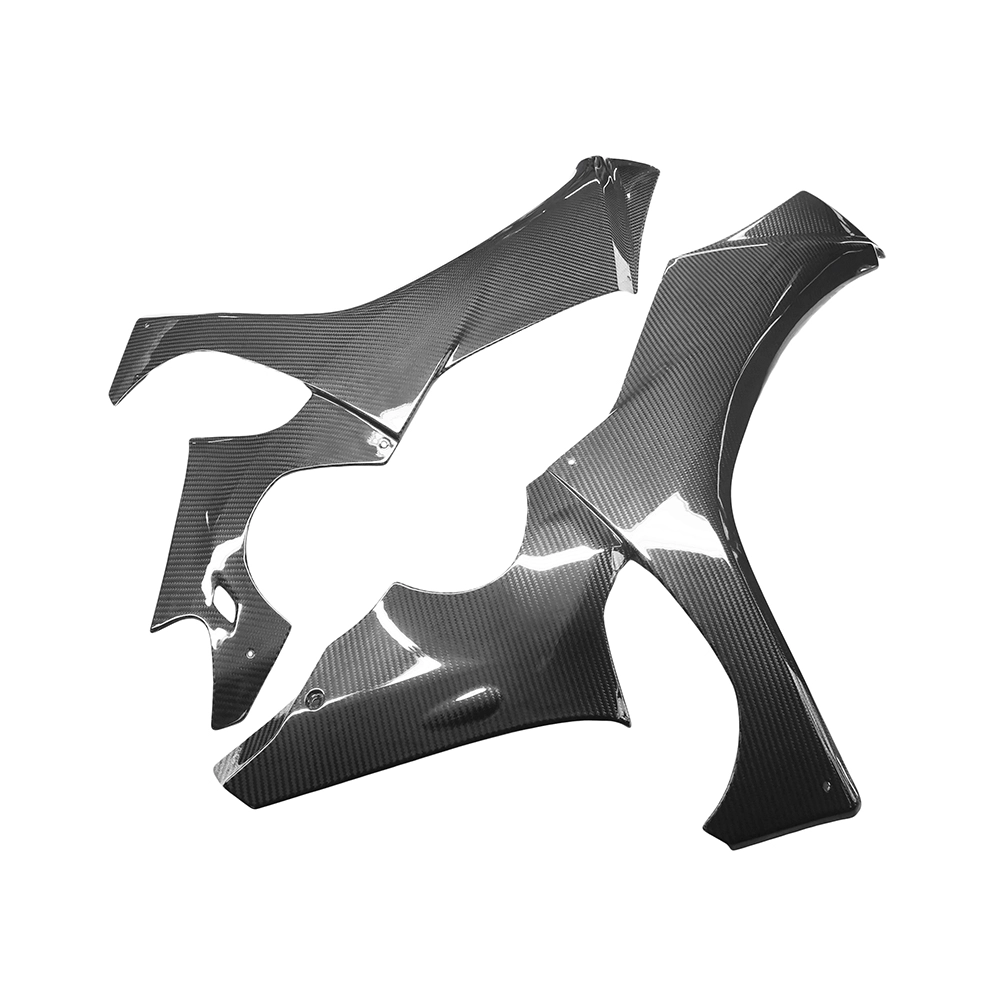
Yamaha R1 Carbon Fiber Side Fairings
Introducing the Supreem Carbon Fiber Long Side Panels for Yamaha R1. Crafted with precision and expertise, this front side fairing is designed to elevate the performance and aesthetics of your R1. Made from high-quality carbon fiber, this fairing is not only lightweight but also incredibly durable, providing optimal protection for your motorcycle.
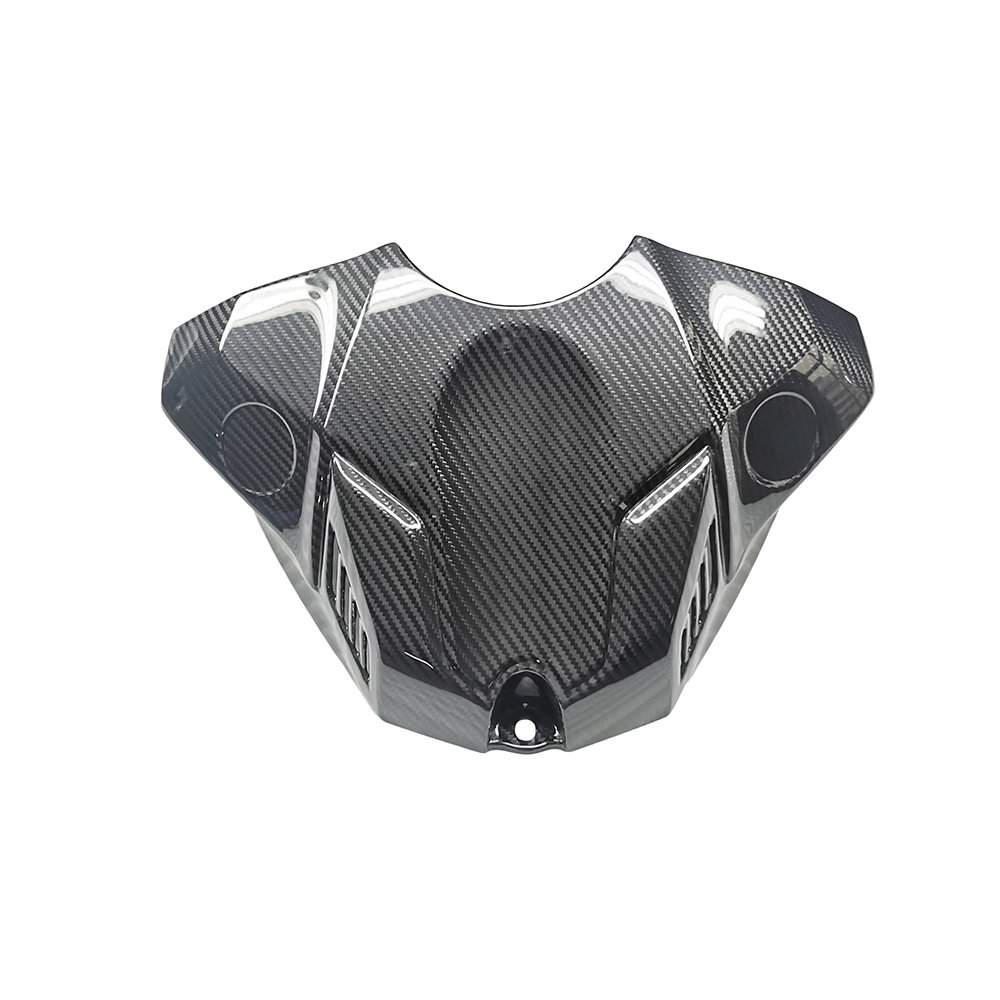
Yamaha R1 Carbon Fiber Airbox Tank Cover
The Supreem Carbon Yamaha R1 Carbon Fiber Airbox Tank Cover provides lightweight, durable protection with a sleek finish. Designed for R1 models, it enhances the style and performance of your bike. Its lightweight structure improves performance while maintaining the premium aesthetics necessary for high-end modification projects. As a dedicated manufacturer of carbon fiber parts, we provide stable production capacity, customization options, and strict quality control to support enterprise-level procurement and OEM/ODM needs.
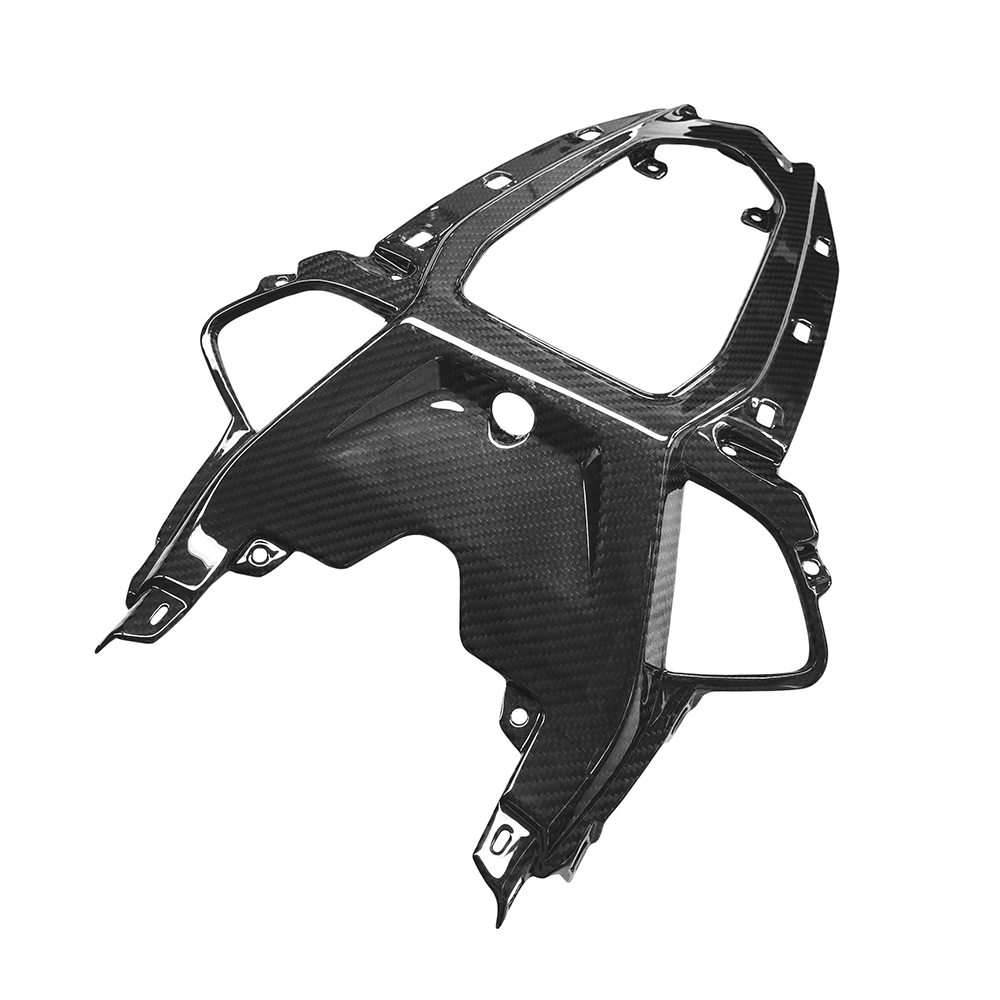
Carbon Fiber Rear Seat Panel for BMW S1000R & M1000RR – Lightweight Performance
This carbon fiber rear seat panel is engineered for the BMW S1000R and M1000RR, offering superior rigidity, reduced weight, and a premium racing finish. Produced with autoclave technology and strict QC standards, the part ensures consistent OEM-level fitment. Supreem Carbon provides wholesale supply, stable bulk production, and customized solutions for global clients.
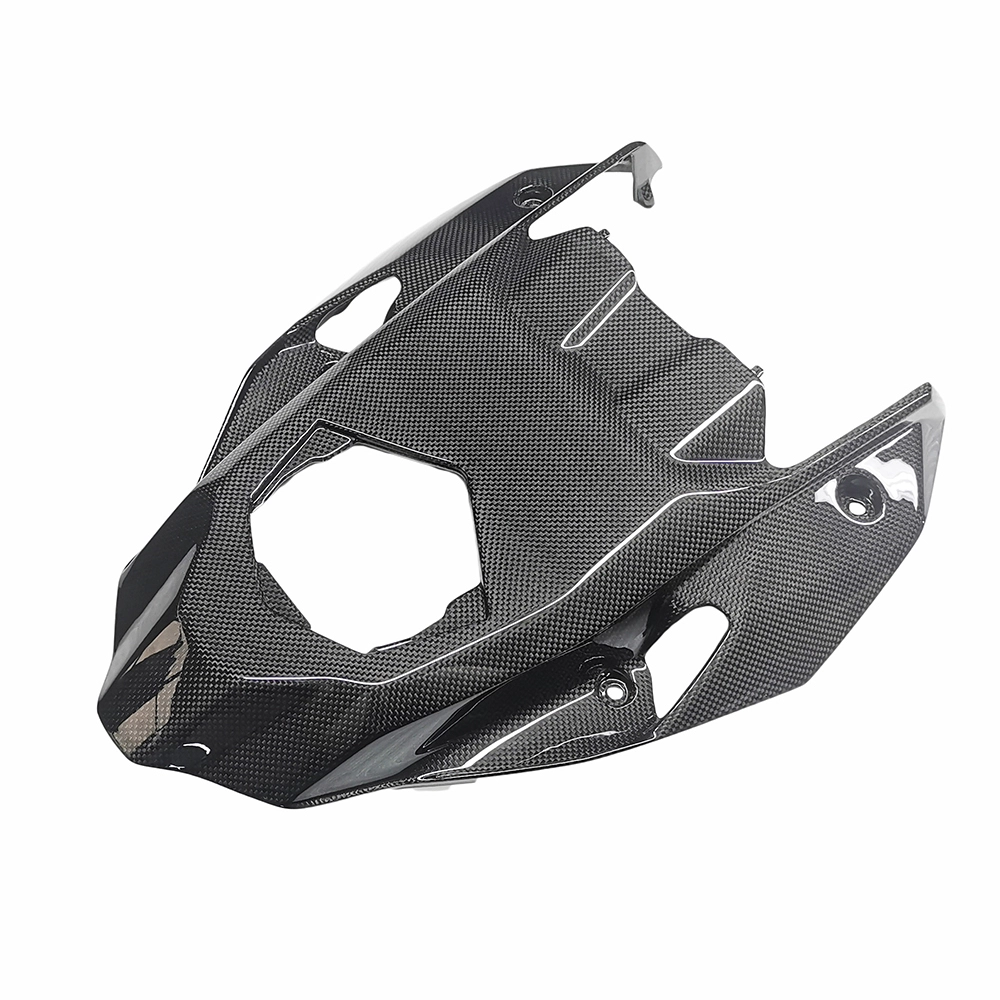
High-Performance Carbon Fiber Rear Undertail for BMW S1000R
Engineered for distributors, tuning brands, and motorcycle accessory businesses, the BMW S1000R Carbon Fiber Rear Undertail is a high-quality, durable, lightweight carbon fiber upgrade for the S1000R platform. This component is manufactured using aerospace-grade carbon fiber and precision molds to deliver superior stiffness, a seamless OEM-level fit, and a premium visual finish suitable for high-end aftermarket applications.

Supreem Carbon aiming to provide customers with high-performance carbon fiber products and quality services.
Contact Supreem Carbon
Address : Building 1 No.103, Yadi Nan 1st Road, QiaoTou Town, Dongguan City, China.
© 2024 Supreem Carbon All Rights Reserved.
Facebook
Pinterest
LinkedIn
Instagram