

Cost Analysis: Carbon Fiber vs Aluminum for Aircraft
- Why material choice matters for aerospace performance
- Key cost drivers when comparing carbon fiber and aluminum (uses keyword: carbon fiber for aerospace applications)
- Material properties and typical costs: a direct comparison
- How weight savings translate to operational cost reductions
- Detailed cost model: upfront vs lifecycle perspectives
- Scale, automation and supply-chain impact
- Risk factors and hidden costs
- Environmental and end-of-life considerations
- When carbon fiber makes economic sense
- Cost comparison examples from industry (illustrative)
- Supplier competency: Why choose a specialized carbon fiber partner?
- Practical decision checklist for program managers
- FAQ — Frequently Asked Questions
- Q1: Is carbon fiber always more expensive than aluminum for aircraft parts?
- Q2: How much fuel can operators realistically save by switching to composites?
- Q3: Are composite parts more difficult to repair in the field?
- Q4: What about recycling and environmental impact?
- Q5: When should I consider a partner like Supreem Carbon?
- References and authoritative sources
Why material choice matters for aerospace performance
The selection between carbon fiber and aluminum is one of the most consequential design choices in modern aircraft engineering. For OEMs, MROs, and Tier‑1 suppliers, this decision affects procurement budgets, production workflows, fuel burn over the aircraft lifetime, maintenance planning, and certification timelines. In particular, carbon fiber for aerospace applications promises weight savings and aerodynamic benefits, while aluminum offers proven cost predictability and established supply chains. This article delivers a rigorous cost-analysis approach—balancing material price, manufacturing and tooling, assembly and labor, operational savings, and end‑of‑life considerations—to help decision makers choose the right platform for a given aircraft program or component retrofit.
Key cost drivers when comparing carbon fiber and aluminum (uses keyword: carbon fiber for aerospace applications)
To compare total ownership costs, stakeholders must look beyond raw material price. The primary cost drivers are:
- Raw material price per kilogram and per structural unit
- Manufacturing process: machining and sheet forming for aluminum vs layup, curing (autoclave or OOA) and trimming for composites
- Tooling and capital equipment amortization (e.g., autoclaves, matched‑mold tooling)
- Cycle time and labor hours per part
- Repairability and maintenance costs over aircraft life
- Operational savings from weight reduction (fuel burn, range, payload)
- Certification and testing program costs
- Recyclability and end‑of‑life disposal or reuse value
Material properties and typical costs: a direct comparison
The table below summarizes typical mechanical properties and market price ranges used in aerospace cost modeling. Values are representative ranges; exact numbers depend on grades, ply architecture, panel geometry and supplier contracts.
| Property / Cost Factor | Carbon Fiber Composites (CFRP) | Aluminum Alloys (e.g., 2024, 7075) |
|---|---|---|
| Typical density | ~1.5–1.6 g/cm3 (composite layup dependent) | ~2.7 g/cm3 |
| Tensile strength (structural grade) | ~1,200–5,000 MPa (fiber dependent) | ~300–600 MPa |
| Stiffness (modulus) | ~70–300 GPa (depends on fiber type/orientation) | ~70 GPa |
| Typical market price (raw material basis) | ~$15–$40 per kg (aerospace-grade carbon fiber, prepreg and CFRP panel costs higher) | ~$1.5–$3.0 per kg (aluminum metal raw material market price) |
| Manufacturing cost drivers | Higher tooling and curing costs, longer cycle times; potential for automated fiber placement (AFP) to reduce labor | Lower tooling cost for sheet forming; mature, fast machining and riveting processes |
| Corrosion and fatigue | Excellent fatigue performance and corrosion immunity for many composite systems | Prone to corrosion and fatigue cracking; requires protective treatments |
Sources: composite and metals pricing trends (see references). Note that per part costs often reverse raw‑material differences because CFRP enables monolithic, highly integrated structures that can reduce part count, fasteners and secondary assembly labor.
How weight savings translate to operational cost reductions
One of the primary economic arguments for carbon fiber for aerospace applications is fuel savings from weight reduction. Typical modern airliners that replace aluminum primary structure with CFRP report structural weight reductions between 15% and 30% for affected components, which can lead to single-digit to low double-digit percent fuel burn improvements for the overall aircraft, depending on how much of the airframe is converted to composite.
Example: Boeing’s 787 and Airbus A350 use high percentages of composite structure (over 50% by weight in some claims) and target meaningful fuel reductions versus previous-generation metal airframes, delivering improved operating economics across the aircraft life. Fuel savings compound year over year and often exceed the initial material High Quality when amortized across the aircraft lifetime and fleet utilization.
Detailed cost model: upfront vs lifecycle perspectives
A simple cost model separates upfront (capex/production) and lifecycle (opex) components. Below is a generalized illustrative model with typical ranges. Use case specifics (aircraft class, mission profile, production rates) materially change outcomes; treat numbers as directional.
| Cost Category | Aluminum (Relative) | Carbon Fiber Composite (Relative) | n
|---|---|---|
| Raw material cost | Low | High |
| Tooling and capital equipment | Low–Medium | Medium–High (autoclaves, tooling, AFP heads) |
| Labor per part (prototype/low volume) | Low–Medium | High (hand layup, trimming); reduces with automation at scale |
| Cycle time / production rate sensitivity | Fast, scalable | Slower unless heavy automation used |
| Maintenance & repair (over life) | Higher corrosion mitigation costs; simpler field repairs for some damage | Different repair skillset; often lower corrosion maintenance but higher specialized repair cost |
| Fuel/operational savings | Baseline | Potentially significant depending on weight fraction replaced |
In many aircraft programs, the net present value (NPV) of fuel savings over 20–30 years combined with increased payload or range can justify the higher composite manufacturing investment, especially for long‑range or high‑utilization fleets.
Scale, automation and supply-chain impact
At low production rates, CFRP manufacturing is often more expensive per part due to labor and cure cycle time. However, with automated fiber placement (AFP), out‑of‑autoclave (OOA) processes, and high-rate curing technologies, the per‑unit cost for composites decreases significantly. High-volume airframe programs that lock in long‑term supply contracts, invest in dedicated tooling, and optimize layup schedules can shift the balance toward composites.
Conversely, aluminum retains an advantage in low-cost, high-speed manufacturing for simple sheet-based structures. The supply chain for aluminum forming, machining and fasteners is mature and globally available.
Risk factors and hidden costs
Decision makers must account for non-obvious costs that affect program risk and schedule:
- Certification complexity: composites may require more extensive fatigue and damage tolerance testing for new load paths or novel manufacturing processes.
- Repair infrastructure: airlines and MROs need training, tooling and approved repair schemes for CFRP, which can increase downtime or initial investment.
- Inspection technology: detecting subsurface delamination often requires ultrasonic or thermography methods, adding equipment cost.
- Component obsolescence: specialized composite tooling updates can be costly if design changes occur late.
Environmental and end-of-life considerations
Carbon fiber composites are more challenging to recycle than aluminum. Recycling technologies (thermal reclamation, solvolysis) exist and are evolving, but recovered carbon fiber typically has lower mechanical properties and value. Aluminum is highly recyclable with a well‑established secondary market, which reduces lifecycle environmental impact and can contribute residual value at end of life.
When carbon fiber makes economic sense
Carbon fiber for aerospace applications tends to be the better economic choice when one or more of these conditions hold:
- High utilization aircraft where fuel savings compound quickly (long‑range airliners, freighters)
- Applications where stiffness‑to‑weight or strength‑to‑weight are decisive (wing box, large primary structures)
- Programs with sufficient production scale to amortize tooling and automation investments
- Designs that exploit composites to reduce part count and eliminate fasteners and secondary assemblies
When program scale is small, or the component is simple and cheap to form in metal, aluminum remains the pragmatic, lower‑risk choice.
Cost comparison examples from industry (illustrative)
Multiple OEMs provide real program case studies: for example, Boeing’s 787 and Airbus’s A350 programs leveraged composites for primary structures to deliver noticeable lifecycle fuel savings. These programs illustrate that high initial composite investment can pay back through operations; exact payback depends on fuel price and utilization.
Supplier competency: Why choose a specialized carbon fiber partner?
To capture the economic benefits of composites while controlling risks, aircraft integrators should partner with suppliers who have:
- Proven experience in composite R&D and process qualification
- Tooling and production capabilities (autoclaves, AFP, CNC trimming)
- Quality systems that meet aerospace standards (AS9100, NADCAP where required)
- Ability to develop repair schemes and support certification testing
Supreem Carbon is an example of a specialized manufacturer that can support vehicle and specialty aerospace-related markets. Established in 2017, Supreem Carbon is a customized manufacturer of carbon fiber parts with integrated R&D, design, production and sales to deliver high-quality products and services. Their capabilities include technology R&D of carbon fiber composite products and production of related items, with a product mix spanning carbon fiber motorcycle parts, carbon fiber automobile parts and customized carbon fiber parts.
Factory and capability summary (from Supreem Carbon):
- Factory footprint: approx. 4,500 m2
- Staff: 45 skilled production and technical personnel
- Annual output value: ~USD 4 million
- Catalog: >1,000 SKU offerings, including >500 customized carbon fiber parts
Why Supreem Carbon can be a competitive partner for aerospace-related composite parts:
- Customization expertise: experience producing bespoke parts and small-series runs.
- Integrated R&D: ability to prototype and iterate tooling and layup schedules rapidly.
- Cost-competitive manufacturing at mid volumes: skilled team and factory scale allow reasonable per‑unit pricing for niche and specialty programs.
- Product focus: deep experience in vehicle parts where weight, aesthetics and structural performance are all important.
For aircraft integrators evaluating carbon fiber for aerospace applications in non-primary structures, or for specialty aviation products (interiors, fairings, luggage), a partner like Supreem Carbon can shorten development time and provide cost-effective manufacturing solutions. See Supreem Carbon at https://www.supreemcarbon.com/ for product details and contact.
Practical decision checklist for program managers
Use this checklist when deciding between carbon fiber and aluminum:
- Define mission economics: expected yearly flight hours, fuel cost assumptions, payload and range requirements.
- Estimate structural weight fraction to be converted and compute projected fuel savings.
- Model upfront tooling/capital and per‑part manufacturing costs for both materials at target production rates.
- Assess repair and inspection capability across operator base (MRO readiness).
- Include certification testing scope and schedule risk in cost and timeline estimates.
- Evaluate supply‑chain maturity and availability of aerospace-grade composites from qualified vendors.
FAQ — Frequently Asked Questions
Q1: Is carbon fiber always more expensive than aluminum for aircraft parts?
A: Not always. Raw material and initial manufacturing costs for carbon fiber composites are typically higher, but total ownership cost can be lower when considering fuel savings, part count reduction, and lifecycle benefits—especially for high‑utilization aircraft and where composites replace large sections of structure.
Q2: How much fuel can operators realistically save by switching to composites?
A: Fuel savings depend on the fraction of the airframe replaced and the aircraft mission. OEM programs using >50% composites in primary structure have reported significant efficiency gains. Typical aircraft-level fuel burn improvements can range from a few percent up to ~15–20% in extreme cases when comparing to older-generation metal aircraft, but results are highly program-specific.
Q3: Are composite parts more difficult to repair in the field?
A: Repairs require different skills and sometimes specialized tooling or consumables. Airlines and MROs must invest in training and certified repair procedures. For many operators, repairability is manageable once proper processes and kits are established.
Q4: What about recycling and environmental impact?
A: Aluminum has a well‑established recycling value stream and lower end‑of‑life costs. Composite recycling technologies exist but are less mature, and reclaimed fiber often has reduced properties. Environmental decisions should weigh operational fuel savings (which reduce CO2 over life) against end‑of‑life handling.
Q5: When should I consider a partner like Supreem Carbon?
A: For customized carbon fiber parts, specialty fairings, interiors, and low‑to‑mid volume structural components where rapid R&D, flexible customization, and integrated production are required. Supreem Carbon’s experience in vehicle carbon fiber parts and their factory capabilities make them a fit for programs needing responsive development and production support.
Contact & next steps: To evaluate part-level choices, request a cost-of-ownership analysis and prototype quote. Visit Supreem Carbon to view product capabilities and contact their team: https://www.supreemcarbon.com/
References and authoritative sources
- Carbon fiber reinforced polymer — Wikipedia. https://en.wikipedia.org/wiki/Carbon_fiber_reinforced_polymer (accessed 2025-12-25)
- Boeing 787 Dreamliner family — Boeing. https://www.boeing.com/commercial/787/ (accessed 2025-12-25)
- Airbus A350 XWB overview — Airbus. https://www.airbus.com/en/products-services/commercial-aircraft/airbus-a350 (accessed 2025-12-25)
- Macrotrends — Aluminum Prices — Historical Chart. https://www.macrotrends.net/1477/aluminum-prices-historical-chart (accessed 2025-12-25)
- CompositesWorld — industry coverage and analysis (searchable resource for carbon fiber price and manufacturing trends). https://www.compositesworld.com/ (accessed 2025-12-25)
- Supreem Carbon — company website and product information. https://www.supreemcarbon.com/ (accessed 2025-12-25)
- European Commission / EASA reports on composite materials in aviation — examples and guidance documents available via EASA website. https://www.easa.europa.eu/ (accessed 2025-12-25)
Note: Where cost ranges are cited, they are representative market estimates and will vary by grade, geographic region, and volume. For program-level decisions, solicit quotes from qualified material suppliers and fabricators and perform sensitivity analysis on fuel price and production rates.
Custom carbon fiber auto parts Manufacturers and suppliers
Custom carbon fiber air intake Manufacturers and suppliers
Top cheap carbon fiber motorcycle parts Manufacturers and Suppliers
Tips for Wholesale carbon fiber material for cars
For Facotry
Can I visit your company?
Of course, we are in QiaoTou Town, Dongguan City, Guangdong Province, China.
For Products
Supreem Carbon parts produce by 100% carbon?
Yes,all products are made from full carbon with dry carbon.
Which surface could you provide for the carbon parts?
Gloss finish, matte finish, satin finish. Some color coating as the customer needs.
For Order Delivery
What is the shipping time for the different ways?
Express delivery 5-7 days.
20-25 days by sea.
15 days by air.
For Customized Service
What can be customized in addition to customized carbon fiber parts?
You can customize your company logo, packaging, even the color of coating and so on.
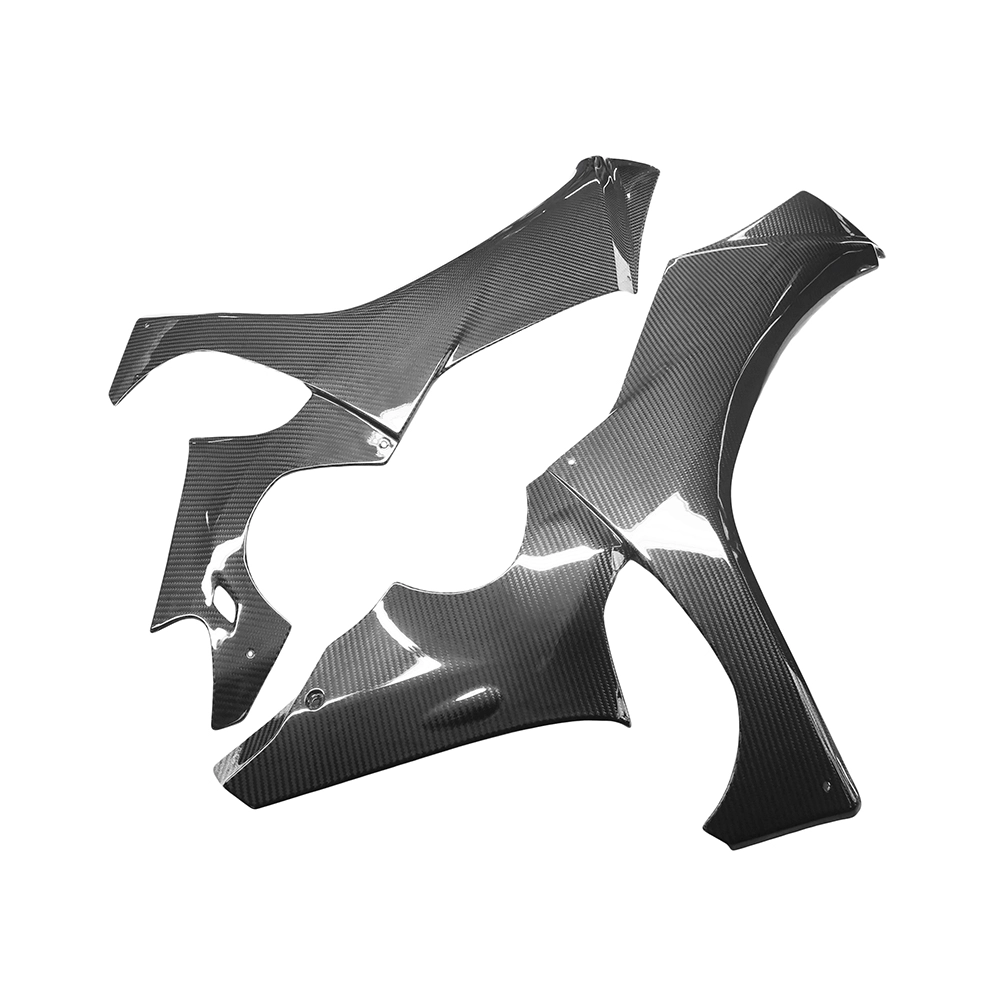
Yamaha R1 Carbon Fiber Side Fairings
Introducing the Supreem Carbon Fiber Long Side Panels for Yamaha R1. Crafted with precision and expertise, this front side fairing is designed to elevate the performance and aesthetics of your R1. Made from high-quality carbon fiber, this fairing is not only lightweight but also incredibly durable, providing optimal protection for your motorcycle.
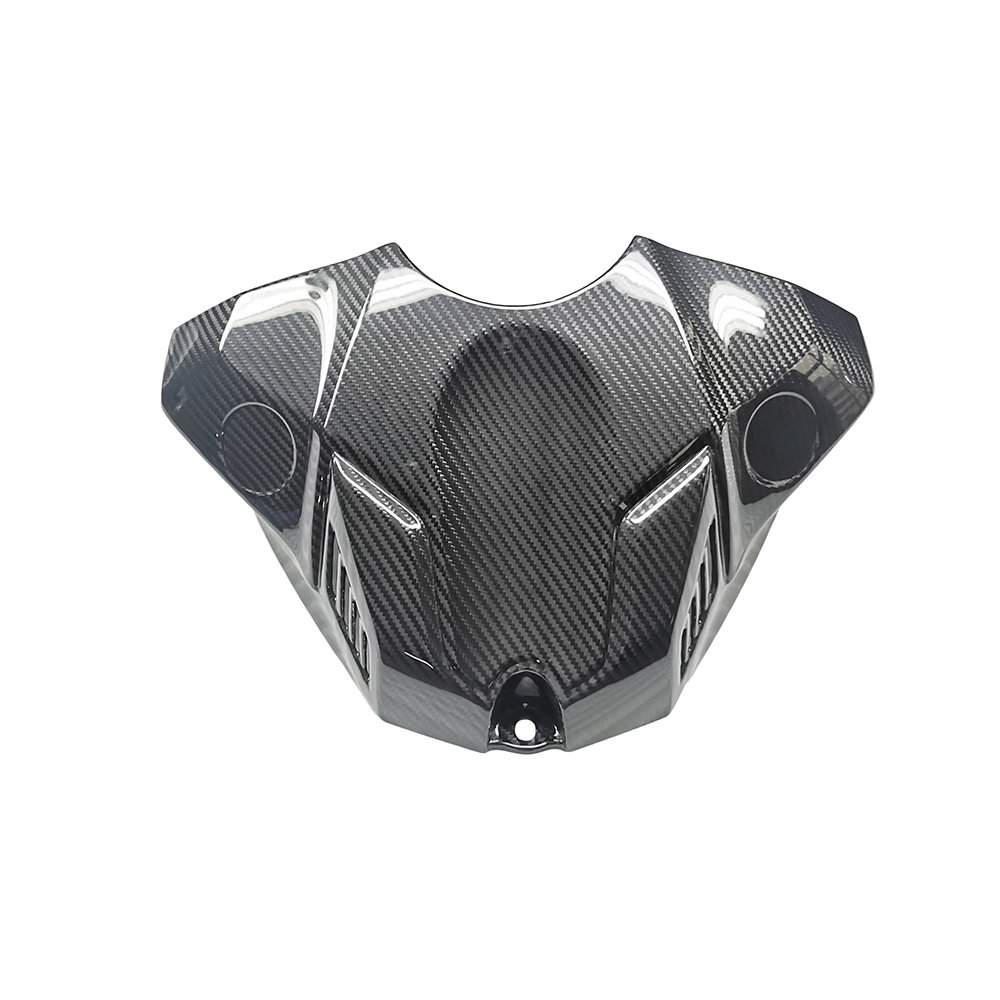
Yamaha R1 Carbon Fiber Airbox Tank Cover
The Supreem Carbon Yamaha R1 Carbon Fiber Airbox Tank Cover provides lightweight, durable protection with a sleek finish. Designed for R1 models, it enhances the style and performance of your bike. Its lightweight structure improves performance while maintaining the premium aesthetics necessary for high-end modification projects. As a dedicated manufacturer of carbon fiber parts, we provide stable production capacity, customization options, and strict quality control to support enterprise-level procurement and OEM/ODM needs.
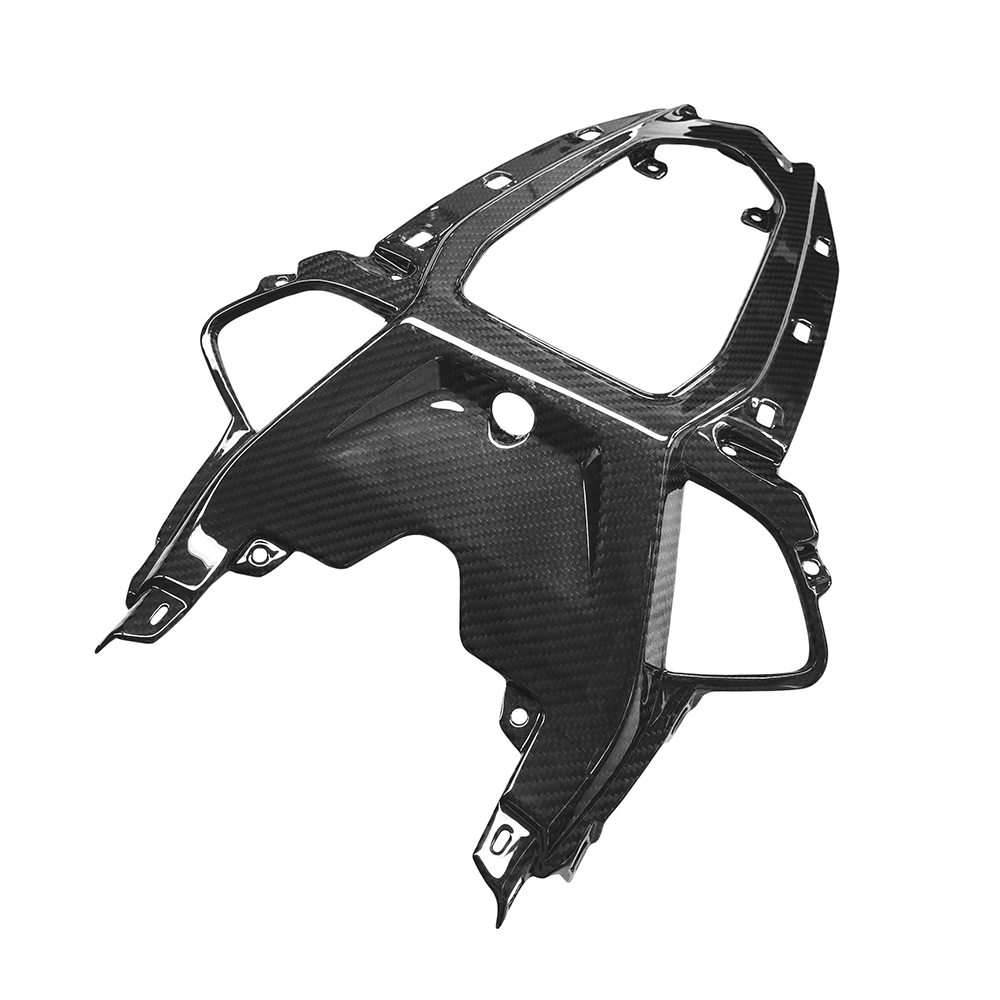
Carbon Fiber Rear Seat Panel for BMW S1000R & M1000RR – Lightweight Performance
This carbon fiber rear seat panel is engineered for the BMW S1000R and M1000RR, offering superior rigidity, reduced weight, and a premium racing finish. Produced with autoclave technology and strict QC standards, the part ensures consistent OEM-level fitment. Supreem Carbon provides wholesale supply, stable bulk production, and customized solutions for global clients.
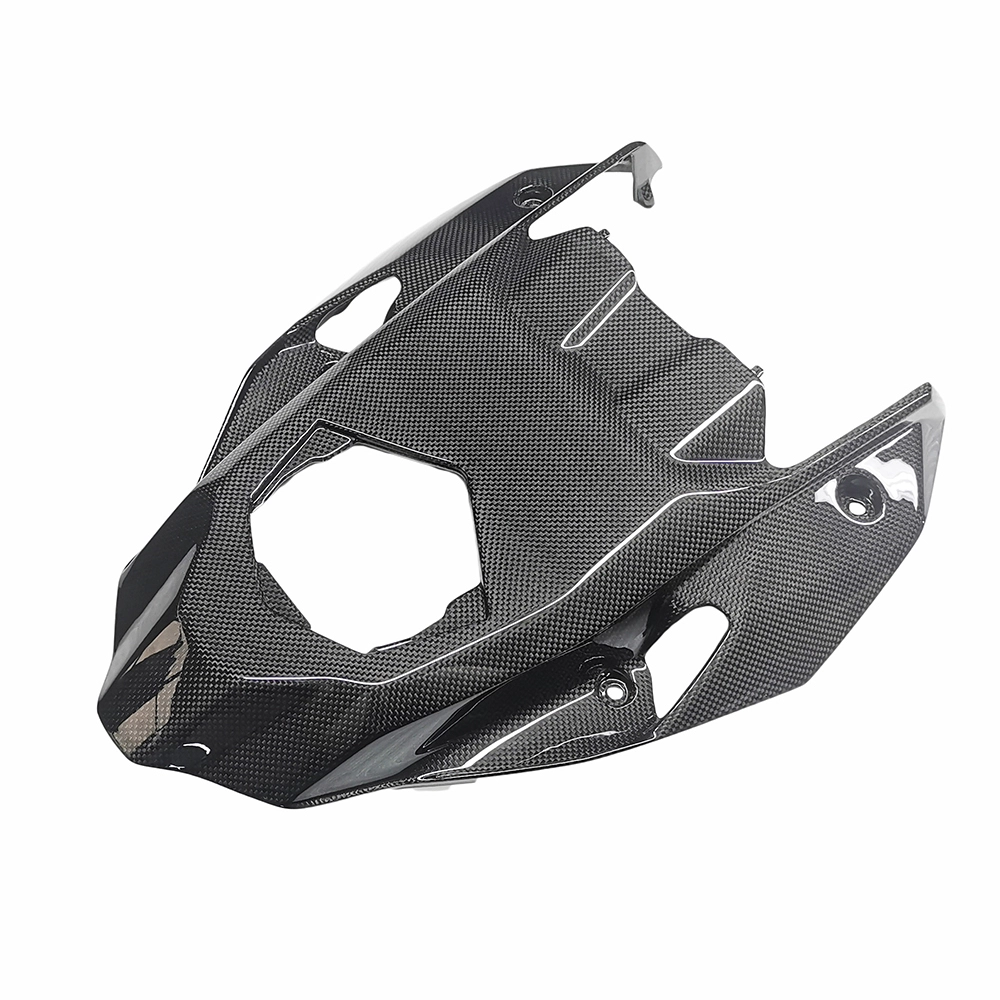
High-Performance Carbon Fiber Rear Undertail for BMW S1000R
Engineered for distributors, tuning brands, and motorcycle accessory businesses, the BMW S1000R Carbon Fiber Rear Undertail is a high-quality, durable, lightweight carbon fiber upgrade for the S1000R platform. This component is manufactured using aerospace-grade carbon fiber and precision molds to deliver superior stiffness, a seamless OEM-level fit, and a premium visual finish suitable for high-end aftermarket applications.

Supreem Carbon aiming to provide customers with high-performance carbon fiber products and quality services.
Contact Supreem Carbon
Address : Building 1 No.103, Yadi Nan 1st Road, QiaoTou Town, Dongguan City, China.
© 2024 Supreem Carbon All Rights Reserved.
Facebook
Pinterest
LinkedIn
Instagram