
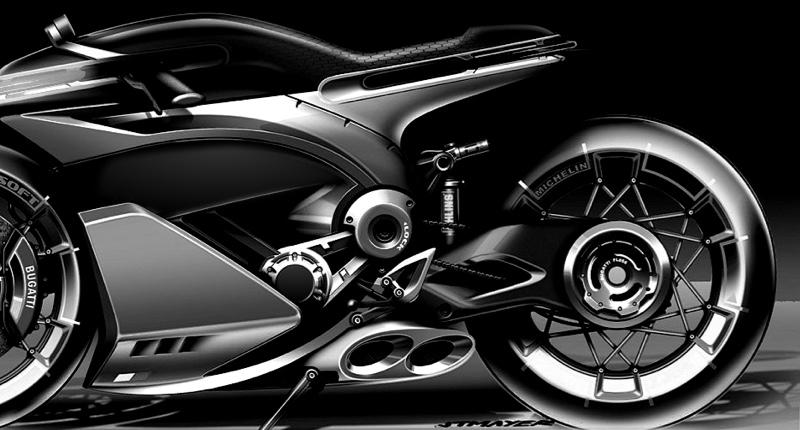


How to Choose a Carbon Fiber Tube Supplier for Industrial Use
- Choosing the Right Carbon Fiber Tube: A Practical Guide
- Why selecting the right carbon fiber tube supplier matters: carbon fiber tube supplier
- Key technical specifications to ask your carbon fiber tube supplier: carbon fiber tube supplier
- Material properties and performance comparison to discuss with a carbon fiber tube supplier
- Quality control, testing and certifications your carbon fiber tube supplier should provide: carbon fiber tube supplier
- Manufacturing methods and what to expect from your carbon fiber tube supplier: carbon fiber tube supplier
- Commercial terms and supply chain considerations with a carbon fiber tube supplier
- How to evaluate supplier experience and references: carbon fiber tube supplier
- Comparison of supplier offerings and how to choose: carbon fiber tube supplier
- Why Supreem Carbon could be your preferred carbon fiber tube supplier: carbon fiber tube supplier
- Checklist: 10 questions to ask any carbon fiber tube supplier before you place an order: carbon fiber tube supplier
- FAQ — Common questions about choosing a carbon fiber tube supplier
- 1. What minimum information should I give a carbon fiber tube supplier to get an accurate quote?
- 2. How do I verify the mechanical performance claims from a carbon fiber tube supplier?
- 3. When should I choose filament winding over pultrusion?
- 4. Will carbon fiber tubes corrode or require special maintenance compared with metal?
- 5. How much should I expect to pay for custom carbon fiber tubes?
- Contact and product viewing
- References and sources
Choosing the Right Carbon Fiber Tube: A Practical Guide
Why selecting the right carbon fiber tube supplier matters: carbon fiber tube supplier
Choosing the correct carbon fiber tube supplier for industrial use affects part performance, repeatability, cost and regulatory compliance. Tubes are used in critical applications — from machine shafts and pneumatic actuators to structural booms and automated tooling — where small differences in layup, fiber type, resin, or manufacturing method change stiffness, fatigue life and safety margins. Evaluating suppliers early prevents costly redesigns, delays in production, and failure risks that can affect safety and warranty exposure.
Key technical specifications to ask your carbon fiber tube supplier: carbon fiber tube supplier
Before engaging a carbon fiber tube supplier, collect the technical requirements you need answered. At minimum, request:
- Material specification: fiber type (e.g., standard modulus, intermediate, high modulus), resin system (thermoset epoxy, toughened epoxy, high-temperature systems).
- Mechanical targets: required tensile strength, longitudinal and hoop modulus, shear strength, allowable deflection, and target fatigue life.
- Geometric tolerances: outer diameter (OD) tolerance, wall thickness tolerance, straightness, concentricity.
- Surface treatments and finishes: internal bore finish, outer cosmetic finish, primer-ready surfaces, coating options for wear or chemical resistance.
- Joining and end treatments: integrated metal inserts, molded end caps, secondary machining services, bonding preparation.
- Environmental requirements: temperature range, UV exposure, chemical contact, and any flame/smoke requirements for indoor use.
- Inspection & testing: proof loading, burst pressure (if pressurized), nondestructive testing (ultrasound/CT), and sample certification reports.
Suppliers should be able to translate your functional requirements into a proposed layup and manufacturing method with estimated tolerances and test results.
Material properties and performance comparison to discuss with a carbon fiber tube supplier
Understanding typical ranges helps when reviewing supplier data sheets. The table below summarizes typical engineering ranges for carbon fiber tubes versus common metallic alternatives. Values are representative; always validate with supplier test reports for your lot.
| Property | Carbon fiber tube (typical) | Aluminum (6061-T6) | Steel (AISI 1045) | Source |
|---|---|---|---|---|
| Tensile strength | 2,000–5,500 MPa (fiber-dependent) | 310 MPa | 570 MPa | Carbon fiber: Wikipedia; Metals: Engineering ToolBox (accessed 2025-12-22) |
| Young’s modulus (axial) | 70–400 GPa (typical 150–300 GPa) | 69 GPa | 210 GPa | See references |
| Density | 1.4–1.7 g/cm³ | 2.7 g/cm³ | 7.8 g/cm³ | See references |
Quality control, testing and certifications your carbon fiber tube supplier should provide: carbon fiber tube supplier
Industrial buyers must expect traceability and measurable quality controls. Ask suppliers for:
- Material certificates and batch traceability (fiber lot number, resin batch).
- Manufacturing process controls and documented SOPs (standard operating procedures).
- Third-party or in-house testing results: tensile, compression, interlaminar shear (ILSS), void content, dimensional inspections and nondestructive testing (ultrasonic or CT where required).
- Relevant certifications: ISO 9001 for quality management; IATF 16949 for automotive supply chains if you are in automotive; RoHS/REACH compliance for regulated markets.
- Inspection plans and acceptance criteria (AQL) and willingness to provide first article inspection (FAI) reports.
For highly regulated or safety-critical applications, require independent lab validation or conditional acceptance testing as part of your contract.
Manufacturing methods and what to expect from your carbon fiber tube supplier: carbon fiber tube supplier
Common manufacturing methods for tubes include filament winding, pultrusion, roll-wrapping (mandrel-wrapped), and prepreg/autoclave layup. Each method has pros and cons for tolerance, volume and cost:
| Process | Best for | Tolerances & finish | Typical volume | Notes |
|---|---|---|---|---|
| Filament winding | Cylindrical shapes, high hoop/axial strength | Good dimensional control; consistent wall thickness | Low–high (flexible) | Excellent for pressure vessels and shafts; repeatable |
| Pultrusion | Continuous profiles with constant cross-section | Tight tolerances; excellent straightness | High volume | Cost-effective for long runs; less flexible for complex features |
| Roll-wrap (mandrel) | Small batches, bespoke tubes | Variable; depends on tooling | Low volume | Good for custom OD/ID and variable wall thickness |
| Prepreg/autoclave | High-performance aerospace or sports parts | Excellent fiber control and low voids | Low–medium | Higher cost; superior mechanical properties |
Ask suppliers which method they will use and why it fits your mechanical and cost targets. For example, filament winding provides excellent hoop strength for pressure or torsional loads, while pultrusion excels at consistent profiles and high-volume runs.
Commercial terms and supply chain considerations with a carbon fiber tube supplier
Price per meter or per part is important but not the only factor. When comparing commercial offers, evaluate:
- Minimum order quantities (MOQs) and sample policies.
- Tooling costs and amortization for custom mandrels or dies.
- Lead time for prototypes vs production; ramp schedules for higher volumes.
- Warranty, liability and intellectual property (IP) terms — clarify ownership of tooling and design files.
- Raw material sourcing stability — carbon fiber availability and potential supply chain risks are a major cost driver.
- Logistics: packaging for long, thin parts, export compliance and availability of expedited shipping.
How to evaluate supplier experience and references: carbon fiber tube supplier
Practical ways to confirm supplier competence:
- Request case studies or references in your end-market (automotive, motorsports, industrial automation, UAVs).
- Ask for sample parts and instrumented test data from previous jobs — tensile tests, fatigue cycles, thermal stability tests.
- Perform a site visit or virtual tour; review shop layout, testing equipment and key staff qualifications.
- Evaluate engineering support: can the supplier run finite element analysis (FEA) or advise on layup optimization and bonding methods?
Suppliers who combine manufacturing with in-house R&D and engineering services reduce integration risk and accelerate development.
Comparison of supplier offerings and how to choose: carbon fiber tube supplier
The table below helps match supplier capability to your project profile.
| Project profile | Recommended supplier capability | Why |
|---|---|---|
| High-volume commodity tubes (constant cross-section) | Supplier with pultrusion and automated QC | Lower unit cost, tight tolerances |
| Performance-critical shafts or pressure tubes | Supplier with filament winding and testing lab | Superior fiber orientation control and measurable properties |
| Custom prototypes and low-volume specialty parts | Small-batch manufacturer with roll-wrap/prepreg and tooling flexibility | Speed and flexibility outweigh unit cost |
Why Supreem Carbon could be your preferred carbon fiber tube supplier: carbon fiber tube supplier
Supreem Carbon, established in 2017, is a customized manufacturer of carbon fiber parts for automobiles and motorcycles, integrating R&D, design, production, and sales to deliver high-quality products and services. The company emphasizes carbon fiber composite technology development and manufactures related products, including customized and modified carbon fiber vehicle accessories, carbon fiber luggage and sports equipment.
Key strengths that make Supreem Carbon competitive as a carbon fiber tube supplier for industrial applications:
- Manufacturing footprint: a factory of approximately 4,500 m² with 45 skilled production and technical staff, enabling responsive production and quality oversight.
- Output and product range: annual output value around US$4 million, offering over 1,000 product types, including 500+ customized carbon fiber parts — indicating both breadth and customization capability.
- Integrated R&D and design services: in-house engineering shortens development cycles and improves the handoff from prototype to production.
- Industry focus: core competency in carbon fiber motorcycle parts, carbon fiber automobile parts, and customized carbon fiber parts — relevant experience for industrial tubes used in mobility and high-performance equipment.
- Customization and aftermarket expertise: well-suited for projects that require aesthetic finishes, inserts, and bonded joints as commonly requested in automotive and motorcycle sectors.
Visit Supreem Carbon at https://www.supreemcarbon.com/ to review product lines and request samples. Their combination of R&D, product diversity and manufacturing scale makes them a viable candidate for industrial carbon fiber tube projects that require customization and reliable production capacity.
Checklist: 10 questions to ask any carbon fiber tube supplier before you place an order: carbon fiber tube supplier
- What fiber and resin systems will you use, and can you supply material certificates?
- Which manufacturing method will you apply and why is it the best fit for my part?
- Can you provide dimensional tolerances, straightness and concentricity specs for my geometry?
- Do you perform in-process and final inspection? Can you share FAI or sample test reports?
- What nondestructive testing (NDT) methods do you have available?
- What are MOQs, lead times for prototypes and ramp schedules for production quantities?
- What tooling costs and ownership terms apply?
- Do you have references in my industry and can you facilitate a sample test program?
- What warranty and liability coverage do you provide for industrial applications?
- How do you manage supply chain risks (fiber shortages, resin lead times) and price fluctuations?
FAQ — Common questions about choosing a carbon fiber tube supplier
1. What minimum information should I give a carbon fiber tube supplier to get an accurate quote?
Provide: target dimensions (OD, ID, length), wall thickness, required tolerances, load cases (axial, bending, torsion), environmental conditions (temperature, chemicals, UV), target quantities, and any certification needs. The clearer the specification, the more accurate the quote and the fewer iterations you'll need.
2. How do I verify the mechanical performance claims from a carbon fiber tube supplier?
Request test reports from the supplier showing sample mechanical tests (tensile, compressive, ILSS, fatigue), and require material traceability. For critical parts, arrange third-party testing on supplied samples or witness manufacturer tests. Review process controls and historical test variability.
3. When should I choose filament winding over pultrusion?
Choose filament winding for tubes requiring tailored hoop/axial strength, variable wall thickness, or higher performance under combined loading. Pultrusion is better for long runs of constant cross-section profiles where cost and tight dimensional control matter.
4. Will carbon fiber tubes corrode or require special maintenance compared with metal?
Carbon fiber composites do not rust, but certain galvanic interactions can occur when carbon contacts metals (especially aluminum) in the presence of an electrolyte. Proper end treatments, isolation layers, and design details prevent galvanic corrosion. Regular inspection for surface damage and bond integrity is recommended.
5. How much should I expect to pay for custom carbon fiber tubes?
Pricing varies widely by material (standard vs high-modulus fiber), manufacturing method, tolerances and volumes. Low-volume custom parts can be significantly more expensive per unit than pultruded production parts. Obtain multiple quotes and include tooling amortization in cost comparisons.
Contact and product viewing
If you want a supplier that combines R&D, customization and in-house production, consider contacting Supreem Carbon to discuss prototypes, samples and production runs. View their product range and contact information at https://www.supreemcarbon.com/ — request technical datasheets and start with a clear specification to accelerate quotation accuracy.
References and sources
- Carbon fiber — Wikipedia. https://en.wikipedia.org/wiki/Carbon_fiber (accessed 2025-12-22)
- Carbon Fiber Market Overview — Grand View Research. https://www.grandviewresearch.com/industry-analysis/carbon-fiber-market (accessed 2025-12-22)
- Composite materials standards — ASTM International. https://www.astm.org/Standards/composite-materials-standards. (accessed 2025-12-22)
- Young's Modulus for common materials — Engineering ToolBox. https://www.engineeringtoolbox.com/young-modulus-d_773. (accessed 2025-12-22)
- Supreem Carbon official website — company profile and product information. https://www.supreemcarbon.com/ (accessed 2025-12-22)
Best professional carbon fiber pool cues manufacturers and supplier brands
Custom best carbon fiber motorcycle helmets Manufacturers and suppliers
High Quality Carbon Fiber Race Car Parts by Supreem Carbon
What are the application scenarios of carbon fiber arch support?
For Products
Supreem Carbon parts produce by 100% carbon?
Yes,all products are made from full carbon with dry carbon.
For Order Delivery
What is the shipping time for the different ways?
Express delivery 5-7 days.
20-25 days by sea.
15 days by air.
How to choose the mode of transportation?
We use official shipment like Fedex,UPS,DHL and so on. Also customer can arrange delivery by themselves.
For Customized Service
What is the customization process of carbon fiber products?
1. Customer provide 3D drawing, design requirement or idea
2. Technician evaluate project feasibility and provide a quotation
3. Project confirmation and arrange sample production
4. Delivery and customer feedback
5. Big scale orders production
What custom customer need to prepare?
1. Send Your Design/Idea/3D drawing.
2. Supplier Quotation Confirmation.
3. Firts Sample Feedback.
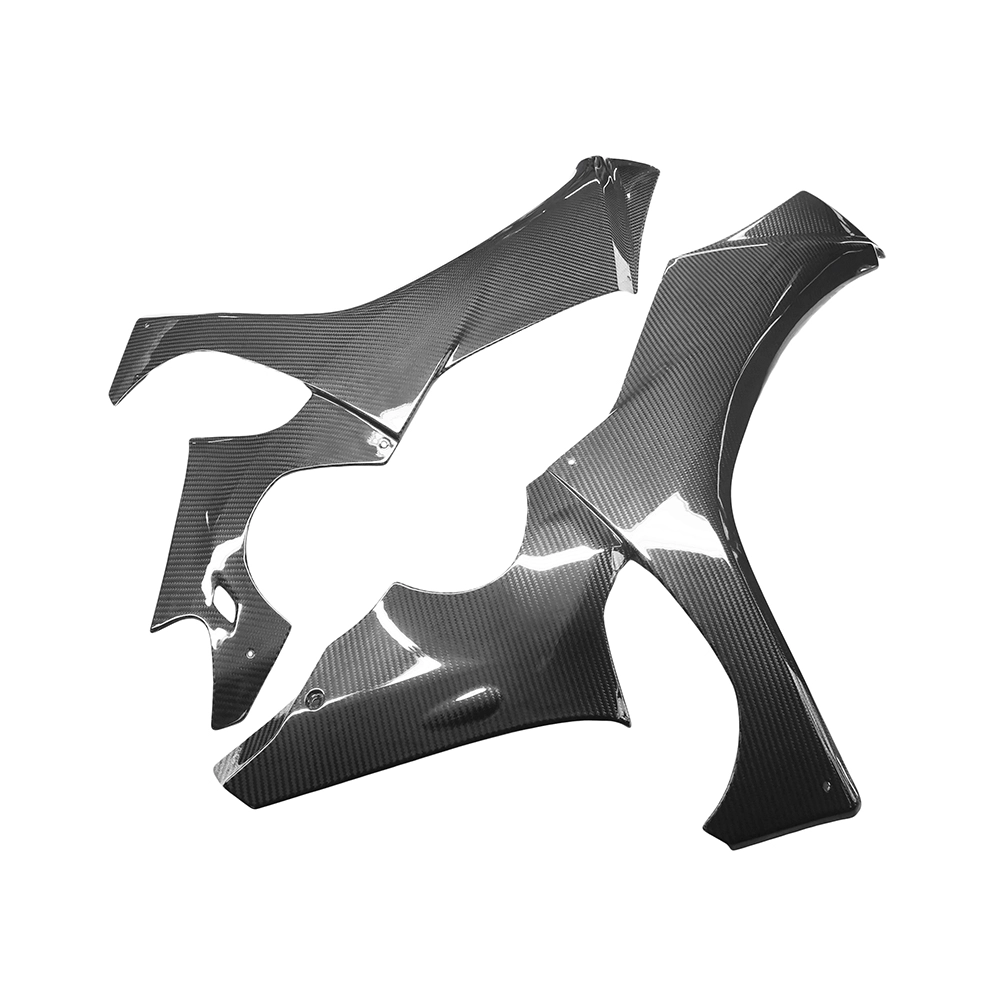
Yamaha R1 Carbon Fiber Side Fairings
Introducing the Supreem Carbon Fiber Long Side Panels for Yamaha R1. Crafted with precision and expertise, this front side fairing is designed to elevate the performance and aesthetics of your R1. Made from high-quality carbon fiber, this fairing is not only lightweight but also incredibly durable, providing optimal protection for your motorcycle.
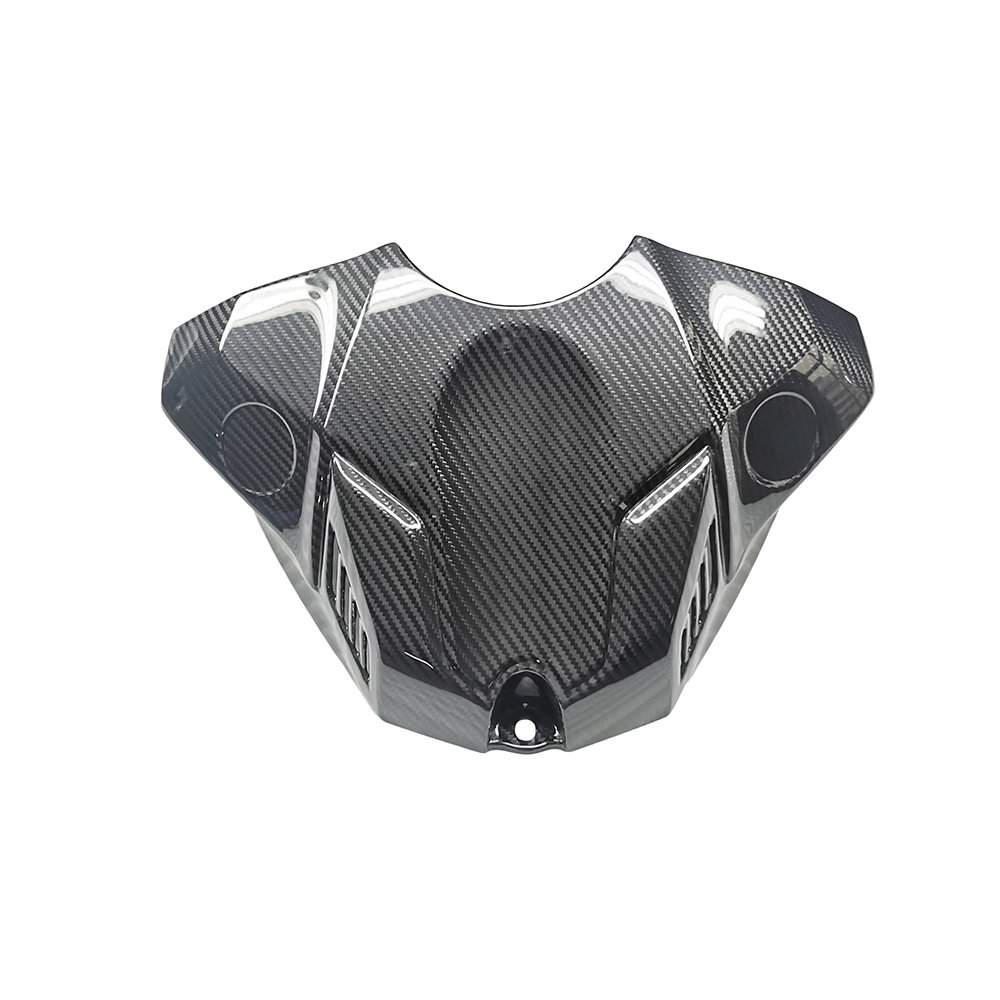
Yamaha R1 Carbon Fiber Airbox Tank Cover
The Supreem Carbon Yamaha R1 Carbon Fiber Airbox Tank Cover provides lightweight, durable protection with a sleek finish. Designed for R1 models, it enhances the style and performance of your bike. Its lightweight structure improves performance while maintaining the premium aesthetics necessary for high-end modification projects. As a dedicated manufacturer of carbon fiber parts, we provide stable production capacity, customization options, and strict quality control to support enterprise-level procurement and OEM/ODM needs.
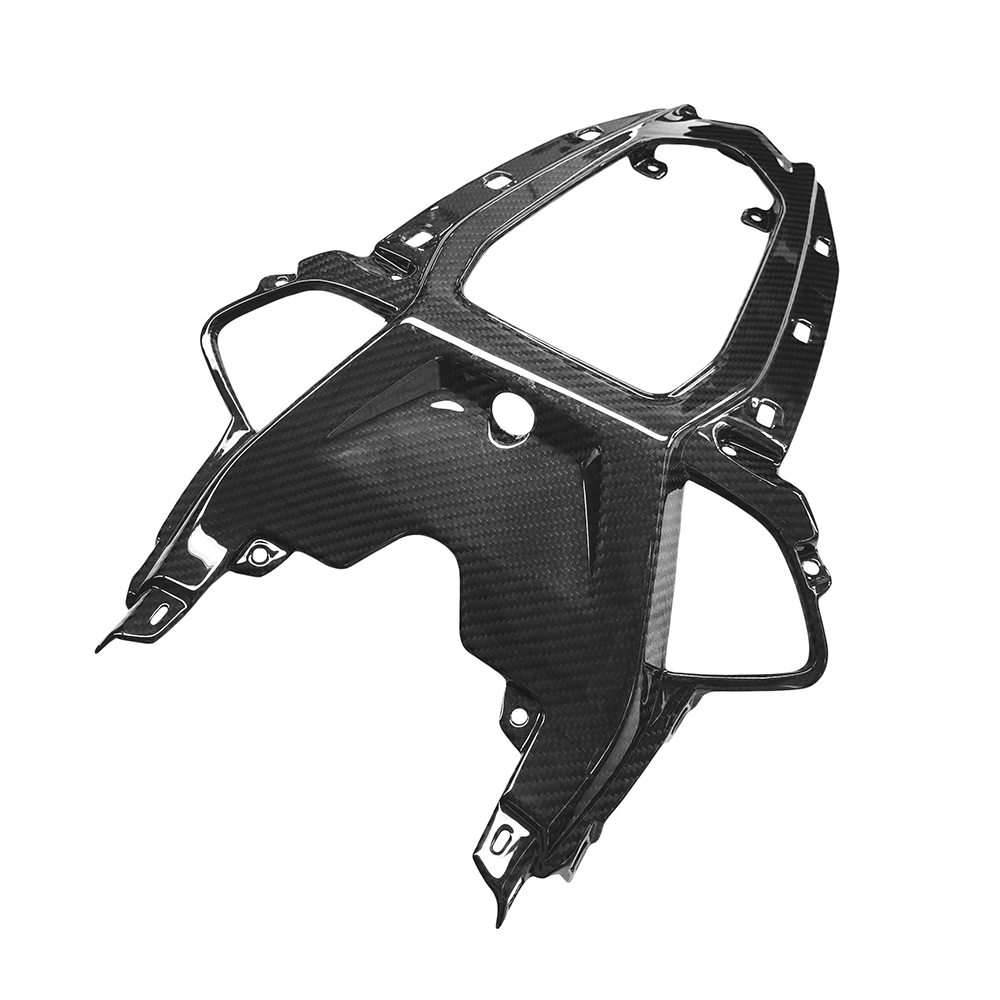
Carbon Fiber Rear Seat Panel for BMW S1000R & M1000RR – Lightweight Performance
This carbon fiber rear seat panel is engineered for the BMW S1000R and M1000RR, offering superior rigidity, reduced weight, and a premium racing finish. Produced with autoclave technology and strict QC standards, the part ensures consistent OEM-level fitment. Supreem Carbon provides wholesale supply, stable bulk production, and customized solutions for global clients.
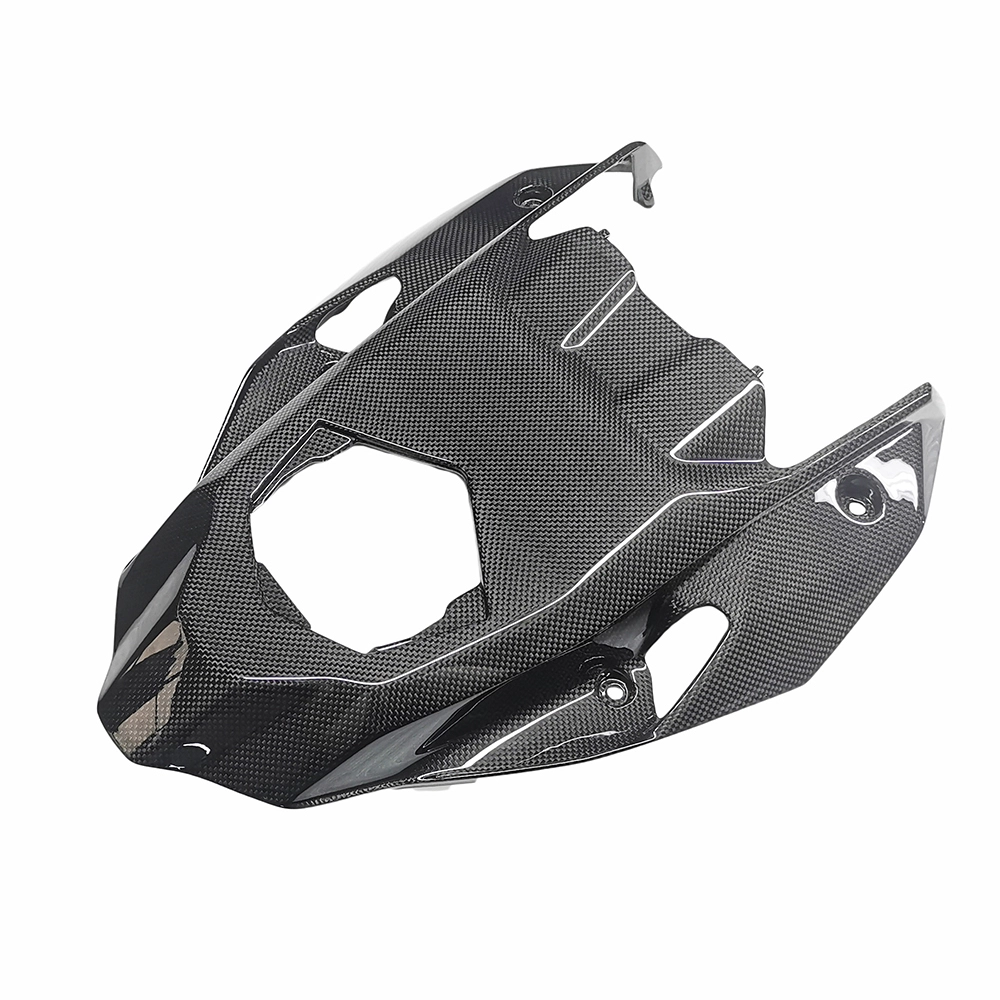
High-Performance Carbon Fiber Rear Undertail for BMW S1000R
Engineered for distributors, tuning brands, and motorcycle accessory businesses, the BMW S1000R Carbon Fiber Rear Undertail is a high-quality, durable, lightweight carbon fiber upgrade for the S1000R platform. This component is manufactured using aerospace-grade carbon fiber and precision molds to deliver superior stiffness, a seamless OEM-level fit, and a premium visual finish suitable for high-end aftermarket applications.

Supreem Carbon aiming to provide customers with high-performance carbon fiber products and quality services.
Contact Supreem Carbon
Address : Building 1 No.103, Yadi Nan 1st Road, QiaoTou Town, Dongguan City, China.
© 2024 Supreem Carbon All Rights Reserved.
Facebook
Pinterest
LinkedIn
Instagram