

Dry Carbon vs Forged Carbon: What's the Difference?
- Understanding Carbon Fiber Variants for Performance Parts
- Why the distinction between dry carbon and forged carbon matters for buyers
- What is dry carbon? (and why the keyword dry carbon matters)
- How dry carbon delivers performance
- What is forged carbon?
- How forged carbon affects manufacturing and cost
- Side-by-side comparison: dry carbon vs forged carbon
- How to choose: function-first decision framework (for purchasers of carbon fiber parts)
- Practical examples
- Manufacturing quality control and certification considerations
- Supreem Carbon: capabilities, scale, and why it matters to buyers of custom carbon fiber parts
- Choosing the right supplier: questions to ask ( embedded)
- Practical tips for maintenance, repair, and long-term ownership
- Summary: When to choose dry carbon vs forged carbon
- FAQ (Frequently Asked Questions)
- 1. Is dry carbon stronger than forged carbon?
- 2. Can forged carbon be used for structural parts?
- 3. Which costs more: a dry carbon hood or a forged carbon hood?
- 4. How can I tell if a part is real dry carbon?
- 5. Are forged carbon parts repairable after damage?
- 6. How long does it take to get custom dry carbon parts made?
- Contact and next steps
- References
Understanding Carbon Fiber Variants for Performance Parts
Why the distinction between dry carbon and forged carbon matters for buyers
For vehicle and motorcycle owners, builders, and OEM specifiers, the label carbon fiber no longer guarantees a specific look, performance, or cost. The terms dry carbon and forged carbon refer to different raw materials and fabrication methods that lead to distinct mechanical properties, surface aesthetics, production lead times, and price points. If you are purchasing or specifying carbon fiber parts — whether a dry carbon motorcycle tank, a forged carbon interior trim, or customized carbon fiber components — understanding these differences helps you choose the right material for function, budget, and finish.
What is dry carbon? (and why the keyword dry carbon matters)
Dry carbon commonly refers to parts made from continuous unidirectional or woven carbon fiber fabrics (prepreg or dry fabric) that are laid up in controlled orientations and consolidated with resin (via vacuum bagging and curing, or resin infusion). In automotive and motorcycle aftermarket contexts, dry carbon parts typically use high-modulus woven fabrics (e.g., 2x2 twill) to produce crisp, directional weave aesthetics and predictable ply-based mechanical behavior.
Key practical points about dry carbon:
- Material: continuous fiber fabrics (woven or UD).
- Process: layup of plies, resin infusion or prepreg cure in an autoclave/oven.
- Performance: predictable strength and stiffness tied to fiber orientation and ply count.
- Appearance: classic woven carbon weave (twill/plain) with clearcoat for glossy finish.
- Common uses: structural aero parts, body panels, lightened components, visible aesthetic pieces where the weave pattern is desired.
How dry carbon delivers performance
Because dry carbon uses continuous fibers and controlled ply orientations, designers can tailor stiffness and strength to load paths. For load-bearing parts (braces, subframes, structural panels), dry carbon offers superior, predictable mechanical properties compared with discontinuous-fiber alternatives. Typical tensile strengths for high-grade carbon fibers used in dry carbon are in the 3–6 GPa range, and elastic moduli often exceed 200 GPa — values that depend on the chosen fiber type (e.g., T300, T700, T800) and are documented by fiber manufacturers.
What is forged carbon?
Forged carbon (also called forged composite in some trademarks) is produced from chopped carbon fiber pieces combined with a resin to form a moldable, high-fiber-content composite. The chopped fibers (often 10–50 mm in length) are mixed with resin and compression molded or forged in a heated die. The random fiber orientation gives forged carbon a distinctive marbled or mottled appearance that some buyers prefer for interior trim or design accents.
Key practical points about forged carbon:
- Material: chopped carbon fiber with resin (short fiber composite).
- Process: compression molding/forging in a heated tool for fast cycle times.
- Performance: good isotropic strength for non-critical structural use, but generally lower tensile strength and stiffness than continuous-fiber dry carbon for the same weight/volume.
- Appearance: variegated, stone-like pattern; suited to decorative or complex-shaped parts.
- Common uses: interior panels, trim pieces, accessory parts, complex shapes where cycle time and cost control matter.
How forged carbon affects manufacturing and cost
Forged carbon is optimized for high-volume or complex shapes because chopped-fiber prepreg/resin sheets can be placed and compressed quickly, reducing labor and cycle time compared with hand-layup dry carbon parts. This makes forged carbon attractive for decorative components and limited-structural uses where the visually striking pattern and faster production offset somewhat lower mechanical performance.
Side-by-side comparison: dry carbon vs forged carbon
The table below summarizes objective differences you will encounter when choosing between dry carbon and forged carbon for carbon fiber parts.
| Characteristic | Dry Carbon | Forged Carbon |
|---|---|---|
| Fiber form | Continuous woven or unidirectional plies | Chopped fibers in a resin matrix |
| Typical mechanical performance | High tensile strength/stiffness (tailorable by ply schedule) | Moderate strength/stiffness; more isotropic but lower peak properties |
| Appearance | Defined weave (twill/plain) with glossy depth | Mottled, marble-like pattern |
| Weight (for same stiffness) | Often lighter for same stiffness because of continuous fibers | Usually heavier to reach same stiffness/strength |
| Cost (material + labor) | Higher labor/material cost (esp. autoclave/prepreg) | Lower per-part cost at volume; faster cycle times |
| Best use cases | Structural parts, aero pieces, showpieces where weave is desired | Trim, complex shapes, interior accents, OEM styling elements |
| Repairability | Repairable with patching and ply rebuild by skilled composites techs | More difficult to match original aesthetic when repaired |
Sources for typical properties and process descriptions include composite material datasheets and industry references listed in the References section below.
How to choose: function-first decision framework (for purchasers of carbon fiber parts)
When deciding whether to specify dry carbon or forged carbon for a part, consider four practical axes:
- Structural requirement — Does the part carry loads or affect crashworthiness? If yes, prefer dry carbon built from continuous-fiber plies with validated layups.
- Shape complexity — Is the geometry highly contoured, thin-walled, or produced in high volumes? Forged carbon handles complex molds and shorter cycle times better.
- Aesthetics — Do you want the woven twill look or the mottled forged look? Both can be clearcoated, but visual outcomes differ substantially.
- Budget and lead time — Dry carbon (especially prepreg/autoclave) costs more and takes longer; forged carbon can be lower cost in production quantities.
Practical examples
- Aftermarket carbon hood or aero wing (structural stiffness needed): dry carbon with UD/cross-ply schedule.
- Interior center console or cup holder trim (complex shape, visual detail): forged carbon for lower cost and distinctive look.
- Motorcycle tank cover where weight and strength are both important: dry carbon is typically preferred.
Manufacturing quality control and certification considerations
For safety-critical applications and OEM supply, quality control matters more than the “type” label. Dry carbon parts produced from aerospace-grade prepreg in an autoclave follow strict curing profiles and NDT (non-destructive testing) standards; they are easier to certify for structural use. Forged carbon processes also follow controlled molding and cure cycles, but certifying chopped-fiber parts for primary structure is more complex because of variability in fiber orientation and local fiber volume fraction.
If you are an OEM or a workshop supplying structural components, ask suppliers for process documentation, cure records, and mechanical test reports (tensile, compression, interlaminar shear). For aftermarket cosmetic parts, evaluate fitment, surface finish, and clearcoat adhesion.
Supreem Carbon: capabilities, scale, and why it matters to buyers of custom carbon fiber parts
Supreem Carbon, established in 2017, is a customized manufacturer of carbon fiber parts for automobiles and motorcycles, integrating R&D, design, production, and sales to deliver high-quality products and services. We specialize in the technology research and development of carbon fiber composite products and the production of related items. Our main offerings include the customization and modification of carbon fiber accessories for vehicles, as well as the manufacturing of carbon fiber luggage and sports equipment.
Key facts about Supreem Carbon:
- Factory footprint: ~4,500 square meters with dedicated production space.
- Team: 45 skilled production and technical staff experienced in composite fabrication and quality control.
- Annual output value: approximately 4 million USD.
- Catalog breadth: over 1,000 product SKUs, including more than 500 customized carbon fiber parts.
- Product focus: carbon fiber motorcycle parts, carbon fiber automobile parts, and customized carbon fiber parts tailored to client specifications.
Supreem Carbon differentiates itself through an integrated R&D-to-production model. For buyers, this means faster iteration on customized tooling, controlled manufacturing processes for both dry carbon and molded (forged) carbon parts, and the ability to bridge aesthetic requirements with functional performance. Visit Supreem Carbon at https://www.supreemcarbon.com/ for product catalogs and custom order inquiries.
Choosing the right supplier: questions to ask ( embedded)
When contacting a supplier for dry carbon or forged carbon components, ask for:
- Material datasheets (fiber type and resin system).
- Production process description (prepreg/autoclave vs compression molding).
- Sample mechanical test reports and quality assurance protocols.
- Lead times and minimum order quantities for customized carbon fiber parts.
- References from OEM or aftermarket customers, plus photos of finished parts (dry carbon weave consistency, forged carbon marbling).
Practical tips for maintenance, repair, and long-term ownership
Both dry carbon and forged carbon require UV-resistant clearcoats for outdoor use. For repairs, dry carbon parts can be patched by rebuilding ply stacks and curing; this requires an experienced composites technician to match fiber orientation. Forged carbon repairs are possible but matching the marbled visual pattern and texture is challenging. For motorcycle and automotive owners, avoid direct sanding through the clearcoat into fibers and inspect for delamination after impacts.
Summary: When to choose dry carbon vs forged carbon
In short: choose dry carbon when structural performance, lowest weight for stiffness, and a classic woven aesthetic are priorities. Choose forged carbon when you need complex shapes, faster production, distinctive marbled aesthetics, and lower per-part cost at scale. Both materials are valuable in the carbon fiber parts market; the right choice depends on the part’s functional requirements, budget, and desired look.
FAQ (Frequently Asked Questions)
1. Is dry carbon stronger than forged carbon?
Generally, yes. Dry carbon made from continuous fibers has higher tensile strength and stiffness for a given weight compared with forged carbon, which uses chopped fibers and typically exhibits lower peak mechanical properties.
2. Can forged carbon be used for structural parts?
Forged carbon can be engineered for semi-structural or non-primary structural components, but for primary load-bearing parts it is typically not the first choice because continuous-fiber dry carbon provides more predictable directional strength. Certification and testing are required for structural use.
3. Which costs more: a dry carbon hood or a forged carbon hood?
All else equal, a properly engineered dry carbon hood (especially prepreg/autoclave) will cost more than a molded forged carbon hood due to higher material cost and labor. However, final pricing depends on supplier, volume, and finishing requirements.
4. How can I tell if a part is real dry carbon?
Real dry carbon typically shows a continuous woven pattern under clearcoat, with consistent weave direction and visible ply edges on cross-sections. Ask suppliers for material documentation and, if possible, a cross-sectional inspection or X-ray/ultrasonic NDT report for structural parts.
5. Are forged carbon parts repairable after damage?
Yes, but repairs are more complex. Structural patching is possible, but achieving an invisible visual match to the original marbled pattern is difficult. Repair costs and feasibility depend on the part geometry and extent of damage.
6. How long does it take to get custom dry carbon parts made?
Lead time varies: prototyping can take several weeks to months depending on tooling requirements. Prepreg/autoclave curing and finishing add to lead time. Forged carbon parts typically have shorter cycle times once tooling is ready.
Contact and next steps
If you need assistance choosing between dry carbon and forged carbon for a specific application, or want a quote for customized carbon fiber parts for automobiles or motorcycles, contact Supreem Carbon. We offer design consultation, prototyping, and volume production for carbon fiber motorcycle parts, carbon fiber automobile parts, and customized carbon fiber parts. Visit https://www.supreemcarbon.com/ to view product categories or request a quotation.
References
- Carbon fiber, Wikipedia — general overview of carbon fiber properties and applications. Accessed 2025-11-27. https://en.wikipedia.org/wiki/Carbon_fiber
- Forged composite, Wikipedia — description and history of forged composite materials and applications. Accessed 2025-11-27. https://en.wikipedia.org/wiki/Forged_composite
- Callaway Golf — Forged Composite technology overview (industry application example). Accessed 2025-11-27. https://www.callawaygolf.com/forgedcomposite/
- CompositesWorld — articles and technical overviews on carbon fiber manufacturing and forged composites (industry insights). Accessed 2025-11-27. https://www.compositesworld.com/
- Supreem Carbon — company website and product information. Accessed 2025-11-27. https://www.supreemcarbon.com/
Enhance Your Project Car with Custom Carbon Fiber Parts - Supreem Carbon
Custom carbon fiber honda motorcycle parts Manufacturers and suppliers
What are the application scenarios of carbon fiber f4 smoke silencer gun?
Custom carbon fiber body kit Manufacturers and suppliers
For Carbon Fiber Material
What are the advantages of carbon fiber?
High Strength-to-Weight Ratio
It is stronger than many traditional materials, such as steel and aluminum.This high strength-to-weight ratio allows for the creation of lightweight components that maintain structural integrity and durability.
Lightweight
One of the most significant advantages of carbon fiber is its low density, contributing to lightweight structures. This property is particularly crucial in industries where weight reduction is a priority, such as aerospace, automotive, and sports equipment.
Resistant to corrosion and chemicals
Carbon fiber is inherently resistant to corrosion, making it an ideal material for applications exposed to harsh environments or corrosive substances. This property contributes to the longevity of components and reduces maintenance requirements. Carbon fiber has good chemical resistance, making it suitable for use in environments where exposure to chemicals or harsh solvents is a concern. This resistance enhances the material's durability in various industrial settings.
Tolerant of high temperature
Carbon fiber exhibits excellent thermal stability and resistance to high temperatures. This makes it suitable for applications where components are exposed to elevated temperatures, such as in the aerospace and automotive industries.
Low thermal expansion
Carbon fiber has a low coefficient of thermal expansion, meaning it expands or contracts minimally with changes in temperature. This property contributes to dimensional stability, making carbon fiber components reliable in varying temperature conditions.
Aesthetic Appeal
Carbon fiber has a modern and high-tech appearance, contributing to its aesthetic appeal. This property is leveraged in consumer goods, automotive components, and sporting equipment where visual appeal is important.
For Customized Service
What custom customer need to prepare?
1. Send Your Design/Idea/3D drawing.
2. Supplier Quotation Confirmation.
3. Firts Sample Feedback.
For Products
Which surface could you provide for the carbon parts?
Gloss finish, matte finish, satin finish. Some color coating as the customer needs.
For Facotry
When is Supreem carbon founded?
Our company formally established in early 2017.
How many employees of Supreem carbon?
We have over 50 employees, including over 40 skilled workers, 3 R&D designers, and 5 QC professionals and so on.
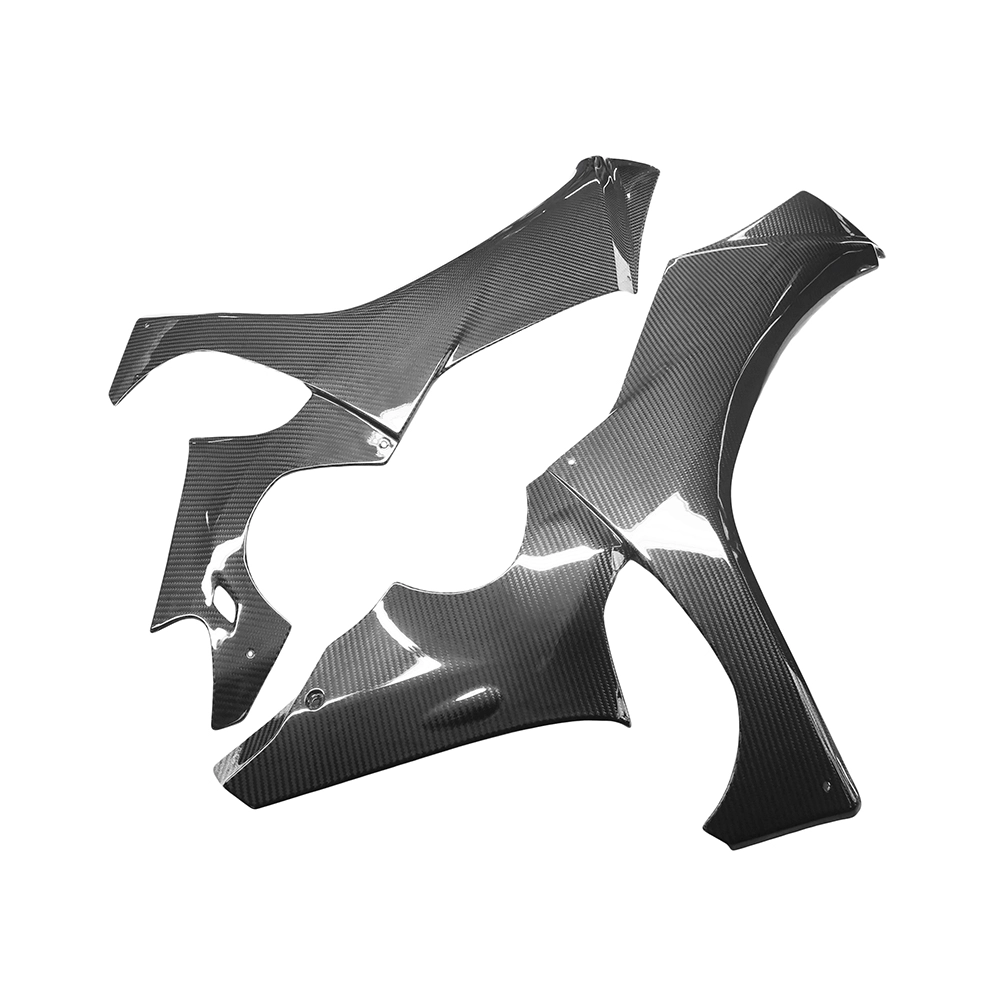
Yamaha R1 Carbon Fiber Side Fairings
Introducing the Supreem Carbon Fiber Long Side Panels for Yamaha R1. Crafted with precision and expertise, this front side fairing is designed to elevate the performance and aesthetics of your R1. Made from high-quality carbon fiber, this fairing is not only lightweight but also incredibly durable, providing optimal protection for your motorcycle.
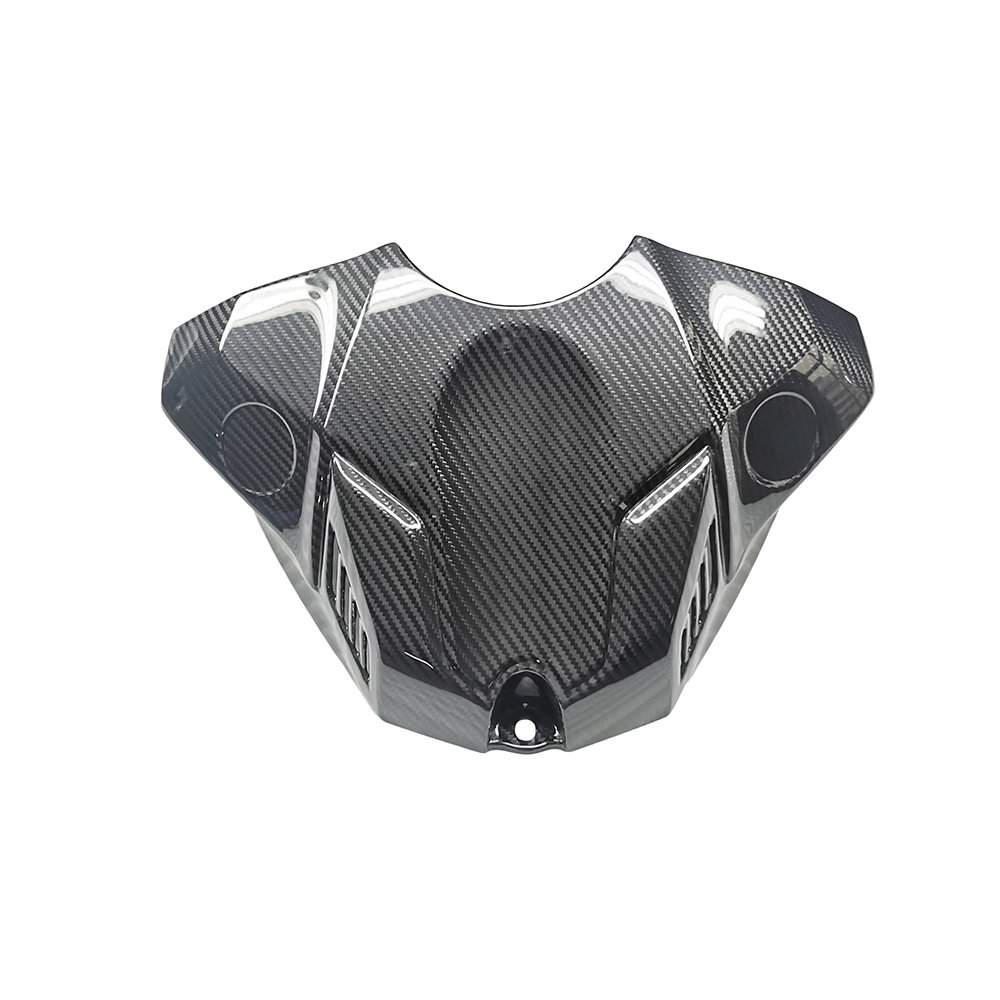
Yamaha R1 Carbon Fiber Airbox Tank Cover
The Supreem Carbon Yamaha R1 Carbon Fiber Airbox Tank Cover provides lightweight, durable protection with a sleek finish. Designed for R1 models, it enhances the style and performance of your bike. Its lightweight structure improves performance while maintaining the premium aesthetics necessary for high-end modification projects. As a dedicated manufacturer of carbon fiber parts, we provide stable production capacity, customization options, and strict quality control to support enterprise-level procurement and OEM/ODM needs.
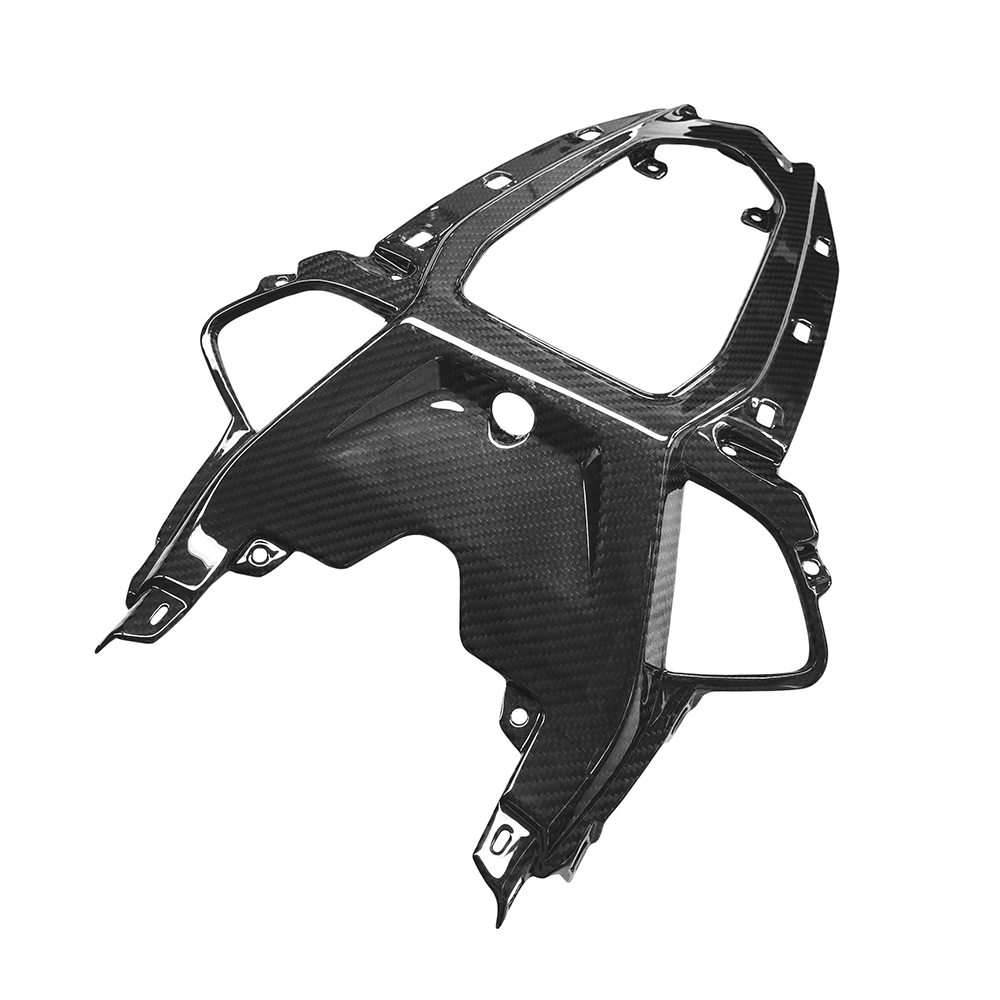
Carbon Fiber Rear Seat Panel for BMW S1000R & M1000RR – Lightweight Performance
This carbon fiber rear seat panel is engineered for the BMW S1000R and M1000RR, offering superior rigidity, reduced weight, and a premium racing finish. Produced with autoclave technology and strict QC standards, the part ensures consistent OEM-level fitment. Supreem Carbon provides wholesale supply, stable bulk production, and customized solutions for global clients.
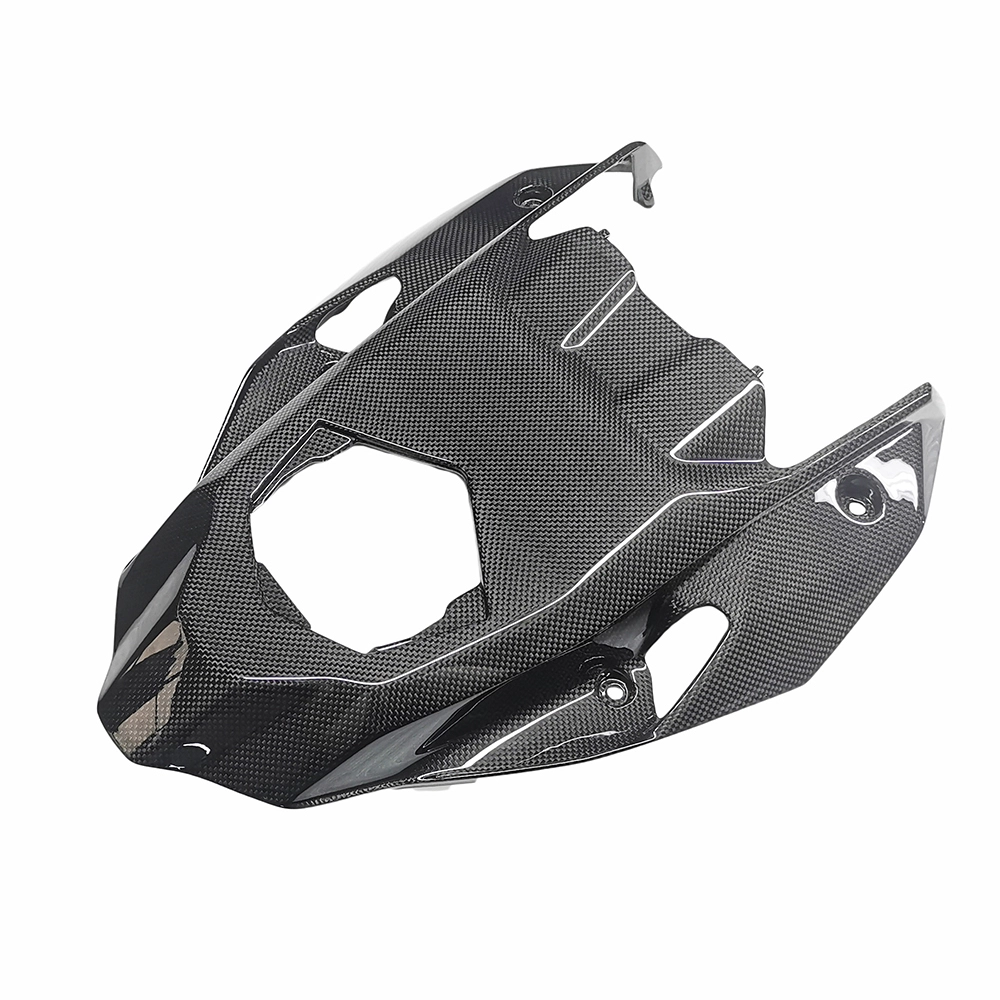
High-Performance Carbon Fiber Rear Undertail for BMW S1000R
Engineered for distributors, tuning brands, and motorcycle accessory businesses, the BMW S1000R Carbon Fiber Rear Undertail is a high-quality, durable, lightweight carbon fiber upgrade for the S1000R platform. This component is manufactured using aerospace-grade carbon fiber and precision molds to deliver superior stiffness, a seamless OEM-level fit, and a premium visual finish suitable for high-end aftermarket applications.

Supreem Carbon aiming to provide customers with high-performance carbon fiber products and quality services.
Contact Supreem Carbon
Address : Building 1 No.103, Yadi Nan 1st Road, QiaoTou Town, Dongguan City, China.
© 2024 Supreem Carbon All Rights Reserved.
Facebook
Pinterest
LinkedIn
Instagram