

Cost Comparison: Dry Carbon vs Wet Carbon Parts
- Understanding the true cost of carbon fiber parts
- Dry carbon vs wet carbon: clear definitions and why the distinction matters (dry carbon vs wet carbon)
- Material costs: comparing raw materials between dry carbon and wet carbon (buy carbon fiber parts)
- Manufacturing and labor costs: process complexity and its effect on price (carbon fiber motorcycle parts)
- Finishing, cosmetic value and perceived cost (carbon fiber automobile parts)
- Performance, weight and lifecycle cost: getting more than you pay for (dry carbon vs wet carbon performance)
- Side-by-side cost and attributes comparison table (dry carbon vs wet carbon)
- Example scenarios: when to choose dry carbon or wet carbon (custom carbon fiber parts)
- How economies of scale change the equation (carbon fiber parts manufacturing cost)
- Quality assurance, warranty and rework costs (buy carbon fiber parts vs make)
- Supreem Carbon: capabilities, scale and why we matter in the dry vs wet carbon decision
- Supreem Carbon company profile and core offerings (Supreem Carbon carbon fiber motorcycle parts)
- Why Supreem Carbon is competitive (custom carbon fiber parts manufacturer advantage)
- How Supreem Carbon aligns process choice to customer needs (dry carbon vs wet carbon consultancy)
- Practical decision matrix and purchasing checklist (buying carbon fiber parts)
- Checklist before you buy or produce carbon fiber parts
- Conclusion: choosing the right carbon path for your budget and needs
- FAQ
- 1. Is dry carbon always stronger than wet carbon?
- 2. Why do prepreg parts cost more?
- 3. Can wet-layup parts be made to look as good as dry carbon?
- 4. Which process is faster for prototyping?
- 5. How should I choose a supplier for carbon fiber parts?
- References and further reading
Understanding the true cost of carbon fiber parts
Dry carbon vs wet carbon: clear definitions and why the distinction matters (dry carbon vs wet carbon)
Before comparing costs, it is essential to define terms used by OEMs, tuners, and aftermarket suppliers. Dry carbon in common automotive/motorcycle usage usually refers to parts made from prepreg (pre-impregnated) carbon fiber that are cured under controlled heat and pressure (often in an autoclave) or using out-of-autoclave (OOA) cured prepreg systems. Wet carbon refers to parts made by wet layup, vacuum-bagging, or resin infusion (RTM or VARTM), where dry fabric is wetted with resin during layup and cured without autoclave pressure.These differences matter because the process chosen controls material consolidation, void content, achievable fiber volume fraction, repeatability, and surface finish — all of which directly affect weight, strength, durability, and therefore lifecycle value and cost-per-performance of the part. (See sources: Prepreg, Resin Transfer Molding, Vacuum bagging.)
Material costs: comparing raw materials between dry carbon and wet carbon (buy carbon fiber parts)
Material inputs differ substantially:- Dry carbon (prepreg) uses pre-impregnated fabrics or unidirectional tapes where resin content and distribution are controlled. Prepreg raw material prices include resin-in-fabric manufacturing overhead and refrigeration/logistics for storage.- Wet carbon uses dry fabrics and bulk resin systems (epoxy, polyester, or vinyl ester) mixed at point-of-use.Relative cost implications:- Prepreg (dry carbon) materials are more expensive per square meter/kg due to added manufacturing and handling costs, cold-chain storage, and product qualification. They also typically produce higher fiber volume fraction (better strength-to-weight) and lower void content.- Wet layup materials are cheaper up-front but often require more resin per part and more finishing work to achieve a high-gloss look.(See reference list for supplier and material background.)
Manufacturing and labor costs: process complexity and its effect on price (carbon fiber motorcycle parts)
Labor and equipment are where many of the cost differences appear:- Dry carbon (prepreg/autoclave): requires controlled layup environments, vacuum-bagging, autoclave or OOA ovens, and experienced technologists. Cycle times can be long (autoclave cure times plus prep), tooling must withstand elevated temperatures and pressures, and scrap risk is high for small-volume pilots. This drives up per-part cost especially at low volumes.- Wet carbon (hand layup or infusion): can be performed with simpler tooling and lower-capex equipment. Vacuum infusion reduces consumable waste and improves repeatability but still generally requires less capital than an autoclave shop.As a rule of thumb, production with prepreg/autoclave often incurs higher fixed costs (tooling & equipment amortization) and higher per-part labor costs for finishing and inspection—making it more expensive at prototype and low-volume production, but cost-effective at higher volumes where repeatability and high performance are required.
Finishing, cosmetic value and perceived cost (carbon fiber automobile parts)
Surface finish expectations heavily affect final price. High-end dry carbon parts can be molded to a near-perfect surface (with clearcoat over the weave) requiring minimal post-work, whereas wet layup parts often require filling, sanding, and multiple clearcoats to reach a similar level of gloss. For aftermarket customers who pay for showroom-quality exposed weaves, finishing labor and quality control can add significantly to wet-carbon part costs, narrowing the material-based price gap.
Performance, weight and lifecycle cost: getting more than you pay for (dry carbon vs wet carbon performance)
Cost is not just purchase price; it is cost-per-performance over the product life. Dry carbon parts typically deliver:- Higher strength-to-weight ratio- Better fatigue and environmental resistance (lower moisture uptake when prepreg/resin systems are optimized)- Higher consistency and lower scrap rates at scaleThis can mean lower lifecycle costs for vehicles where weight and stiffness are critical (racing, performance motorcycles, high-end sports cars). Wet carbon remains a strong choice for non-structural trim, visual components, and where budgets are constrained.
Side-by-side cost and attributes comparison table (dry carbon vs wet carbon)
| Attribute | Dry Carbon (Prepreg / Autoclave) | Wet Carbon (Wet layup / Infusion) |
|---|---|---|
| Material cost (per unit area / kg) | Higher — prepreg fabrics and handling High Quality | Lower — dry fabric + bulk resin cheaper |
| Manufacturing equipment & tooling | High (autoclave/OOA ovens, precise tooling) | Lower (simple molds, vacuum pumps; RTM requires tooling investment) |
| Labor & processing time | Skilled labor, controlled environment, longer cycle times | Less specialized (hand layup) to moderately skilled (infusion) |
| Surface finish & cosmetic quality | Superior as-molded finish; less post-work | Often requires filling/sanding/clearcoating for show-quality |
| Mechanical properties | Higher fiber volume fraction, lower voids — better strength/weight | Lower fiber volume fraction typically; acceptable for non-critical parts |
| Typical best use | Structural, performance-critical or High Quality cosmetic parts | Trim, covers, aftermarket visuals, cost-sensitive applications |
| Relative cost (typical range) | 2–5× higher than wet carbon for equivalent external geometry (varies by volume and finish) | Lower initial purchase price; finishing can raise final cost |
Notes: Relative cost multipliers depend on production volume, part complexity, and finish level. The 2–5× factor is a practical rule often observed in automotive/motorcycle aftermarket contexts when comparing high-quality prepreg parts to basic wet-layup parts; specific quotes should be obtained for an apples-to-apples comparison.
Example scenarios: when to choose dry carbon or wet carbon (custom carbon fiber parts)
- Choose dry carbon (prepreg) when: - The part is structural or contributes to vehicle performance (chassis components, structural braces) - Weight savings and stiffness are prioritized (race bikes, track cars) - High repeatability and low void content are required for certification or long-term durability- Choose wet carbon (wet layup/infusion) when: - The part is primarily cosmetic (body panels, trim, luggage covers) - Budget is constrained and finish quality can be achieved affordably - Rapid prototyping or small-batch customization is needed and autoclave access is unavailable
How economies of scale change the equation (carbon fiber parts manufacturing cost)
At high volumes, the fixed costs of tooling and autoclave-capable processes can be amortized across many parts, reducing per-piece cost penalties for prepreg. Conversely, at low volumes or one-off builds, wet carbon typically remains the lowest-cost route for delivering a visually acceptable product. This is why many OEMs use prepreg for high-volume performance parts and aftermarket shops use infusion or hand-layup for bespoke items.
Quality assurance, warranty and rework costs (buy carbon fiber parts vs make)
Higher initial investment in dry carbon manufacturing tends to reduce out-of-box defects and long-term warranty claims due to better process control. Wet layup parts can have higher variability and therefore higher costs for inspection and rework. Buyers should consider total cost of ownership rather than sticker price alone, especially where safety or longevity is critical.
Supreem Carbon: capabilities, scale and why we matter in the dry vs wet carbon decision
Supreem Carbon company profile and core offerings (Supreem Carbon carbon fiber motorcycle parts)
Supreem Carbon, established in 2017, is a customized manufacturer of carbon fiber parts for automobiles and motorcycles, integrating R&D, design, production, and sales to deliver high-quality products and services. We specialize in carbon fiber composite technology R&D and production, providing customization and modification of carbon fiber accessories for vehicles, as well as carbon fiber luggage and sports equipment.Our factory covers approximately 4,500 square meters and employs 45 skilled production and technical staff, achieving an annual output value of around 4 million dollars. Currently, we offer over 1,000 product types, including more than 500 customized carbon fiber parts. Our core product categories include carbon fiber motorcycle parts, carbon fiber automobile parts, and fully customized carbon fiber solutions for OEM and aftermarket customers. (Website: https://www.supreemcarbon.com/)
Why Supreem Carbon is competitive (custom carbon fiber parts manufacturer advantage)
- Integrated R&D and production shortens design-to-part timelines and reduces iteration costs for custom projects.
- Experienced team (45 technical staff) supports both wet-layup and prepreg techniques, allowing customers to select the best cost-performance balance.
- Mid-sized factory scale (4,500 m2) provides flexibility: small-volume customization with controlled costs, and scalable production to reduce per-piece costs as volumes increase.
- Wide product range (1,000+ SKUs) and 500+ customizable parts demonstrate breadth for automotive and motorcycle markets.
These capabilities mean Supreem Carbon can advise whether a given part should be built as dry carbon (when performance and finish justify the High Quality) or wet carbon (when budget and turnaround matter), and quote realistic total-cost-of-ownership for either route.
How Supreem Carbon aligns process choice to customer needs (dry carbon vs wet carbon consultancy)
We recommend the following collaborative approach:1) Functional audit: determine structural, weight, and regulatory requirements.2) Target costing: set acceptable purchase and lifecycle cost bands.3) Prototype route: use wet layup or infusion for rapid validation; move to prepreg/autoclave for final production if required.4) Scale plan: model tooling amortization to show break-even volume for switching processes.This methodology helps clients minimize up-front spend while ensuring the final production route meets durability and performance targets.
Practical decision matrix and purchasing checklist (buying carbon fiber parts)
Checklist before you buy or produce carbon fiber parts
- Define function: cosmetic, semi-structural, or structural.
- Set acceptable weight targets and stiffness requirements.
- Decide on surface expectations: raw weave, painted, or OEM-fit clearcoated finish.
- Estimate annual volume and calculate tooling amortization per unit.
- Request samples and NDT data (void content, fiber volume fraction) for safety-critical parts.
- Factor in delivery lead time: prepreg/autoclave workflows may be longer due to cure cycles and scheduling.
Conclusion: choosing the right carbon path for your budget and needs
There is no universal answer to dry carbon vs wet carbon — only the right choice for an individual application. Dry carbon (prepreg/autoclave) offers superior mechanical properties and finish at a High Quality and tends to be the correct choice for performance and structural parts. Wet carbon (wet layup or infusion) offers lower up-front cost and greater flexibility for cosmetic parts, prototypes, and small-volume projects. Consider total cost of ownership and be explicit about finish and lifecycle expectations when requesting quotes.For businesses and individuals seeking partner manufacturers who can both advise and execute across the wet-to-dry spectrum, Supreem Carbon provides integrated R&D, production flexibility, and an established product portfolio to help align performance targets with budgets. Contact Supreem Carbon to review your parts, get sample quotes, and decide whether wet or dry carbon is right for your project: https://www.supreemcarbon.com/.
FAQ
1. Is dry carbon always stronger than wet carbon?
Not always, but generally yes: prepreg/autoclave parts typically attain higher fiber volume fraction and lower void content, which yields better strength-to-weight and fatigue performance for the same geometry. However, for non-structural parts, wet carbon can be fully adequate.
2. Why do prepreg parts cost more?
Prepreg materials and processes involve higher raw material costs, cold-chain logistics, controlled cure environments (autoclaves/OOA ovens), specialized tooling, and skilled labor. These factors increase both fixed and variable costs versus wet-layup methods.
3. Can wet-layup parts be made to look as good as dry carbon?
Cosmetically, yes—but it often requires additional finishing steps (filling, sanding, multiple clearcoats) and skilled labor. These finishing costs can narrow the price gap between wet and dry carbon for some parts.
4. Which process is faster for prototyping?
Wet layup or vacuum infusion is typically faster and cheaper for prototypes because tooling is simpler and there is no autoclave scheduling. Prepreg routes are more common for final production where performance and repeatability are essential.
5. How should I choose a supplier for carbon fiber parts?
Look for integrated capabilities (design, tooling, production), experience in your application (automotive/motorcycle), process flexibility (wet & dry), documented QA/QC processes, sample parts or test data, and transparent costing that includes tooling amortization and finishing. Suppliers like Supreem Carbon offer both the technical know-how and manufacturing scale to advise on cost-effective process choices.
Contact Supreem Carbon to discuss your specific part requirements, request quotes, or view product samples: https://www.supreemcarbon.com/
References and further reading
- Prepreg — Wikipedia. https://en.wikipedia.org/wiki/Prepreg (accessed 2025-12-17).
- Carbon fiber — Wikipedia. https://en.wikipedia.org/wiki/Carbon_fiber (accessed 2025-12-17).
- Resin transfer molding — Wikipedia. https://en.wikipedia.org/wiki/Resin_transfer_molding (accessed 2025-12-17).
- Hexcel — Prepreg product information. https://www.hexcel.com/products/prepregs (accessed 2025-12-17).
- Goodfellow — Carbon fibre overview. https://www.goodfellow.com/E/Carbon-fibre. (accessed 2025-12-17).
- Supreem Carbon corporate site — company profile and product offerings. https://www.supreemcarbon.com/ (accessed 2025-12-17).
What are the application scenarios of carbon fiber automotive?
Custom carbon fiber parts Manufacturers and suppliers
Customize Your BMW Motorcycle with Premium Carbon Fiber Parts from Supreem Carbon
Custom carbon fiber for cars Manufacturers and suppliers
For Customized Service
What is the customization process of carbon fiber products?
1. Customer provide 3D drawing, design requirement or idea
2. Technician evaluate project feasibility and provide a quotation
3. Project confirmation and arrange sample production
4. Delivery and customer feedback
5. Big scale orders production
What custom customer need to prepare?
1. Send Your Design/Idea/3D drawing.
2. Supplier Quotation Confirmation.
3. Firts Sample Feedback.
For Order Delivery
How to choose the mode of transportation?
We use official shipment like Fedex,UPS,DHL and so on. Also customer can arrange delivery by themselves.
For Products
What is main products for factory?
Supreem carbon mainly produce carbon fiber custom products for automobile and motorcycle accessaries, including the design, develop and manufacturing of appearance parts, interior parts, functional parts, etc. Other carbon fiber custom goods also can produce for you.
Which surface could you provide for the carbon parts?
Gloss finish, matte finish, satin finish. Some color coating as the customer needs.
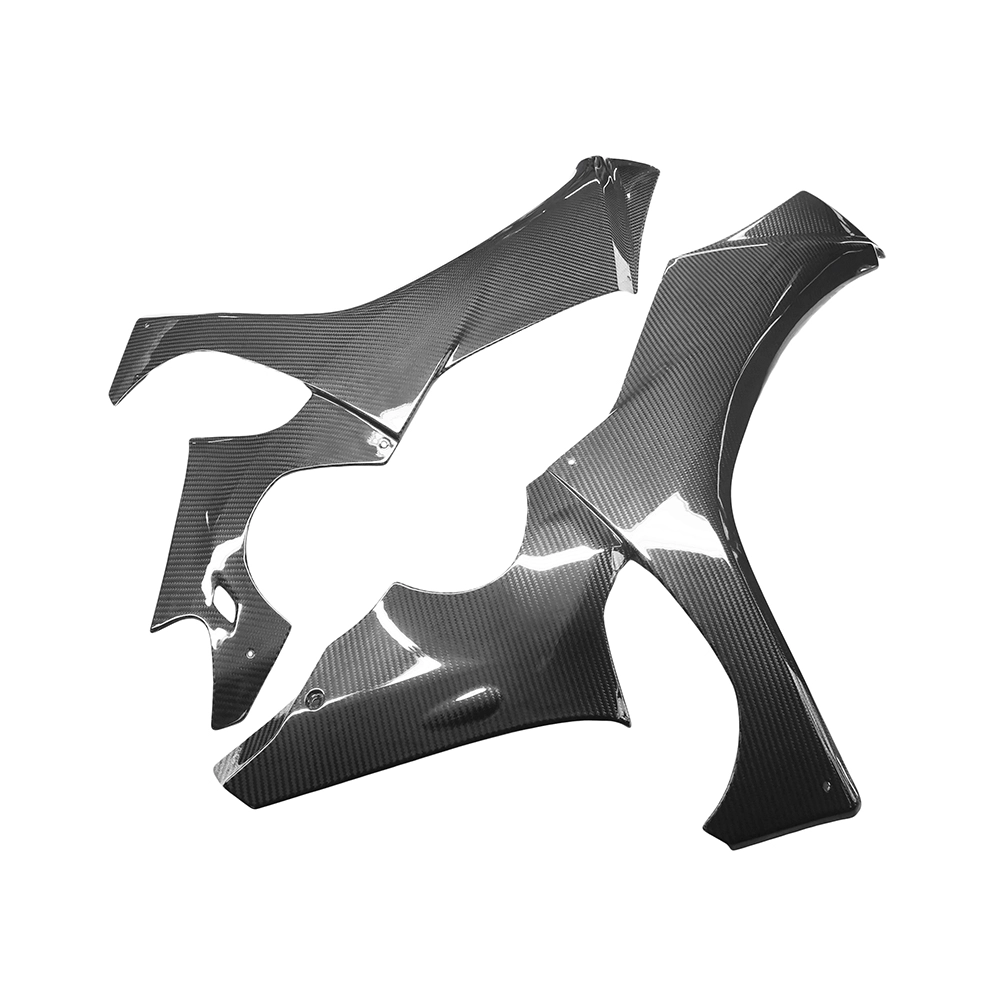
Yamaha R1 Carbon Fiber Side Fairings
Introducing the Supreem Carbon Fiber Long Side Panels for Yamaha R1. Crafted with precision and expertise, this front side fairing is designed to elevate the performance and aesthetics of your R1. Made from high-quality carbon fiber, this fairing is not only lightweight but also incredibly durable, providing optimal protection for your motorcycle.
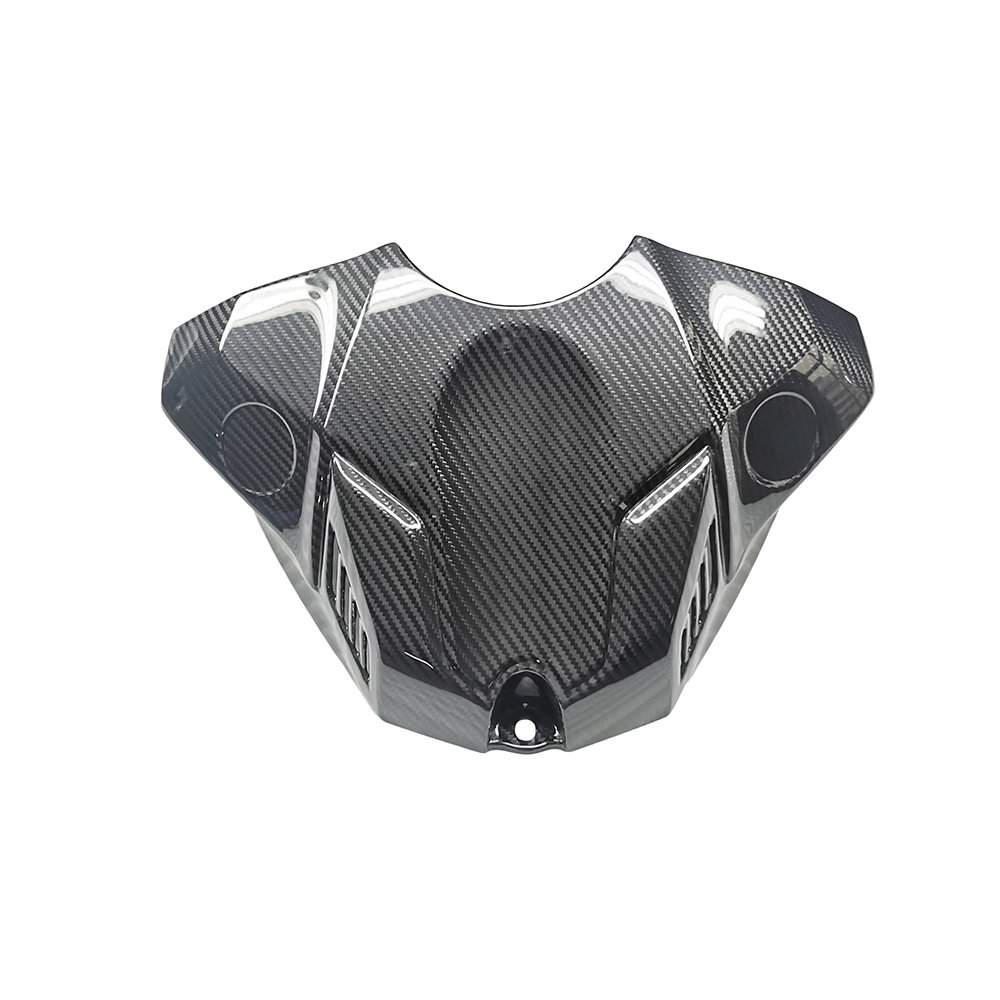
Yamaha R1 Carbon Fiber Airbox Tank Cover
The Supreem Carbon Yamaha R1 Carbon Fiber Airbox Tank Cover provides lightweight, durable protection with a sleek finish. Designed for R1 models, it enhances the style and performance of your bike. Its lightweight structure improves performance while maintaining the premium aesthetics necessary for high-end modification projects. As a dedicated manufacturer of carbon fiber parts, we provide stable production capacity, customization options, and strict quality control to support enterprise-level procurement and OEM/ODM needs.
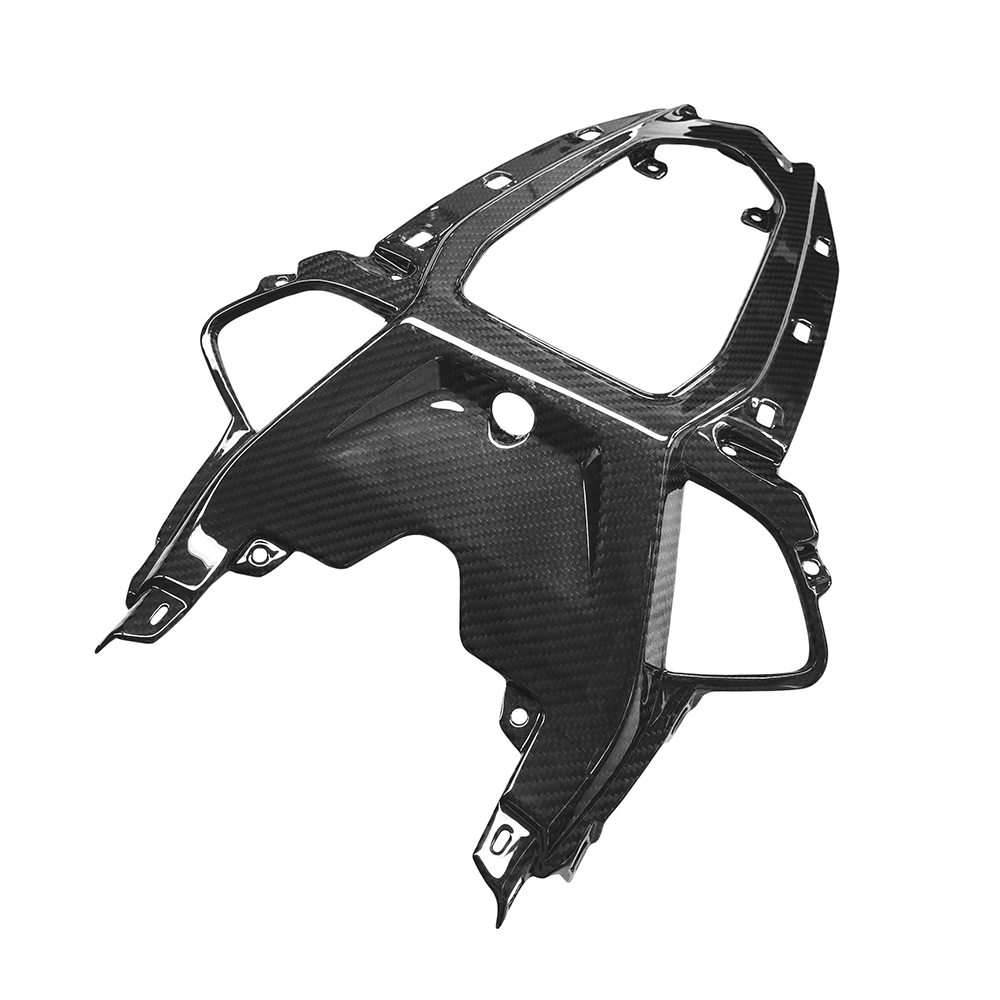
Carbon Fiber Rear Seat Panel for BMW S1000R & M1000RR – Lightweight Performance
This carbon fiber rear seat panel is engineered for the BMW S1000R and M1000RR, offering superior rigidity, reduced weight, and a premium racing finish. Produced with autoclave technology and strict QC standards, the part ensures consistent OEM-level fitment. Supreem Carbon provides wholesale supply, stable bulk production, and customized solutions for global clients.
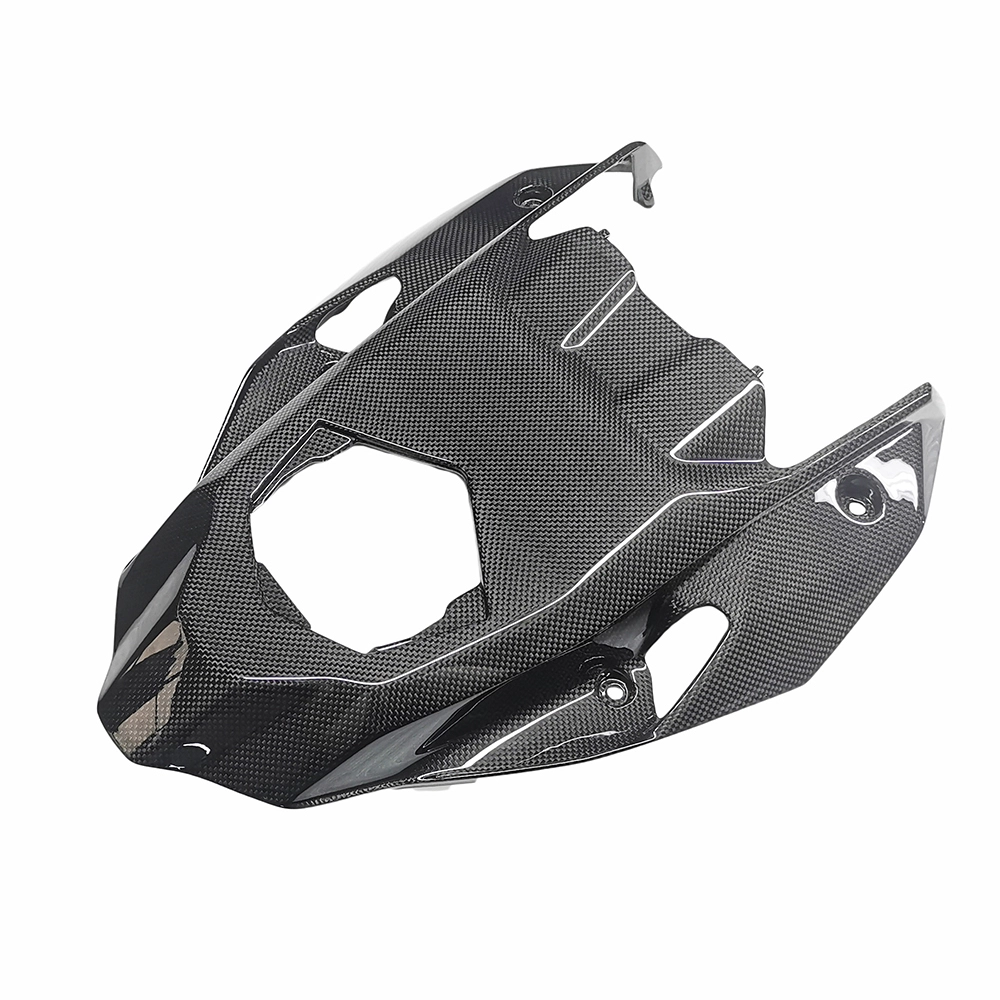
High-Performance Carbon Fiber Rear Undertail for BMW S1000R
Engineered for distributors, tuning brands, and motorcycle accessory businesses, the BMW S1000R Carbon Fiber Rear Undertail is a high-quality, durable, lightweight carbon fiber upgrade for the S1000R platform. This component is manufactured using aerospace-grade carbon fiber and precision molds to deliver superior stiffness, a seamless OEM-level fit, and a premium visual finish suitable for high-end aftermarket applications.

Supreem Carbon aiming to provide customers with high-performance carbon fiber products and quality services.
Contact Supreem Carbon
Address : Building 1 No.103, Yadi Nan 1st Road, QiaoTou Town, Dongguan City, China.
© 2024 Supreem Carbon All Rights Reserved.
Facebook
Pinterest
LinkedIn
Instagram