

Dry vs Wet Carbon: Strength, Weight and Durability
- Understanding Carbon Fiber Manufacturing Methods
- Why the choice between dry carbon vs wet carbon matters for parts
- How dry carbon and wet carbon are made (manufacturing overview)
- Process differences and what they mean for part properties
- Mechanical comparison: strength, stiffness, and weight
- What tests and metrics to consider when comparing dry carbon vs wet carbon
- Durability and environmental performance
- How environmental exposure and damage tolerance differ between methods
- Cost, lead times and scalability
- Which method is right for prototype, low-volume or mass production?
- Appearance and finishing: aesthetic vs structural carbon
- When to choose visible dry carbon finishes vs functional wet carbon approaches
- Testing, certification and acceptance criteria for automotive parts
- Standards and tests to demand when evaluating suppliers
- Practical selection guide: which method to pick by application
- Recommendations for common automotive and motorcycle parts
- Case study summary: typical observed differences in production
- Example metrics from industry practice
- Introducing Supreem Carbon: capabilities and why it matters to buyers
- Supreem Carbon overview and why we stand out in dry carbon vs wet carbon selection
- Decision checklist: questions to ask suppliers about dry carbon vs wet carbon
- Practical procurement and engineering questions
- Frequently Asked Questions (FAQ)
- 1. What is the main practical difference between dry carbon vs wet carbon?
- 2. Are dry carbon parts always stronger than wet-lay parts?
- 3. Can wet-lay parts be made to look like high-quality dry carbon?
- 4. How should I test a supplier’s parts before large orders?
- 5. For a motorcycle aftermarket fender, which method is recommended?
- Contact and next steps
- Get expert help selecting dry carbon vs wet carbon parts
- References and further reading
Understanding Carbon Fiber Manufacturing Methods
Why the choice between dry carbon vs wet carbon matters for parts
The phrase dry carbon vs wet carbon describes two broad families of carbon-fiber composite manufacturing: dry/prepreg/autoclave or vacuum-assisted resin transfer (often called dry processes) and wet lay-up/hand lay-up where fiber is manually saturated with resin. For engineers and buyers of carbon fiber parts—especially in automotive and motorcycle markets—this decision directly affects strength-to-weight, surface finish, long-term durability, cost and repairability.
How dry carbon and wet carbon are made (manufacturing overview)
Process differences and what they mean for part properties
Dry carbon commonly refers to prepreg (pre-impregnated fiber fabrics) cured under controlled heat and pressure—often in an autoclave—or to dry fiber placed in a mold followed by resin infusion (e.g., vacuum-assisted resin transfer molding, VARTM). Wet carbon refers to traditional hand lay-up where resin is applied by brush or roller directly to dry fabric in the mold and cured at ambient or elevated temperature without high compaction pressure.
- Dry/prepreg + autoclave: high fiber volume fraction, low void content, excellent consolidation and consistent resin distribution.
- Resin infusion (a hybrid dry approach): uses dry fiber with controlled infusion of resin; can achieve good FVF and low voids without autoclave if well executed.
- Wet lay-up (hand lay-up): more operator-dependent; typically lower fiber volume fraction and higher voids; lower tooling and equipment cost.
Mechanical comparison: strength, stiffness, and weight
What tests and metrics to consider when comparing dry carbon vs wet carbon
Key measurable metrics are tensile strength, compressive strength, flexural modulus (stiffness), and specific strength (strength-to-weight). For carbon composites, these are strongly correlated to fiber volume fraction (FVF), fiber alignment, void content and degree of resin-rich areas. Typical ranges observed in industry practice are summarized in the table below.
| Property | Dry Carbon (Prepreg / Infused) | Wet Carbon (Hand Lay-up) |
|---|---|---|
| Typical fiber volume fraction (FVF) | 55–65% (prepreg/autoclave) / 50–60% (infusion) | 35–55% |
| Void content | <1–2% (autoclave/prepreg) / 1–3% (well-controlled infusion) | 2–6% or higher (operator dependent) |
| Relative tensile strength (fiber-dominated direction) | High (closer to theoretical fiber capability) | Lower (more resin-rich zones reduce effectiveness) |
| Surface finish | Mirror-like, consistent (ideal for visible parts) | Often requires filler/clearcoat to match appearance |
| Typical cost | Higher (materials, prepreg storage, autoclave) | Lower initial tooling and material cost |
Numbers above are industry-typical ranges; actual performance depends on fiber type, laminate architecture and process control. Higher fiber volume fraction and lower voids directly increase specific strength and stiffness, which is why many high-performance OEM parts favor prepreg/autoclave or controlled infusion methods.
Durability and environmental performance
How environmental exposure and damage tolerance differ between methods
Durability involves resistance to impact, fatigue life, moisture ingress and UV exposure. Because dry carbon parts usually have better consolidation and lower voids, they tend to exhibit superior fatigue behavior and lower water uptake over time. Wet-lay parts with resin-rich regions and higher voids can be more susceptible to moisture ingress and delamination initiation under cyclic loading.
That said, proper material selection (resin chemistry with good hydrolytic resistance), sealing and coating can mitigate many durability concerns for wet-lay parts intended for exterior automotive or motorcycle use.
Cost, lead times and scalability
Which method is right for prototype, low-volume or mass production?
Hand lay-up/wet carbon is attractive for prototypes and low-volume custom parts because tooling and process capital are low and lead times can be short. Dry carbon via prepreg and autoclave demands greater upfront investment: heated storage/freezers for prepreg, autoclaves, and controlled curing ovens. However, for medium-to-high volume production, processes such as resin infusion, RTM (resin transfer molding) and automated fiber placement can scale economically and close the cost gap while maintaining high quality.
Appearance and finishing: aesthetic vs structural carbon
When to choose visible dry carbon finishes vs functional wet carbon approaches
Visible carbon parts (exposed twill/uni surfaces) are commonly made using dry prepreg or carefully controlled infusion to achieve a glossy, defect-free finish that requires minimal filler. Wet-lay parts often need additional gelcoat, fairing and clear coat to achieve showroom-quality surfaces. For body panels and trim, dry carbon is frequently chosen when aesthetics and High Quality perception are priorities.
Testing, certification and acceptance criteria for automotive parts
Standards and tests to demand when evaluating suppliers
When procuring carbon parts for road vehicles or motorcycles, specify measurable acceptance criteria: fiber volume fraction (ASTM D3171), void content (micrographic methods, ASTM E2109/ASTM D2549), tensile/compressive/flexural tests (ASTM D3039, D3410, D790), and fatigue (ASTM D7791 or equivalent). For structural components, require batch traceability, material certificates and non-destructive inspection such as ultrasonic C-scan to detect delaminations or porosity issues.
Practical selection guide: which method to pick by application
Recommendations for common automotive and motorcycle parts
- Exterior aesthetic trim (mirror finish, high gloss): dry prepreg or well-controlled infusion.
- Structural chassis components or load-bearing brackets: dry prepreg/autoclave or RTM with tight FVF and low voids.
- Aftermarket custom panels and luggage: infusion or high-quality wet-lay with post-processing depending on budget.
- Large-format parts where autoclave size is limited: infusion with optimized tooling and vacuum bagging.
Case study summary: typical observed differences in production
Example metrics from industry practice
In field comparisons between an autoclave-cured prepreg front fender and a comparable hand lay-up part, OEM-level prepreg parts commonly demonstrate:
- 10–25% higher tensile and flexural strength for the same areal weight.
- 10–20% lower weight for equivalent stiffness due to higher FVF.
- Significantly better surface consistency and lower scrap rates in controlled processes.
These figures are indicative; actual values should be verified on test coupons from the chosen supplier.
Introducing Supreem Carbon: capabilities and why it matters to buyers
Supreem Carbon overview and why we stand out in dry carbon vs wet carbon selection
Supreem Carbon, established in 2017, is a customized manufacturer of carbon fiber parts for automobiles and motorcycles, integrating R&D, design, production, and sales to deliver high-quality products and services. We specialize in the technology research and development of carbon fiber composite products and the production of related items. Our main offerings include the customization and modification of carbon fiber accessories for vehicles, as well as the manufacturing of carbon fiber luggage and sports equipment.
Our factory spans approximately 4,500 square meters and employs 45 skilled production and technical staff, achieving an annual output value of around 4 million dollars. Currently, we offer over 1,000 types of products, including more than 500 customized carbon fiber parts. Our vision is to become the world's leading carbon fiber products manufacturer. Learn more at https://www.supreemcarbon.com/.
Why consider Supreem Carbon when evaluating dry carbon vs wet carbon for your project?
- Broad process capability: from high-quality prepreg and controlled infusion to economical wet-lay for prototypes and low-volume runs.
- Custom engineering and R&D: ability to optimize laminate schedules and resin selection for application-specific strength, weight and durability targets.
- In-house quality and traceability: production staff with composite experience and consistent inspection practices to meet automotive expectations.
- Product breadth: carbon fiber motorcycle parts, carbon fiber automobile parts, and customized carbon fiber parts—covering both visible aesthetic pieces and functional structural components.
Decision checklist: questions to ask suppliers about dry carbon vs wet carbon
Practical procurement and engineering questions
- What fiber types and resin systems do you use and can you provide material certificates?
- Can you provide measured FVF and void content for representative production coupons?
- What NDT methods do you apply (ultrasonic C-scan, thermography) and can you share inspection records?
- What are typical lead times and costs for prototype vs production runs?
- Do you offer engineering support to optimize laminate design for weight-critical or crash-critical parts?
Frequently Asked Questions (FAQ)
1. What is the main practical difference between dry carbon vs wet carbon?
Dry carbon (prepreg/infused) yields higher fiber volume fraction, lower voids and superior mechanical properties and surface finish. Wet carbon (hand lay-up) is more economical and flexible for low-volume work but typically has lower performance and requires more finishing.
2. Are dry carbon parts always stronger than wet-lay parts?
Generally yes for comparable layups and areal weights, because better consolidation and lower voids in dry processes translate to higher specific strength. However, proper laminate design and resin selection can make wet parts adequate for many non-structural uses.
3. Can wet-lay parts be made to look like high-quality dry carbon?
With skilled finishing—gelcoat, sanding, filler and a high-quality clearcoat—wet-lay parts can visually approximate prepreg surfaces, but achieving the same mirror finish and consistency increases labor and cost.
4. How should I test a supplier’s parts before large orders?
Request material certificates, test coupons and NDT inspection data. Conduct representative mechanical testing (ASTM coupons) and perform dimensional/fit checks. For structural parts, insist on fatigue testing and batch traceability.
5. For a motorcycle aftermarket fender, which method is recommended?
If the fender is an exterior showpiece where weight and finish matter, choose dry prepreg or quality infusion. For low-cost replacement or prototype, wet-lay may suffice, but expect additional finishing work.
Contact and next steps
Get expert help selecting dry carbon vs wet carbon parts
If you need help specifying parts, optimizing laminate schedules or comparing quotes from suppliers, Supreem Carbon provides engineering consultation, prototyping and production services. Visit our website at https://www.supreemcarbon.com/ to view catalogs or request a quote. For direct inquiries, use the contact form on the site or request sample coupons and production references before committing to large production runs.
References and further reading
- Prepreg - Wikipedia, https://en.wikipedia.org/wiki/Prepreg (accessed 2025-12-22)
- Vacuum bagging and infusion techniques - Wikipedia, https://en.wikipedia.org/wiki/Vacuum_bagging (accessed 2025-12-22)
- CompositesWorld articles on voids, autoclave benefits and infusion practices, https://www.compositesworld.com/articles (search relevant articles) (accessed 2025-12-22)
- ASTM standards for composite testing (example: ASTM D3171 for FVF measurement), https://www.astm.org/Standards/D3171.htm (accessed 2025-12-22)
- General carbon fiber information - Wikipedia, https://en.wikipedia.org/wiki/Carbon_fiber (accessed 2025-12-22)
Data and numeric ranges quoted in this article reflect consolidated industry practice and literature values. For project-specific specification, always request supplier test data and perform independent verification on representative coupons or parts.
Carbon Fiber Parts Wholesale: Your Guide to Quality and Costs | Supreem Carbon
The Ultimate Guide to Choosing Reliable Carbon Fiber Distributors
The Role of Carbon Fiber in Sports Car Racing - Supreem Carbon
Custom carbon fiber side panels Manufacturers and suppliers
For Facotry
How many employees of Supreem carbon?
We have over 50 employees, including over 40 skilled workers, 3 R&D designers, and 5 QC professionals and so on.
Supreem carbon main competitive advantages.
Rich experience
Over 10 years production experience in carbon fiber industry, providing customers with high quality carbon products.
Excellent service
From new project development to customer finished product delivery, we provide customers with full tracking and timely feedback on project progress.
High-Quality Products
Our carbon fiber products undergo rigorous quality control to ensure customers achieve the high quality and cost-effective product.
How many monthly production capacity of the factory?
The average monthly production capacity reach 3000 pieces. With the equipment upgrade, it will be increased over 4000 pieces per month.
For Customized Service
How long does the customized products order take?
This depends on the complexity and mold production cycle of the product. The first sample will be ready in 2-3 weeks after mold finished.
For Products
What is main products for factory?
Supreem carbon mainly produce carbon fiber custom products for automobile and motorcycle accessaries, including the design, develop and manufacturing of appearance parts, interior parts, functional parts, etc. Other carbon fiber custom goods also can produce for you.
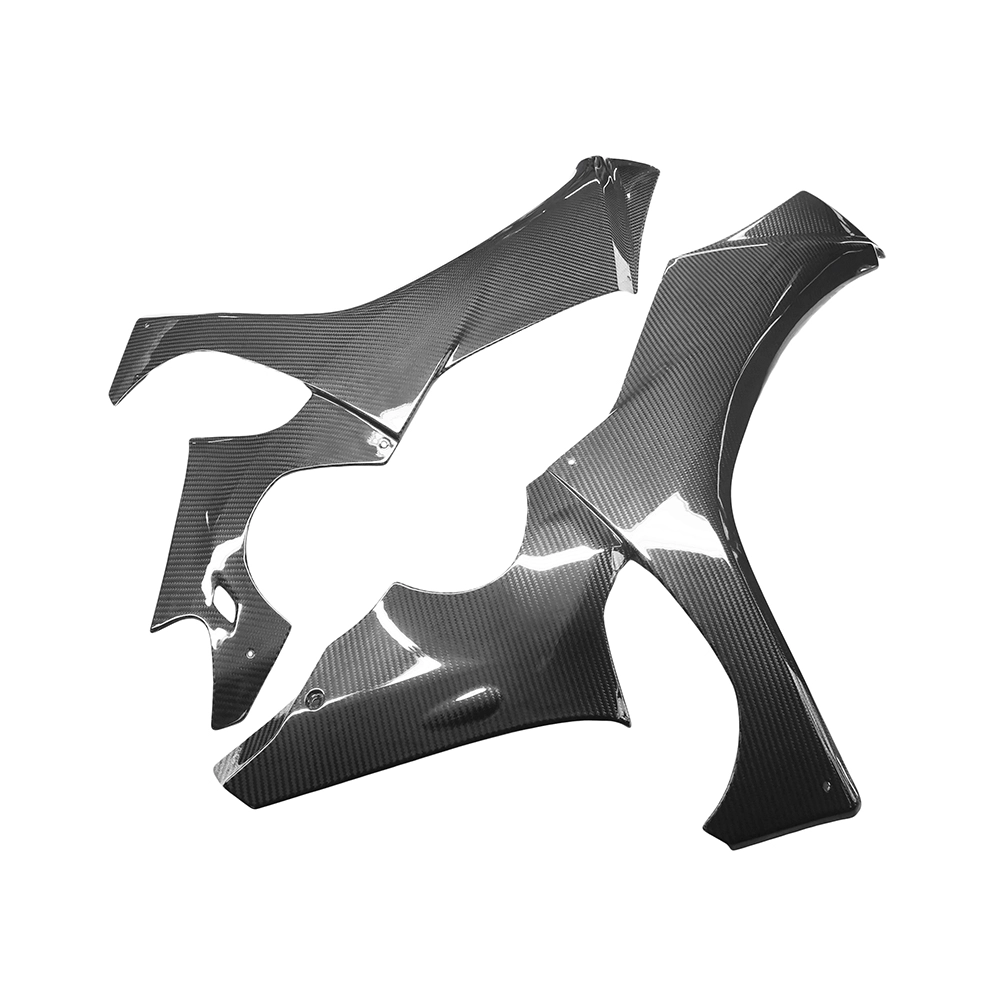
Yamaha R1 Carbon Fiber Side Fairings
Introducing the Supreem Carbon Fiber Long Side Panels for Yamaha R1. Crafted with precision and expertise, this front side fairing is designed to elevate the performance and aesthetics of your R1. Made from high-quality carbon fiber, this fairing is not only lightweight but also incredibly durable, providing optimal protection for your motorcycle.
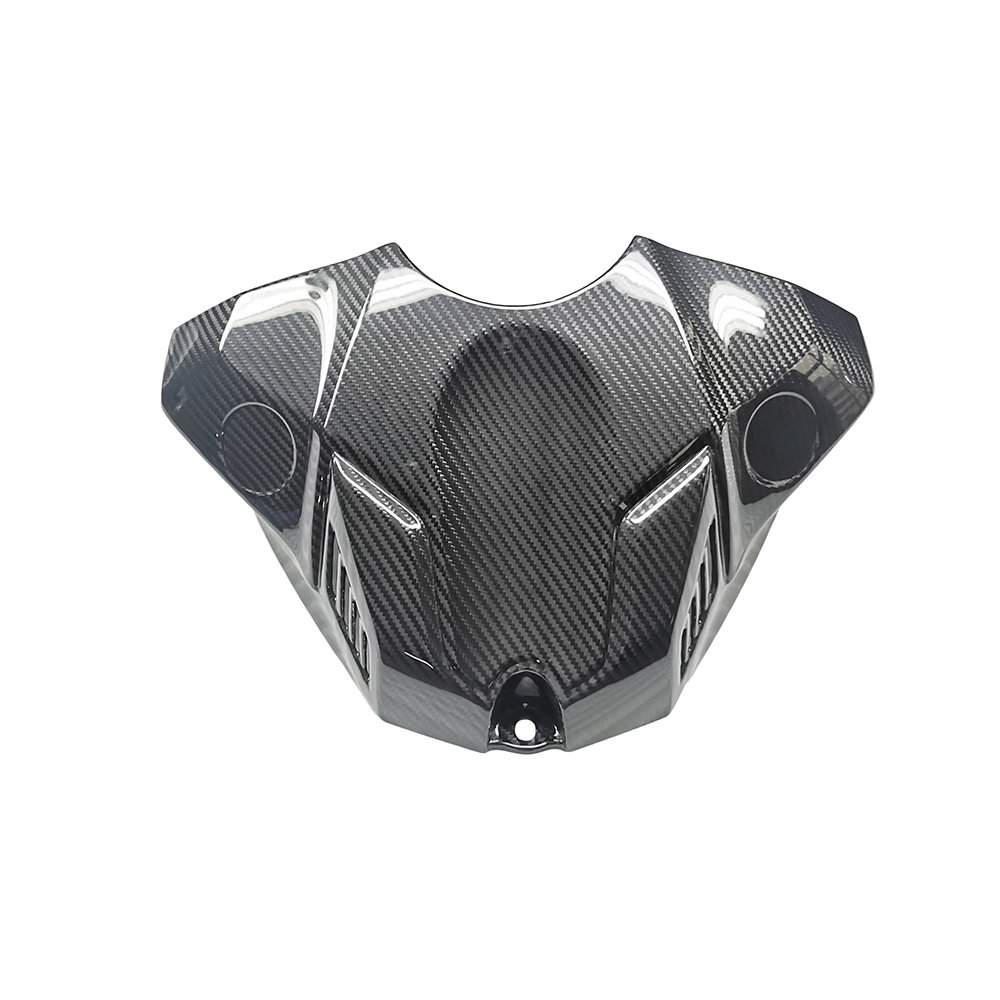
Yamaha R1 Carbon Fiber Airbox Tank Cover
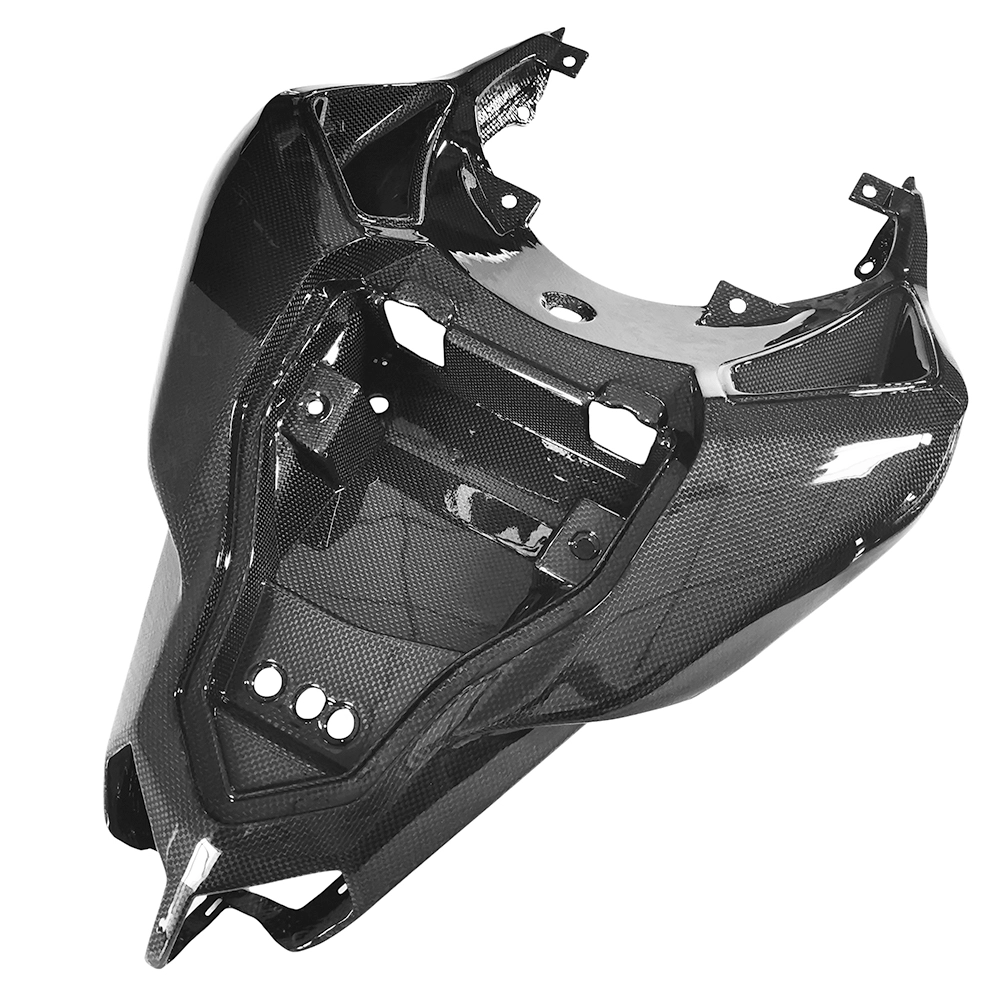
The Supreem Carbon Yamaha R1 Carbon Fiber Airbox Tank Cover provides lightweight, durable protection with a sleek finish. Designed for R1 models, it enhances the style and performance of your bike. Its lightweight structure improves performance while maintaining the premium aesthetics necessary for high-end modification projects. As a dedicated manufacturer of carbon fiber parts, we provide stable production capacity, customization options, and strict quality control to support enterprise-level procurement and OEM/ODM needs.
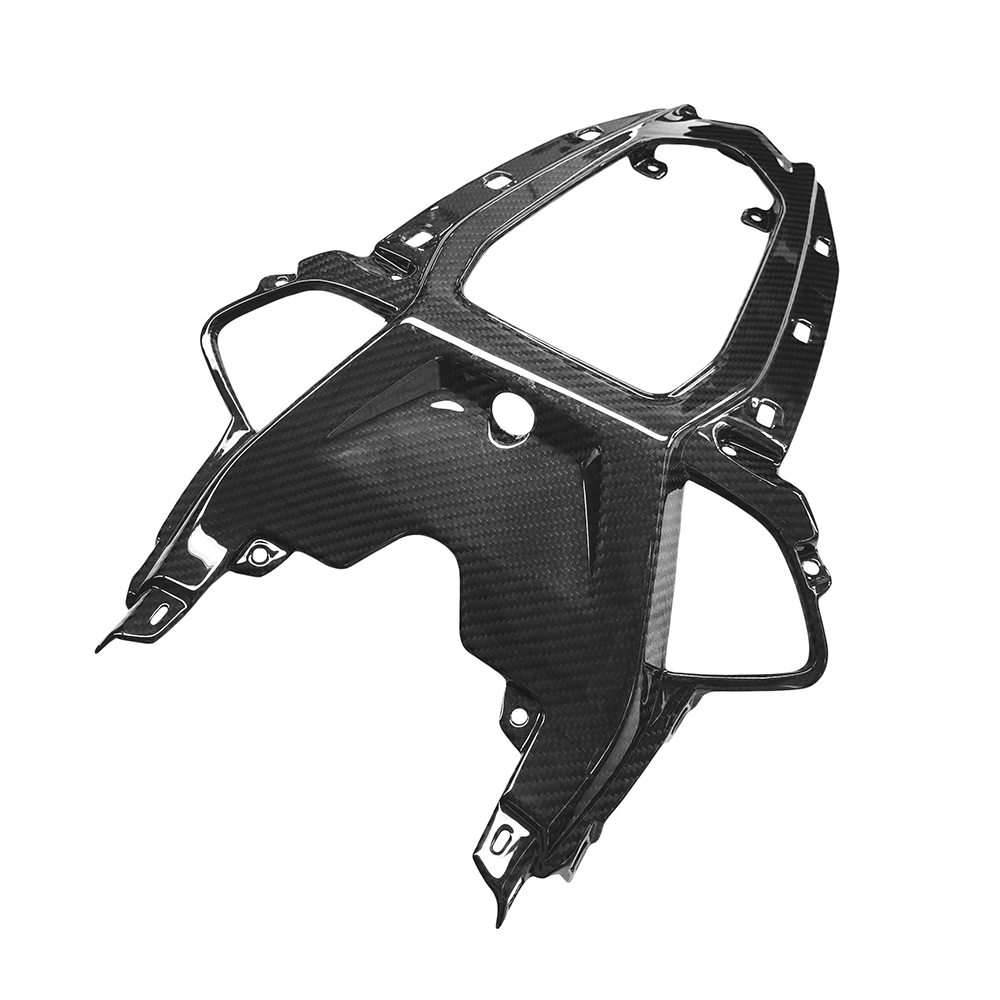
Carbon Fiber Rear Seat Panel for BMW S1000R & M1000RR – Lightweight Performance
This carbon fiber rear seat panel is engineered for the BMW S1000R and M1000RR, offering superior rigidity, reduced weight, and a premium racing finish. Produced with autoclave technology and strict QC standards, the part ensures consistent OEM-level fitment. Supreem Carbon provides wholesale supply, stable bulk production, and customized solutions for global clients.
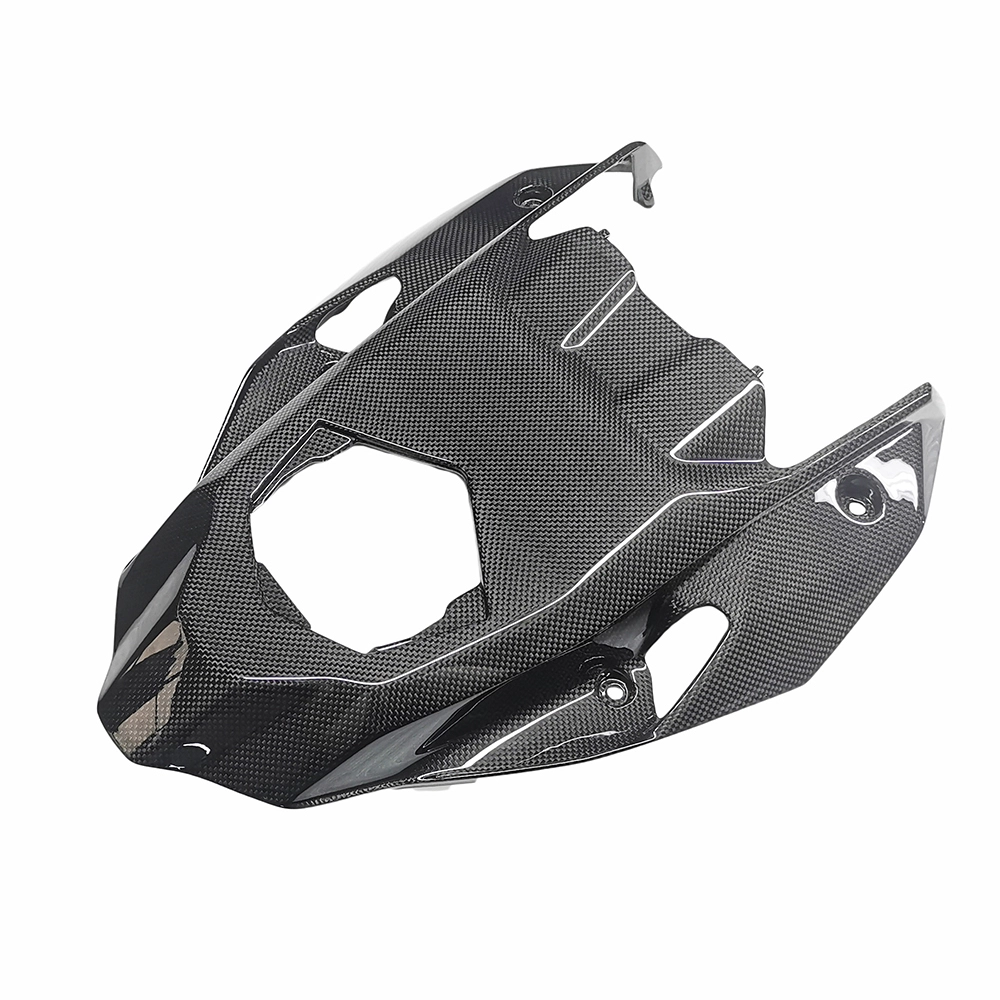
High-Performance Carbon Fiber Rear Undertail for BMW S1000R
Engineered for distributors, tuning brands, and motorcycle accessory businesses, the BMW S1000R Carbon Fiber Rear Undertail is a high-quality, durable, lightweight carbon fiber upgrade for the S1000R platform. This component is manufactured using aerospace-grade carbon fiber and precision molds to deliver superior stiffness, a seamless OEM-level fit, and a premium visual finish suitable for high-end aftermarket applications.

Supreem Carbon aiming to provide customers with high-performance carbon fiber products and quality services.
Contact Supreem Carbon
Address : Building 1 No.103, Yadi Nan 1st Road, QiaoTou Town, Dongguan City, China.
© 2024 Supreem Carbon All Rights Reserved.
Facebook
Pinterest
LinkedIn
Instagram