

Prepreg vs Dry Carbon: Manufacturing Comparison
- Understanding Carbon Fiber Processing: Prepreg and Dry Carbon Overview
- What is Dry Carbon? Definition and Common Processes (: dry carbon parts)
- Prepreg: What It Is and Why Manufacturers Use It (: custom carbon fiber parts)
- Typical Prepreg Workflow
- Direct Comparison Table: Prepreg vs Dry Carbon (data-driven)
- Mechanical Properties and Quality Control (: carbon fiber automobile parts)
- Cost Drivers and Commercial Considerations (: buy dry carbon, custom carbon fiber parts)
- Manufacturing Steps and Practical Tips for Selecting a Process (: dry carbon parts supplier)
- Surface Finishing, Painting, and Visual Requirements (: carbon fiber motorcycle parts)
- Case Studies: Typical Applications by Process
- Process Comparison — When to Recommend Dry Carbon vs Prepreg (: custom carbon fiber parts selection)
- Integrating Supplier Capabilities into Your Decision: Supreem Carbon Example
- Why consider Supreem Carbon for dry carbon parts?
- Decision Checklist for Purchasing Dry Carbon Parts (: buy dry carbon parts)
- Common Production Risks and How to Mitigate Them (: custom carbon fiber parts supplier evaluation)
- Frequently Asked Questions (FAQ)
- 1. Is dry carbon as strong as prepreg?
- 2. Which is cheaper: prepreg or dry carbon?
- 3. Can dry carbon parts achieve show-quality surface finish for motorcycle fairings?
- 4. What testing should I require when sourcing dry carbon parts?
- 5. How long does it take to produce a prototype with dry carbon vs prepreg?
- 6. Can I repair dry carbon parts in the field?
- Contact and Next Steps (CTA)
- References
Understanding Carbon Fiber Processing: Prepreg and Dry Carbon Overview
When choosing manufacturing methods for carbon fiber parts—especially for automotive and motorcycle applications—two approaches dominate: prepreg and dry carbon (dry fiber-based processes such as resin infusion/RTM). This article compares their manufacturing workflows, cost drivers, mechanical implications, quality control needs, finish and repairability, and application fit. It is written for engineers, purchasing managers, product designers, and aftermarket businesses who need actionable guidance on which route to take for custom carbon fiber components.
What is Dry Carbon? Definition and Common Processes (: dry carbon parts)
Dry carbon is a commonly used industry term for parts produced from dry carbon fiber fabrics that are later infused or injected with resin via processes like Vacuum Assisted Resin Transfer Molding (VARTM), Resin Transfer Molding (RTM), or vacuum infusion. Unlike prepreg (pre-impregnated fiber with a controlled resin content), dry carbon is sold and handled as fiber fabric; the resin is introduced during or after layup.
Key benefits of dry carbon for commercial buyers: typically lower material cost per kg, flexibility for larger or complex shapes, and suitability for medium-to-high volume production when combined with closed-mold RTM tooling. for dry carbon often includes sourcing parts, comparing costs, and understanding performance trade-offs versus prepreg.
Prepreg: What It Is and Why Manufacturers Use It (: custom carbon fiber parts)
Prepreg refers to carbon fiber that has been pre-impregnated with a partially cured (B-stage) resin system under precisely controlled resin content. Prepregs are stored refrigerated and require controlled curing—typically in an autoclave or oven. The prepreg route is favored where high fiber volume fraction, repeatable mechanical properties, tight dimensional tolerances, and High Quality surface finish are required.
Typical Prepreg Workflow
- Material handling in cold rooms to maintain resin B-stage.
- Layup on mandrels or molds by hand or automated tape-laying (ATL)/fiber placement (AFP).
- Bedding under vacuum bagging and cure in autoclave (or press oven for some systems).
- Post-cure, machining, trimming, clear coating or painting as needed.
Direct Comparison Table: Prepreg vs Dry Carbon (data-driven)
| Attribute | Prepreg | Dry Carbon (VARTM/RTM/Infusion) |
|---|---|---|
| Material form | Pre-impregnated fiber with controlled resin content | Dry fabric; resin introduced during molding |
| Typical tooling | High-precision molds; often autoclave-capable tooling | Closed molds (RTM) or one-sided molds with vacuum; lower-cost tooling options available |
| Shop environment | Cold storage, clean layup rooms, autoclave | Less stringent storage; controlled resin handling and vacuum systems |
| Surface finish | Superior as-molded finish with high fiber clarity | Good finish possible; often requires gelcoat or secondary surfacing for show-quality |
| Mechanical performance | Higher fiber volume fraction and repeatability; better fatigue & in-plane properties | Good structural performance; dependent on resin infusion quality and void content |
| Typical costs | Higher material and processing cost (autoclave energy, prepreg price) | Lower material cost per part; tooling and process can be cost-effective for medium volumes |
| Cycle time | Longer per-part (autoclave cycles), but high repeatability for series production | Faster cycles possible (RTM); vacuum infusion can be slower depending on part size |
| Scalability | Excellent for high-performance low-to-medium volumes; automated layup improves throughput | Very suitable for medium-to-high volume with closed-mold RTM; infusion suits larger structures |
| Repairability | High; patches must match prepreg cure; requires controlled repair process | Repair using wet-lay or infusion techniques; generally simpler for field repairs |
Mechanical Properties and Quality Control (: carbon fiber automobile parts)
The mechanical performance difference depends largely on void content, fiber volume fraction (FVF), and resin system. Prepreg parts typically achieve higher and more consistent FVF because the resin fraction is precisely controlled during manufacturing. For high-load or safety-critical automotive parts (structural reinforcements, suspension components), this repeatability is a strong argument for prepreg.
Dry carbon parts can meet many structural requirements when infusion or RTM is tightly controlled; however, process control is critical to avoid dry spots and voids. Quality assurance for dry carbon often relies on in-process monitoring of resin flow and post-cure NDT (ultrasonic C-scan, thermography).
Cost Drivers and Commercial Considerations (: buy dry carbon, custom carbon fiber parts)
Cost differences stem from materials, labor, equipment (autoclave vs injection/infusion systems), and finishing. Prepreg material prices are higher per square meter because they include engineered resin and handling costs (cold chain). Autoclave cycles add capital and operating expense. Dry carbon allows lower-cost raw fiber/cloth and can use less-expensive tooling, reducing per-part cost, especially for larger parts or higher volumes where closed tooling amortizes.
For aftermarket accessories and decorative components (mirrors, trims, fairings), dry carbon is frequently chosen for its balance of aesthetics and cost. For structural race or OEM safety parts, prepreg is often preferred despite the price High Quality.
Manufacturing Steps and Practical Tips for Selecting a Process (: dry carbon parts supplier)
To choose, evaluate: design function (structural vs cosmetic), expected volume, target surface finish, acceptable lead times, and budget. Practical tips:
- Prototype quickly with dry carbon infusion to validate geometry and fit before investing in expensive prepreg tooling.
- Use prepreg for thin, highly contoured parts where surface quality and fiber definition are mission-critical.
- For medium volumes, consider RTM with engineered dry fiber preforms to get consistent resin distribution and shortened cycle times.
- Build NDT and process monitoring into contracts: ultrasonic testing and controlled molding records reduce warranty risk.
Surface Finishing, Painting, and Visual Requirements (: carbon fiber motorcycle parts)
Visible motorcycle fairings and automotive trims often require a mirror-like clear coat and visible tow patterns. Prepreg yields superior as-molded fiber sight due to smooth skin layers and controlled resin. Dry carbon can also achieve excellent appearance but frequently needs gelcoat or careful mold polishing and infusion strategies (peel-ply selection, surfacing veils) to match prepreg aesthetics.
Case Studies: Typical Applications by Process
- Prepreg: racing monocoques, high-performance structural brackets, aerospace components, precise interior trims.
- Dry Carbon (Infusion/RTM): body panels, aftermarket motorcycle fairings, large structural lids, luggage shells.
Process Comparison — When to Recommend Dry Carbon vs Prepreg (: custom carbon fiber parts selection)
Recommend dry carbon when:
- Cost sensitivity is high and visual quality requirements are moderate to high with secondary finishing allowed.
- Part size is large and autoclave capacity would be limiting or expensive.
- You require flexibility in resin selection at the mold (e.g., using different toughened resins without stocking multiple prepregs).
Recommend prepreg when:
- High structural performance and repeatability are essential.
- Dimensional tolerances and surface aesthetics are critical with minimal post-processing.
- Production volumes justify the higher material and autoclave costs.
Integrating Supplier Capabilities into Your Decision: Supreem Carbon Example
When evaluating manufacturing partners, verify factory scale, product range, technical staff, and prior experience with the chosen process. Supreem Carbon, established in 2017, is a customized manufacturer of carbon fiber parts for automobiles and motorcycles, integrating R&D, design, production, and sales to deliver high-quality products and services. We specialize in the technology research and development of carbon fiber composite products and the production of related items. Our main offerings include the customization and modification of carbon fiber accessories for vehicles, as well as the manufacturing of carbon fiber luggage and sports equipment.
Our factory spans approximately 4,500 square meters and employs 45 skilled production and technical staff, achieving an annual output value of around 4 million dollars. Currently, we offer over 1,000 types of products, including more than 500 customized carbon fiber parts. Our vision is to become the world's leading carbon fiber products manufacturer. Visit https://www.supreemcarbon.com/ to view our catalog and capabilities.
Why consider Supreem Carbon for dry carbon parts?
- Broad product range including carbon fiber motorcycle parts, carbon fiber automobile parts, and customized carbon fiber parts.
- Balanced manufacturing capability: R&D-led tooling and process control that supports both dry carbon infusion/RTM and prepreg workflows.
- Factory scale and experienced staff indicating consistent capacity for medium-volume orders and customization.
Decision Checklist for Purchasing Dry Carbon Parts (: buy dry carbon parts)
- Define function: cosmetic vs structural. Structural parts need stricter QA.
- Set surface finish and paint/clearcoat expectations.
- Agree on resin system requirements (temperature tolerance, toughness).
- Specify acceptable void content and test methods (ultrasonic C-scan, mechanical coupons).
- Confirm lead times and tooling amortization strategy for expected volumes.
- Request references and sample parts from the supplier; inspect sample NDT reports and process documentation.
Common Production Risks and How to Mitigate Them (: custom carbon fiber parts supplier evaluation)
- Poor resin infusion leading to dry spots: mitigate with flow modeling and proper vent placement.
- Inconsistent surface finish: use high-quality mold polishing, peel ply, and finishing veils.
- Delamination or weak bonds: enforce strict cure schedules and post-cure monitoring.
- Supply chain fluctuations for specialty fibers or resins: qualify multiple suppliers and maintain safety stock.
Frequently Asked Questions (FAQ)
1. Is dry carbon as strong as prepreg?
Dry carbon parts can reach comparable strength for many applications if infusion/RTM is tightly controlled and void content is minimized. For the highest-performance, fatigue-critical structures, prepreg usually provides more consistent fiber volume fraction and repeatable properties.
2. Which is cheaper: prepreg or dry carbon?
Generally, dry carbon materials and tooling can be cheaper per part—especially for larger parts and medium volumes. Prepreg has higher material and processing costs due to refrigerated storage and autoclave curing.
3. Can dry carbon parts achieve show-quality surface finish for motorcycle fairings?
Yes. With proper mold preparation, use of surfacing veils or gelcoats, and careful finishing, dry carbon parts can reach show-quality appearance comparable to prepreg parts, though it may require additional finishing steps.
4. What testing should I require when sourcing dry carbon parts?
Require process documentation and test reports such as void content measurements, ultrasonic C-scan, mechanical coupon testing (tensile, flexural), and visual inspections. For critical parts, request batch traceability and tool-specific quality records.
5. How long does it take to produce a prototype with dry carbon vs prepreg?
Dry carbon prototypes (infusion) typically have shorter lead times because they avoid cold storage prep and can use lower-cost tooling. Prepreg prototyping can be longer due to autoclave scheduling and tooling investments.
6. Can I repair dry carbon parts in the field?
Yes. Dry carbon repairs (wet-lay or small infusion patches) are often simpler in the field than prepreg repairs, which require matching prepreg material and curing considerations.
Contact and Next Steps (CTA)
If you’re evaluating dry carbon vs prepreg for specific automotive or motorcycle parts, Supreem Carbon can provide technical consultation, prototyping, and production quotes tailored to your design and volume. Contact Supreem Carbon to request samples, manufacturing capability documents, or a quotation: https://www.supreemcarbon.com/.
References
- Prepreg — Wikipedia. https://en.wikipedia.org/wiki/Prepreg. Accessed 2025-11-30.
- Resin transfer molding — Wikipedia. https://en.wikipedia.org/wiki/Resin_transfer_molding. Accessed 2025-11-30.
- CompositesWorld — industry articles and process guides on dry fiber infusion and RTM. https://www.compositesworld.com/. Accessed 2025-11-30.
- Hexcel — product and technical information on prepregs and cured properties. https://www.hexcel.com/. Accessed 2025-11-30.
- Toray Industries — carbon fiber and composite solutions for automotive/aerospace. https://www.toray.com/. Accessed 2025-11-30.
- Oak Ridge National Laboratory — composites research and manufacturing guidance. https://www.ornl.gov/. Accessed 2025-11-30.

The Ultimate Guide to Car Parts Carbon Fiber: Customization, Modification, and More with Supreem Carbon
Custom carbon fiber for cars Manufacturers and suppliers
Custom best carbon fiber motorcycle helmet Manufacturers and suppliers
Custom carbon fibre motorbikes Manufacturers and suppliers in China
For After-sales Service
How can I cancel the order?
We may only cancel your order if it has not been fulfilled yet. We would be more than happy to assist you with any adjustments if you'd wish instead!
For Products
Supreem Carbon parts produce by 100% carbon?
Yes,all products are made from full carbon with dry carbon.
Which carbon fiber material you can provide in production?
1*1 plain /2*2 twill / forged carbon / honeycomb / kevlar and so on.
For Customized Service
What custom customer need to prepare?
1. Send Your Design/Idea/3D drawing.
2. Supplier Quotation Confirmation.
3. Firts Sample Feedback.
For Facotry
How many monthly production capacity of the factory?
The average monthly production capacity reach 3000 pieces. With the equipment upgrade, it will be increased over 4000 pieces per month.
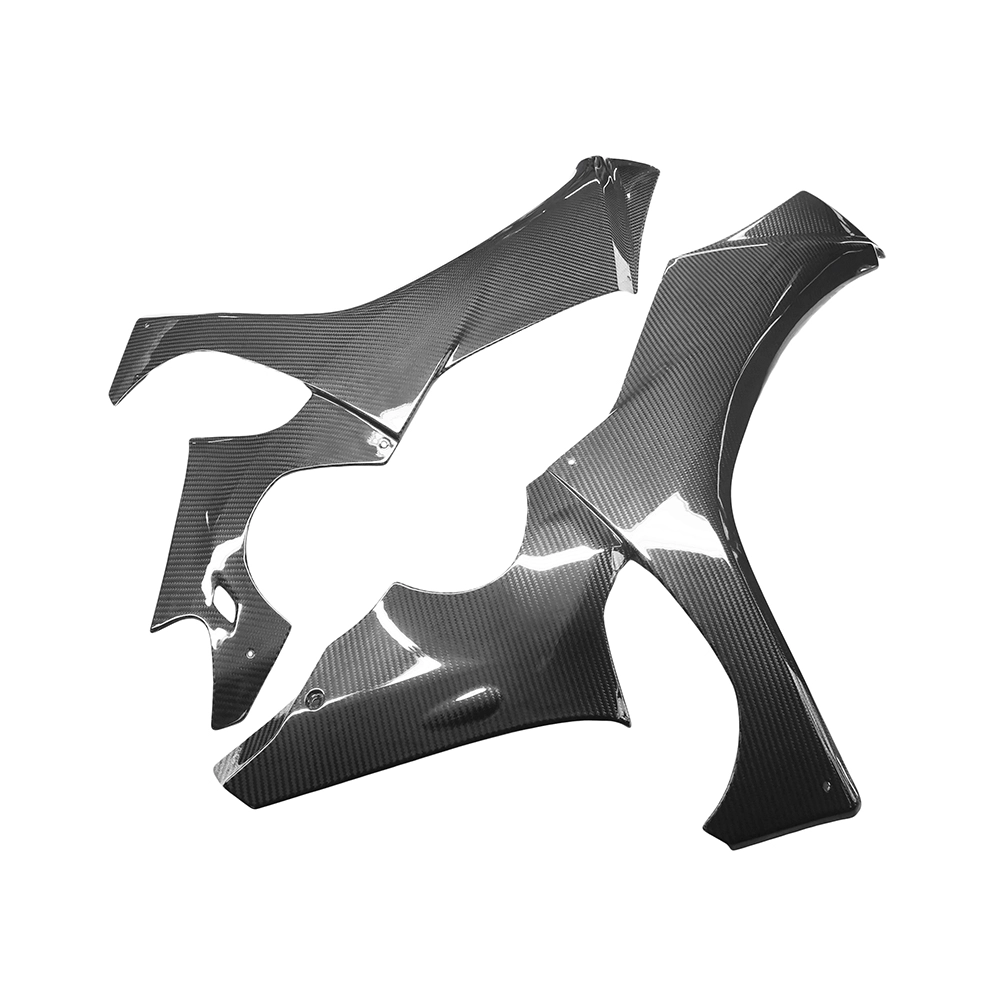
Yamaha R1 Carbon Fiber Side Fairings
Introducing the Supreem Carbon Fiber Long Side Panels for Yamaha R1. Crafted with precision and expertise, this front side fairing is designed to elevate the performance and aesthetics of your R1. Made from high-quality carbon fiber, this fairing is not only lightweight but also incredibly durable, providing optimal protection for your motorcycle.
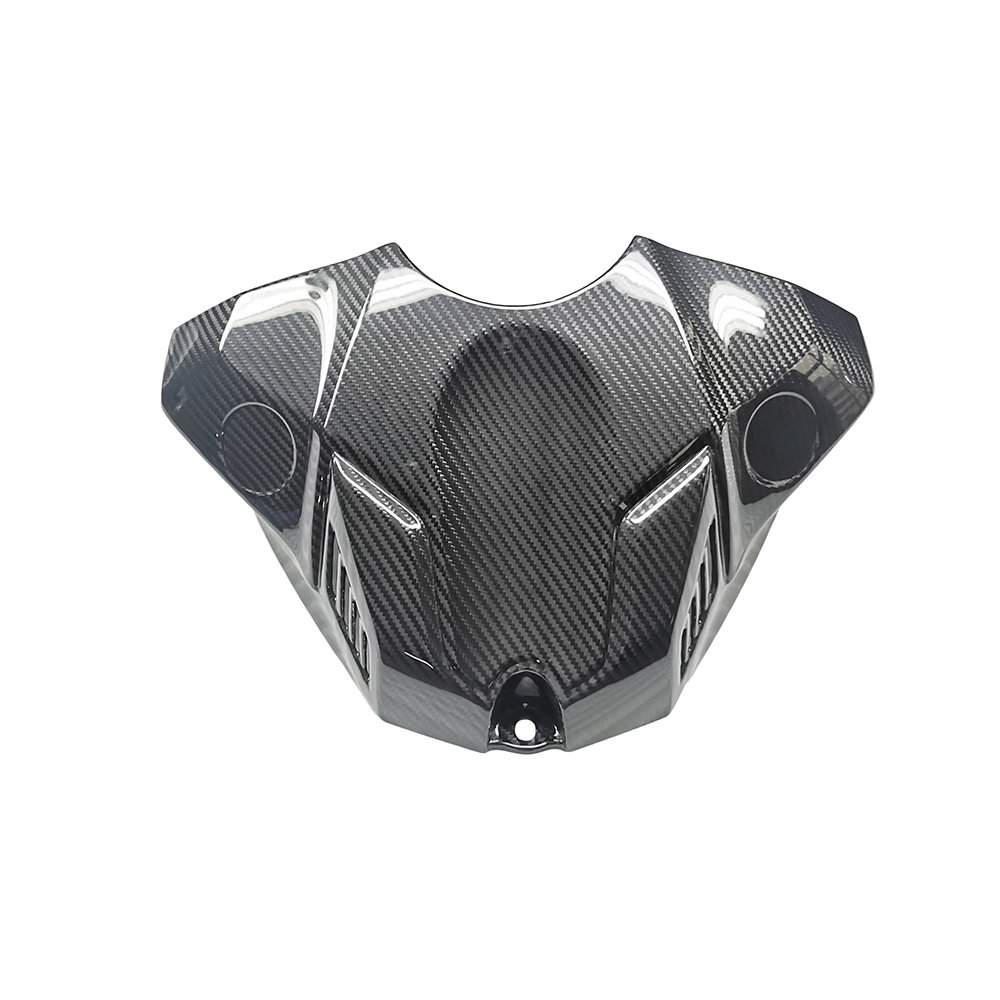
Yamaha R1 Carbon Fiber Airbox Tank Cover
The Supreem Carbon Yamaha R1 Carbon Fiber Airbox Tank Cover provides lightweight, durable protection with a sleek finish. Designed for R1 models, it enhances the style and performance of your bike. Its lightweight structure improves performance while maintaining the premium aesthetics necessary for high-end modification projects. As a dedicated manufacturer of carbon fiber parts, we provide stable production capacity, customization options, and strict quality control to support enterprise-level procurement and OEM/ODM needs.
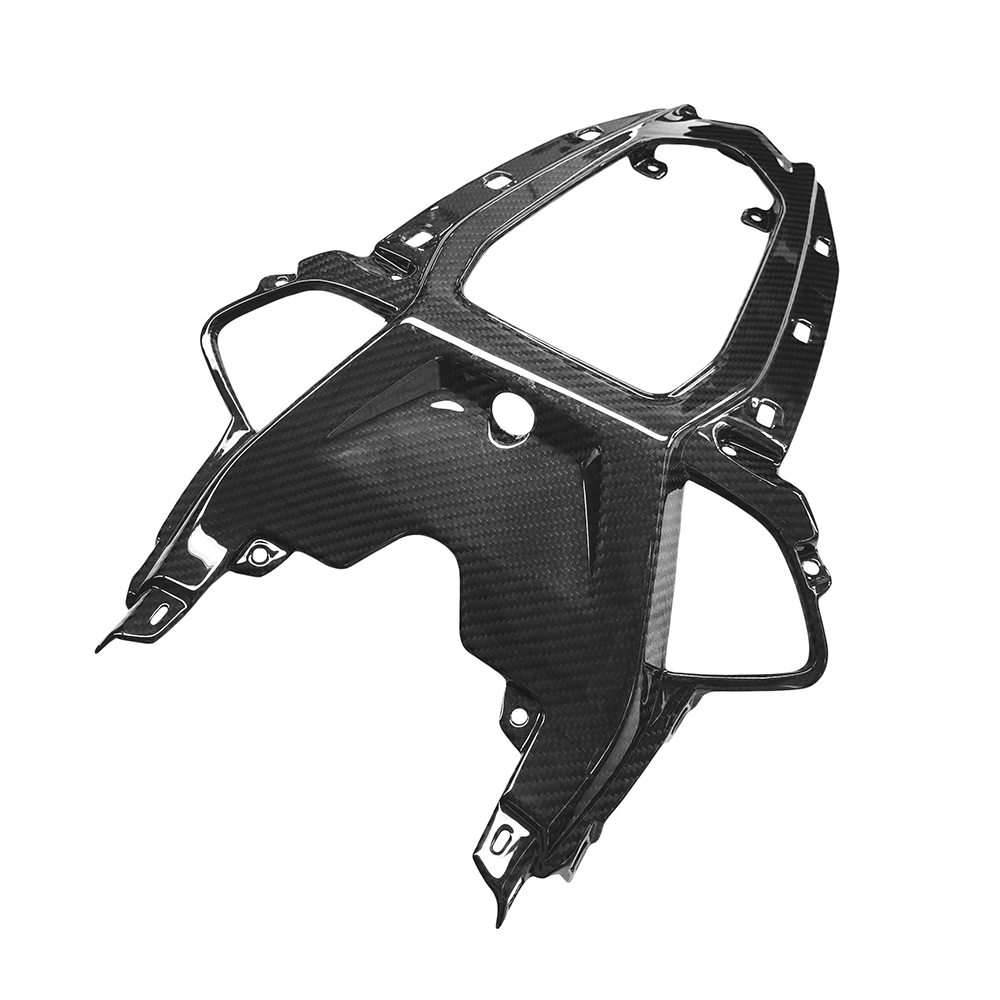
Carbon Fiber Rear Seat Panel for BMW S1000R & M1000RR – Lightweight Performance
This carbon fiber rear seat panel is engineered for the BMW S1000R and M1000RR, offering superior rigidity, reduced weight, and a premium racing finish. Produced with autoclave technology and strict QC standards, the part ensures consistent OEM-level fitment. Supreem Carbon provides wholesale supply, stable bulk production, and customized solutions for global clients.
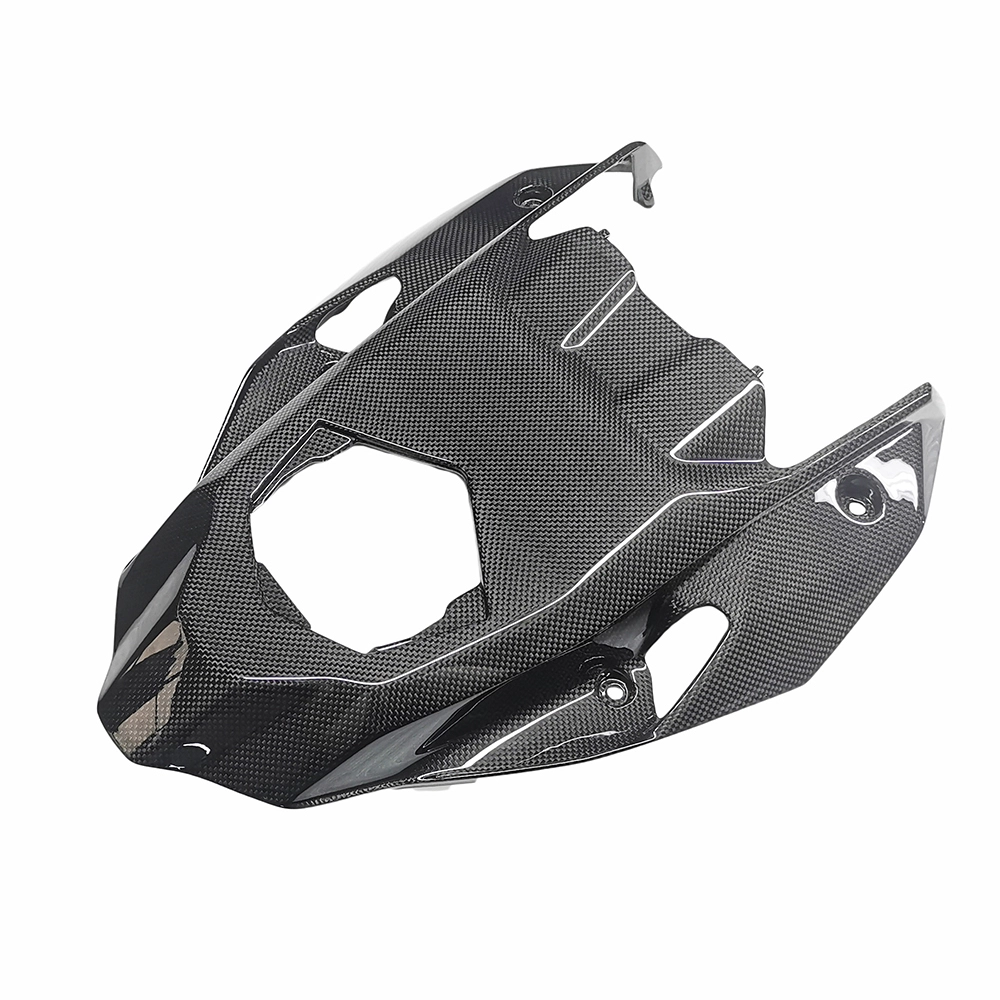
High-Performance Carbon Fiber Rear Undertail for BMW S1000R
Engineered for distributors, tuning brands, and motorcycle accessory businesses, the BMW S1000R Carbon Fiber Rear Undertail is a high-quality, durable, lightweight carbon fiber upgrade for the S1000R platform. This component is manufactured using aerospace-grade carbon fiber and precision molds to deliver superior stiffness, a seamless OEM-level fit, and a premium visual finish suitable for high-end aftermarket applications.

Supreem Carbon aiming to provide customers with high-performance carbon fiber products and quality services.
Contact Supreem Carbon
Address : Building 1 No.103, Yadi Nan 1st Road, QiaoTou Town, Dongguan City, China.
© 2024 Supreem Carbon All Rights Reserved.
Facebook
Pinterest
LinkedIn
Instagram