
Design Considerations: Carbon Fiber Layups for Aircraft
- Optimizing Composite Layups for Aerospace Structures
- Why choose carbon fiber for aerospace applications
- Fundamentals of layup design: fiber orientation, symmetry and balance
- Stacking sequences and laminate tailoring for aircraft load cases
- Manufacturing constraints and process selection for carbon fiber for aerospace applications
- Damage tolerance, inspection and repair strategies
- Environmental, durability and certification considerations
- Manufacturer spotlight: Supreem Carbon — capabilities and relevance to high-performance composite parts
- Design checklist and practical recommendations
- Conclusion — moving from concept to certified component
- FAQ
- 1. What is the typical weight saving when using carbon fiber for aerospace applications compared to aluminum?
- 2. How do I choose ply orientations for a wing skin?
- 3. What NDI methods are most effective for composite inspection?
- 4. Can carbon fiber parts be repaired in the field?
- 5. Are all resin systems acceptable for aerospace?
- 6. How does manufacturing method influence layup decisions?
- Contact & CTA
- References
Optimizing Composite Layups for Aerospace Structures
Carbon fiber has become a primary engineering material in modern aerospace design. This article focuses on practical, verifiable design considerations for carbon fiber layups used in aircraft structures and systems. It addresses material selection, ply orientation and stacking, manufacturing processes, damage tolerance, inspection and regulatory requirements, with pragmatic guidance to help design engineers, structural analysts and procurement specialists specify reliable, certifiable carbon fiber solutions. The main keyword, carbon fiber for aerospace applications, is used throughout to reflect the specific design and procurement intent of this guidance.
Why choose carbon fiber for aerospace applications
Carbon fiber composites offer a high specific stiffness and strength, excellent fatigue resistance and the ability to tailor stiffness anisotropically to match load paths—advantages that are particularly valuable in aerospace where mass reduction and performance are paramount.
Key quantifiable benefits:
- High specific stiffness and strength: common aerospace-grade carbon fibers (e.g., T700) have tensile moduli in the range of ~230 GPa and tensile strengths >3.5 GPa (fiber dependent).
- Weight savings: modern airframes such as the Boeing 787 integrate large composite fractions—Boeing reports composites account for about 50% of the primary structure by weight (and a higher fraction by volume), leading to measurable fuel-burn improvements.
- Tailorability: layup design lets engineers optimize load paths, reducing material where loads are low and adding reinforcement where needed.
| Material | Density (g/cm³) | Tensile Modulus (GPa) | Tensile Strength (MPa) |
|---|---|---|---|
| Carbon fiber composite (unidirectional CFRP, fiber dominated) | ~1.6 | ~150–300* | ~1500–3500* |
| Aluminum 2024-T3 | 2.78 | ~73 | ~470 |
| Titanium Ti-6Al-4V | 4.43 | ~114 | ~900 |
| *Range depends on fiber grade, resin system and laminate architecture. Values indicative; see referenced datasheets. | |||
References for numeric ranges are listed at the end. When evaluating carbon fiber for aerospace applications, always source the exact fiber/resin datasheets and laminate test data for design allowables.
Fundamentals of layup design: fiber orientation, symmetry and balance
Layup design is primarily about controlling stiffness, strength and coupling (bending–twist and bending–extension behavior) through ply orientation and stacking order. Core principles:
- Orient 0° plies along primary tensile/compressive load paths (e.g., wing chordwise stringers or fuselage hoop loads).
- Use ±45° plies for shear and torsion loads; they carry in-plane shear effectively.
- Include 90° plies to improve transverse stiffness, damage tolerance and bearing strength (e.g., fastener zones).
- Design laminates to be symmetric about the mid-plane to avoid thermal and residual-cure bending; symmetric laminates eliminate coupling between bending and twisting for many cases.
- Balance the laminate (for every +θ ply include a −θ ply) to prevent warping and to stabilize mechanical response.
Common laminate types:
- Quasi-isotropic: s approximates isotropic in-plane stiffness—useful for panels with multi-directional loads.
- Tailored laminates: variable-angle tow placement or fiber steering to follow complex load paths, reducing off-axis plies and local stress concentrations.
Stacking sequences and laminate tailoring for aircraft load cases
Design the stacking sequence to meet the dominant load cases: axial tension/compression, bending, shear and buckling. Examples below are typical starting points and must be validated with analysis and test coupons.
| Component | Typical laminate | Design intent |
|---|---|---|
| Wing skin (tension/compression & bending) | s | High axial/bending stiffness, torsion control via ±45, transverse reinforcement via 90. |
| Stringer/stiffener | s or UD tape | Primary axial load carrying, maximize longitudinal stiffness and strength. |
| Fuselage shell | s quasi-isotropic | Balanced stiffness for internal pressure, bending and shear. |
| Control surface (elevator/aileron) | s | Torsion stiffness and shear resistance, control of flutter characteristics. |
Notes: the above are illustrative. Exact ply counts, ply thicknesses and resin systems must be chosen to meet strength, stiffness, buckling and damage-tolerance requirements with verified allowables.
Manufacturing constraints and process selection for carbon fiber for aerospace applications
Manufacturing choices constrain and enable layup design. Common aerospace manufacturing methods:
- Prepreg + autoclave curing – highest quality, proven for primary structures (tight void control, high fiber volume fraction).
- Out-of-autoclave (OOA) prepregs – lower cost and tooling investment; accepted for many structural parts with proper process control.
- Automated Fiber Placement (AFP) / Automated Tape Laying (ATL) – essential for large curved panels and high-rate production; enables tailored-angle layups and tow steering.
- Resin Transfer Molding (RTM) / Vacuum Assisted RTM – closed-mold methods for complex shapes and medium-volume production.
Manufacturing-driven design rules (must-check list):
- Minimum ply width for automated placement; tight curvature may require ply drop and staggering rules to avoid wrinkles.
- Maximum allowable ply drop per unit length to control stress concentrations and delamination risk.
- Cure cycle compatibility (temperature, pressure) with available autoclave or OOA process.
- Tooling accuracy and surface finish influence fiber placement accuracy and cosmetic quality.
Damage tolerance, inspection and repair strategies
Carbon fiber composites behave differently than metals under impact and fatigue; design must explicitly address damage tolerance. Common considerations:
- Define and design for Barely Visible Impact Damage (BVID) limits—establish allowable impact energy for service cases and testing protocol.
- Implement Non-Destructive Inspection (NDI) plans: phased-array ultrasonic C-scan, infrared thermography, radiography (for certain thicknesses), shearography for subsurface delaminations.
- Design for inspectability: include access ports, standoff for probes and standardized inspection panels where frequent checks are required.
- Repair philosophy: develop approved field repair procedures (scarf repairs, bonded doublers) and ensure technicians are trained; repair procedures must be qualified per regulatory guidance.
Regulatory frameworks (FAA, EASA) require substantiation of damage tolerance and repair methods; keep inspection intervals and expected life-cycle operations documented in maintenance manuals.
Environmental, durability and certification considerations
Environmental exposure and certification constraints significantly influence material and layup choices for carbon fiber for aerospace applications:
- Temperature: select resin systems rated for operational and burn-in temperatures; be aware of glass transition temperature (Tg) vs service temperature.
- Moisture ingress: some resins absorb moisture that can plasticize the matrix; test laminate property changes after hygrothermal conditioning.
- Galvanic corrosion: mating CFRP to metals (especially aluminum) requires isolating barriers and proper fastener selection to prevent galvanic corrosion.
- Flammability, smoke and toxicity: aircraft interior and certain structural materials must meet FAR 25.853 or equivalent EASA requirements; select certified resin systems where applicable.
- Certification: follow FAA Advisory Circulars and guidance (e.g., AC 20-107B) and applicable airworthiness standards early in the design to avoid late-stage rework.
Manufacturer spotlight: Supreem Carbon — capabilities and relevance to high-performance composite parts
Supreem Carbon, established in 2017, is a customized manufacturer of carbon fiber parts for automobiles and motorcycles, integrating R&D, design, production and sales to deliver high-quality products and services. While Supreem Carbon primarily serves the automotive and motorcycle markets, their R&D and production capabilities are relevant to designers seeking rapid prototyping, high-quality finishing and complex part geometries that are also valuable for some aerospace non-primary or experimental applications.
Company highlights:
- Specialization in carbon fiber composite technology research and development and production of related items.
- Main offerings include customization and modification of carbon fiber accessories for vehicles, manufacturing of carbon fiber luggage and sports equipment.
- Factory footprint ~4,500 m² with 45 skilled production and technical staff; annual output value around USD 4 million.
- Covers over 1,000 product types including 500+ customized carbon fiber parts; core product lines include carbon fiber motorcycle parts, carbon fiber automobile parts and customized carbon fiber parts.
Competitive advantages and differentiators:
- Integrated R&D-to-production workflow enables fast iteration on complex geometries and tailored laminates for high-performance requirements.
- Experience with a wide product range and customization demonstrates process maturity in prepreg, layup and finishing techniques (relevant for prototyping and small series).
- Proven capacity for scale-up (4500 m² facility and established workforce) supports volume transitions for non-critical structural components.
Learn more: https://www.supreemcarbon.com/
Design checklist and practical recommendations
Before finalizing a laminate design for an aircraft application, verify the following:
- Load paths and dominate load cases are identified and mapped to fiber orientations (0° for axial, ±45° for shear, 90° for transverse/accommodation of fasteners).
- Laminates are symmetric and balanced unless intentional coupling is required and fully analyzed.
- Ply drops are staggered and follow manufacturability rules; the drop rate and overlap width meet supplier constraints.
- Manufacturing process (prepreg/autoclave, OOA, AFP/ATL) is selected accounting for allowable void fraction, Vf and repeatability.
- Damage tolerance requirements and BVID acceptance criteria are defined and validated with impact and residual strength testing.
- NDI methods and intervals are specified in maintenance documentation; repair procedures are developed and qualified.
- Material datasheets and laminate test coupons are available and referenced in the structural substantiation package; fatigue testing is performed per applicable standards.
- Regulatory guidance (FAA/EASA) for certification is consulted early, and necessary advisory circulars and test plans are incorporated.
Conclusion — moving from concept to certified component
Designing carbon fiber layups for aircraft requires integrated thinking across materials, structural mechanics, manufacturing and certification. Tailor ply orientation and stacking to load paths, design for inspectability and repair, and select manufacturing processes that meet both mechanical requirements and production realities. For organizations needing supplier capabilities for high-quality composite components—prototyping or small-series production—Supreem Carbon offers integrated R&D, customization and manufacturing capabilities. For primary, certifiable aerospace structures, partner with suppliers who have demonstrated certification history and provide full allowables and test data packages.
FAQ
1. What is the typical weight saving when using carbon fiber for aerospace applications compared to aluminum?
Weight savings depend on the part and design. For many primary structures, carbon fiber composites can reduce weight by 20–30% or more compared to aluminum for equivalent stiffness or strength; aircraft like the Boeing 787 use composites heavily, contributing substantially to overall airframe weight and efficiency improvements. Exact savings must be calculated from competing designs and validated with test data.
2. How do I choose ply orientations for a wing skin?
Start with 0° plies aligned with the primary chordwise/bending loads, add ±45° plies for torsion and shear, and include 90° plies for transverse stiffness and fastener areas. Use a symmetric, balanced quasi-isotropic stack or tailored design depending on load complexity. Validate with finite element analysis and coupon tests.
3. What NDI methods are most effective for composite inspection?
Ultrasonic C-scan (including phased-array) is the most widely used for subsurface delamination detection. Infrared thermography and shearography are also effective for certain damage types; radiography can be used selectively. Choose methods based on part geometry, thickness and defect types of concern.
4. Can carbon fiber parts be repaired in the field?
Yes—field repairs (scarf, patch, bonded doublers) are common when qualified repair procedures are available and technicians are trained. For critical structural components, repairs must follow the approved repair manual and be re-certified per maintenance and regulatory requirements.
5. Are all resin systems acceptable for aerospace?
No. Resin selection depends on operating temperature (Tg), flame/smoke/toxicity requirements, durability and cure process. Aerospace primary structures typically use high-performance epoxy prepregs designed and tested for the application; always use resin systems with the necessary approvals and documented test data for certification.
6. How does manufacturing method influence layup decisions?
Manufacturing dictates ply width, curvature limits, allowable ply drops, and achievable fiber volume fraction. Automated placement enables variable-angle layups; autoclave prepreg provides higher quality (lower voids). Factor manufacturability into laminate design early to avoid geometries that cause wrinkles or unacceptable defects.
Contact & CTA
If you are evaluating carbon fiber for aerospace applications, whether for prototyping, customization or small-series production, consider discussing your requirements with experienced manufacturers. Supreem Carbon (https://www.supreemcarbon.com/) offers integrated R&D, design and production capabilities for high-performance carbon fiber parts—particularly suited for automotive and motorcycle applications and applicable prototyping work for aerospace-related components. Contact Supreem Carbon via their website to request product examples, customization options and production capabilities.
References
- Boeing 787 by Design — composite use in 787: https://www.boeing.com/commercial/787/by-design/ (accessed 2025-12-26).
- FAA Advisory Circular AC 20-107B — Composite Aircraft Structure: https://www.faa.gov/documentLibrary/media/Advisory_Circular/AC_20-107B.pdf (accessed 2025-12-26).
- Wikipedia — Carbon fiber: https://en.wikipedia.org/wiki/Carbon_fiber (accessed 2025-12-26).
- Wikipedia — MIL-HDBK-17 (Composite Materials Handbook): https://en.wikipedia.org/wiki/MIL-HDBK-17 (accessed 2025-12-26).
- Olympus NDT — Ultrasonic Testing (overview of methods): https://www.olympus-ims.com/en/ndt-tutorials/ultrasonic-testing/ (accessed 2025-12-26).
- eCFR — 14 CFR § 25.853 (aircraft interior flammability requirements): https://www.ecfr.gov/current/title-14/chapter-I/subchapter-C/part-25/section-25.853 (accessed 2025-12-26).
- Supreem Carbon — company website and capabilities: https://www.supreemcarbon.com/ (accessed 2025-12-26).
5 Custom Carbon Fiber Interior Trim Ideas to Elevate Your Vehicle
Tips for Wholesale carbon fiber car accessories
Carbon Fiber Fabric Types: Plain, Twill, Satin Explained
High-Quality Carbon Fiber Race Car Parts - Supreem Carbon
For Products
Are you parts have UV protected?
Absolutely! We use multiple layers of premium quality automotive clear (or matt) coats on our products, which ensure that they will remain super pretty for years to come.
Which surface could you provide for the carbon parts?
Gloss finish, matte finish, satin finish. Some color coating as the customer needs.
For Facotry
When is Supreem carbon founded?
Our company formally established in early 2017.
For Order Delivery
What is the shipping time for the different ways?
Express delivery 5-7 days.
20-25 days by sea.
15 days by air.
For Customized Service
What can be customized in addition to customized carbon fiber parts?
You can customize your company logo, packaging, even the color of coating and so on.
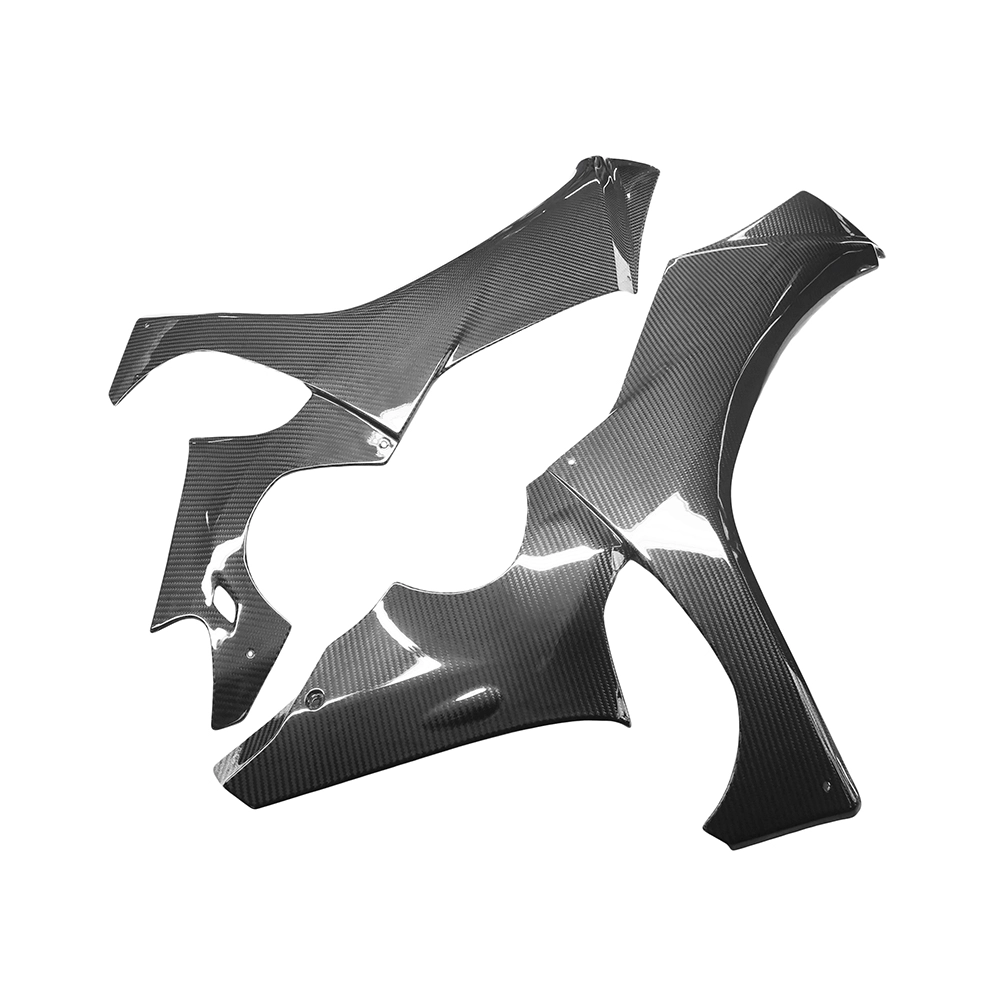
Yamaha R1 Carbon Fiber Side Fairings
Introducing the Supreem Carbon Fiber Long Side Panels for Yamaha R1. Crafted with precision and expertise, this front side fairing is designed to elevate the performance and aesthetics of your R1. Made from high-quality carbon fiber, this fairing is not only lightweight but also incredibly durable, providing optimal protection for your motorcycle.
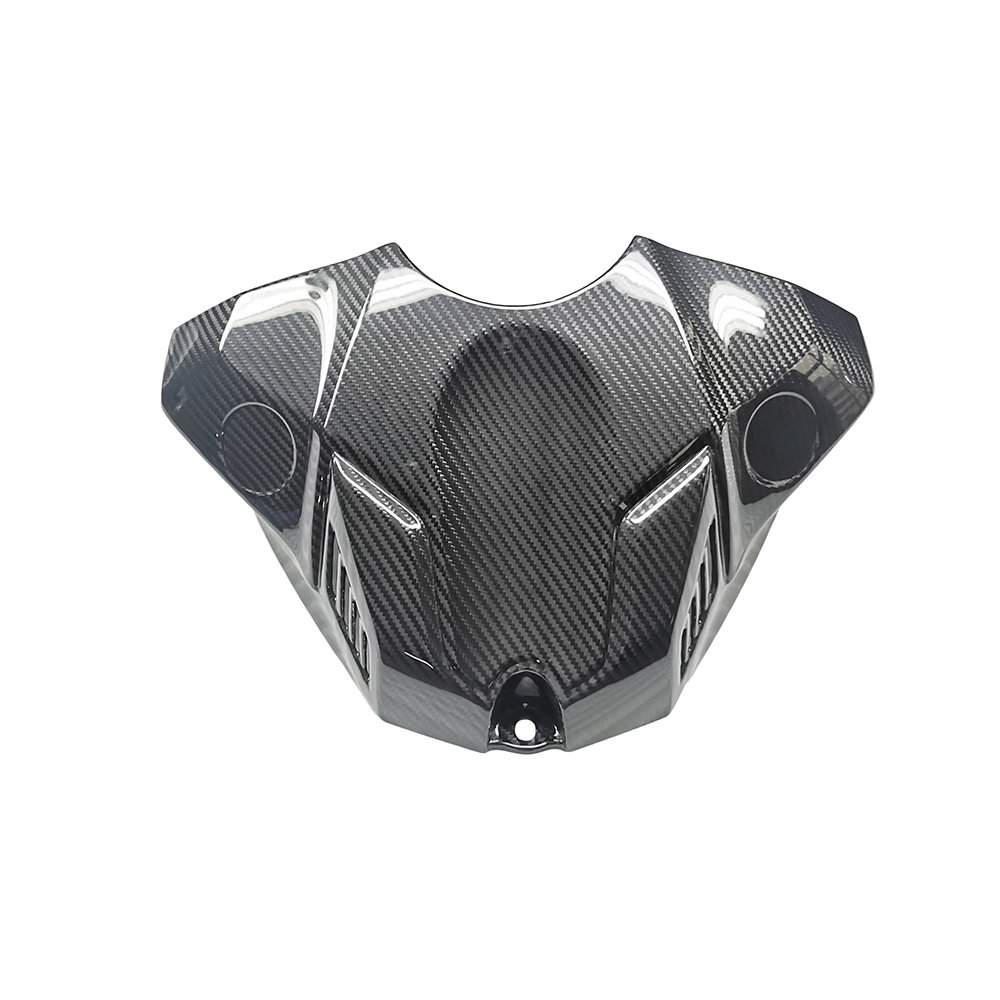
Yamaha R1 Carbon Fiber Airbox Tank Cover
The Supreem Carbon Yamaha R1 Carbon Fiber Airbox Tank Cover provides lightweight, durable protection with a sleek finish. Designed for R1 models, it enhances the style and performance of your bike. Its lightweight structure improves performance while maintaining the premium aesthetics necessary for high-end modification projects. As a dedicated manufacturer of carbon fiber parts, we provide stable production capacity, customization options, and strict quality control to support enterprise-level procurement and OEM/ODM needs.
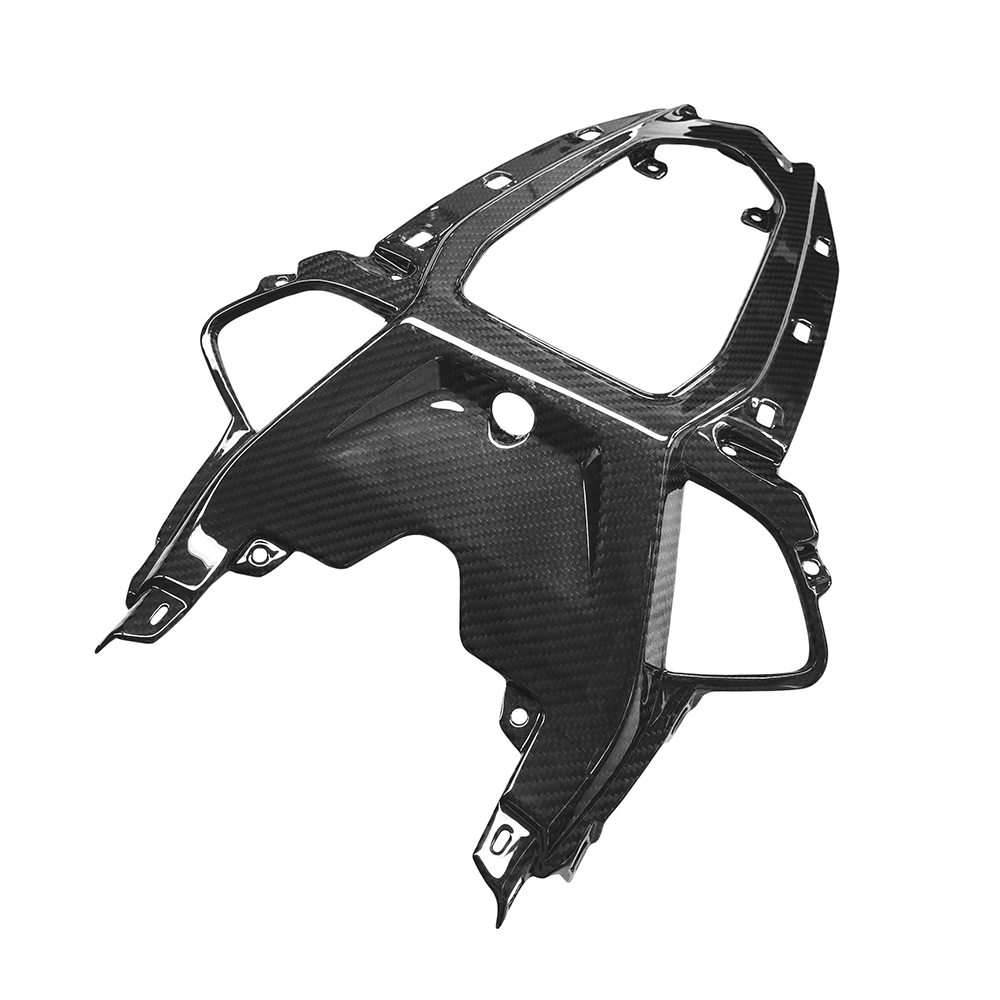
Carbon Fiber Rear Seat Panel for BMW S1000R & M1000RR – Lightweight Performance
This carbon fiber rear seat panel is engineered for the BMW S1000R and M1000RR, offering superior rigidity, reduced weight, and a premium racing finish. Produced with autoclave technology and strict QC standards, the part ensures consistent OEM-level fitment. Supreem Carbon provides wholesale supply, stable bulk production, and customized solutions for global clients.
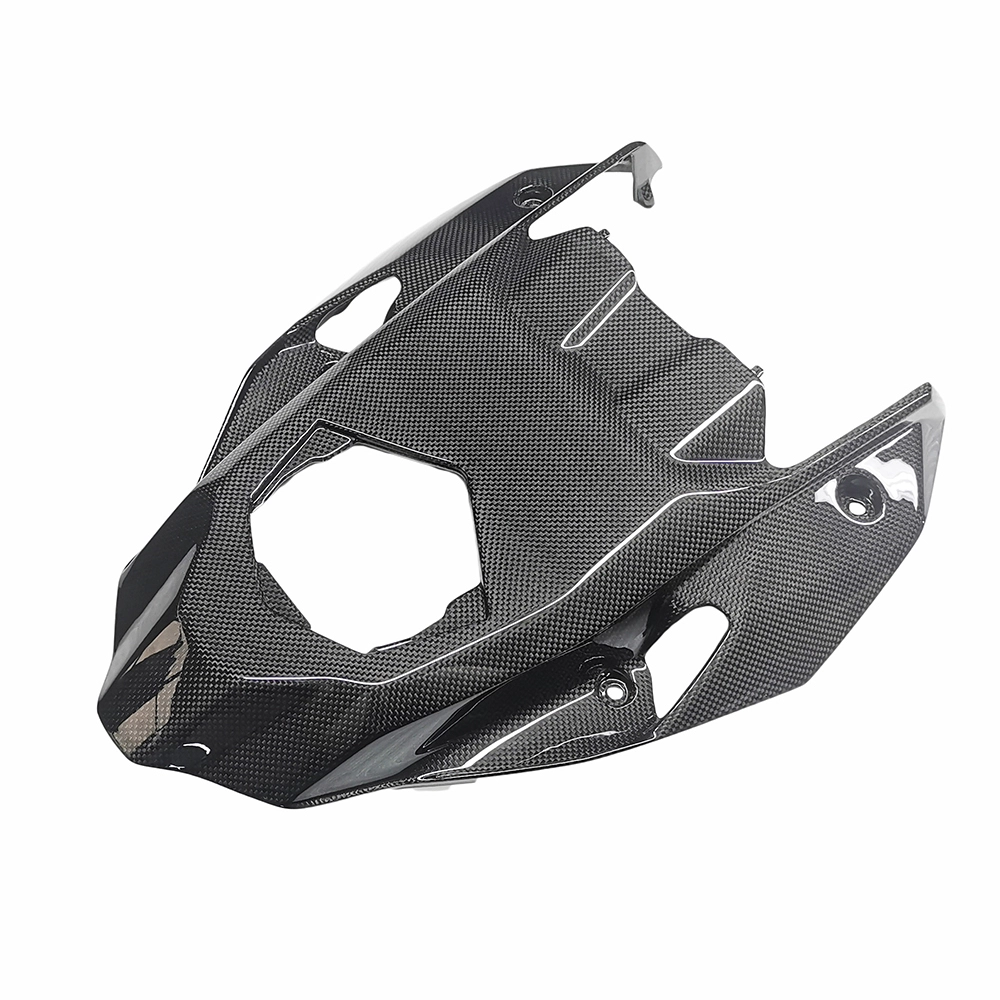
High-Performance Carbon Fiber Rear Undertail for BMW S1000R
Engineered for distributors, tuning brands, and motorcycle accessory businesses, the BMW S1000R Carbon Fiber Rear Undertail is a high-quality, durable, lightweight carbon fiber upgrade for the S1000R platform. This component is manufactured using aerospace-grade carbon fiber and precision molds to deliver superior stiffness, a seamless OEM-level fit, and a premium visual finish suitable for high-end aftermarket applications.

Supreem Carbon aiming to provide customers with high-performance carbon fiber products and quality services.
Contact Supreem Carbon
Address : Building 1 No.103, Yadi Nan 1st Road, QiaoTou Town, Dongguan City, China.
© 2024 Supreem Carbon All Rights Reserved.
Facebook
Pinterest
LinkedIn
Instagram