
Custom Carbon Fiber Tubes: Guide for OEMs and Distributors
- Why Engineers Choose Carbon Fiber Tubes — carbon fiber tube supplier considerations
- Design and Performance: What OEMs Need — carbon fiber tube supplier insights
- Manufacturing Methods and Quality Control — carbon fiber tube supplier comparison
- Material Options and Mechanical Properties — carbon fiber tube supplier data
- Supply Chain, Lead Times, and Cost Drivers — carbon fiber tube supplier guide
- Certifications, Testing, and Traceability — carbon fiber tube supplier expectations
- Selecting a Partner: What to Ask Your carbon fiber tube supplier
- Supreem Carbon: Capabilities & Offerings for OEMs and Distributors — carbon fiber tube supplier partnership
- Case Studies & Typical Applications — carbon fiber tube supplier examples
- FAQ — carbon fiber tube supplier
- Contact & Next Steps — carbon fiber tube supplier engagement
- References
Why Engineers Choose Carbon Fiber Tubes — carbon fiber tube supplier considerations
Carbon fiber tubes deliver a unique combination of high specific strength and stiffness, low thermal expansion, excellent fatigue resistance and corrosion immunity. For OEMs and distributors considering a carbon fiber tube supplier, these attributes translate into lighter assemblies, improved dynamic behavior, and new design freedoms that metal tubes cannot match. This guide focuses on the practical questions engineering and purchasing teams ask when sourcing custom carbon fiber tubes: material selection, manufacturing method, tolerances, testing, lead times, cost drivers and how to evaluate suppliers for scale and traceability.
Design and Performance: What OEMs Need — carbon fiber tube supplier insights
Design starts with requirements. OEMs must balance stiffness, strength, mass, dimensional stability and cost. Typical decision drivers include:
- Mechanical targets: axial stiffness, hoop strength, buckling limit and fatigue life.
- Geometry: straight vs bent tubes, inner/outer diameter, wall thickness uniformity, and required tightness of concentricity.
- Environmental loads: temperature range, UV exposure, chemical contact and galvanic compatibility with joining metals.
- Surface finish and aesthetics: clear-coat, painted, twill weave, matte or gloss requirements.
A competent carbon fiber tube supplier translates these inputs into a laminate architecture (fiber type, orientation, ply sequence) and process plan. Early-stage finite element analysis (FEA) with accurate orthotropic material inputs reduces risk. Ask prospective suppliers for FEA examples or validation data that show how their tube design meets specified deflection, buckling and fatigue requirements.
Manufacturing Methods and Quality Control — carbon fiber tube supplier comparison
Manufacturing method affects mechanical uniformity, dimensional tolerance, cost and batch scalability. The main methods for carbon fiber tube production are filament winding, pultrusion, roll-wrapping (mandrel-wrapping), and prepreg/autoclave or oven curing. The table below compares them on typical criteria.
| Method | Best for | Typical tolerances | Strength & Quality Notes | Typical volume/cost profile |
|---|---|---|---|---|
| Filament winding | High strength, pressure vessels, tailored anisotropy | ±0.1–0.5 mm OD (depending on tooling) | Excellent repeatability, good for high hoop/axial loads | Suited for low-to-medium volumes; tooling moderate |
| Pultrusion | Continuous straight profiles with high throughput | ±0.05–0.3 mm OD | Uniform properties along length; limited in complex profiles | High volumes, low per-unit cost after tooling |
| Mandrel/rolled-wrapping | Custom diameters, small batches, low-cost tooling | ±0.2–0.8 mm OD | Good for prototypes; variable depending on operator skill | Low volumes, flexible, short lead times |
| Prepreg/autoclave | Highest-performance, tight tolerance, aerospace-grade | ±0.01–0.2 mm OD | Superior fiber/resin consolidation, best void control | Higher cost; suited for low-to-medium volumes |
Quality control should include resin content verification, ultrasonic or X-ray inspection for voids/delaminations, dimensional checks, and mechanical testing (tensile, compressive, burst, fatigue). For pressure or safety-critical parts, request supplier certifications and sample test reports showing test methods and results traceable to published standards.
Material Options and Mechanical Properties — carbon fiber tube supplier data
Carbon fibers come in multiple grades: standard modulus (e.g., T300/T700), intermediate modulus, and high modulus. Resin systems include epoxy, vinyl ester, and high-temperature epoxies. The combination determines stiffness, strength, impact resistance and operating temperature.
| Property / Grade | Standard modulus (typ.) | High modulus (typ.) | Notes |
|---|---|---|---|
| Tensile modulus | ~230–240 GPa | ~350–600 GPa | Higher modulus increases stiffness but raises cost and brittleness |
| Tensile strength | ~3.5–6.0 GPa | ~2.0–4.0 GPa | Strength varies with fiber type and tow size |
| Density | ~1.6 g/cm³ (composite depends on resin) | ~1.6 g/cm³ | Composite density depends on fiber volume fraction and resin |
Designers should request datasheets and, where relevant, material certificates for fiber lot numbers and resin batches to ensure consistent mechanical inputs. Cross-validate supplier-provided properties with independent datasheets (fiber manufacturer or industry catalogs) during qualification.
Supply Chain, Lead Times, and Cost Drivers — carbon fiber tube supplier guide
Key cost drivers are raw fiber grade, resin system, production method, post-processing (machining, inserts, coatings), inspection and batch size. Lead time is affected by raw material availability (carbon fiber supply can be constrained), tooling design and curing cycles (autoclave vs oven). Typical timelines:
- Prototype/one-off (rolled-wrapping): 2–6 weeks
- Pre-production small batch (prepreg/autoclave or filament winding): 6–12 weeks
- Production (pultrusion or high-volume winding): 8–20 weeks depending on tooling
OEMs should build lead-time buffers for new designs, and consider dual-sourcing strategies where long-term supply security is critical. Clear forecasts and long-lead purchase orders for raw fiber reduce the risk of allocation-driven delays.
Certifications, Testing, and Traceability — carbon fiber tube supplier expectations
For regulated industries (automotive safety systems, aerospace, medical), expect and require supplier compliance with applicable standards such as ISO 9001, AS9100 for aerospace, or IATF 16949 for automotive. Traceability should include:
- Batch/lots for fiber and resin
- Process records: cure cycles, autoclave/oven logs, operator sign-offs
- Inspection records: dimensional control, NDT (ultrasound/X-ray) results, mechanical tests
Ask suppliers to provide sample Certificates of Conformance (CoC) and typical NDT reports during pre-qualification.
Selecting a Partner: What to Ask Your carbon fiber tube supplier
During supplier evaluation, prioritize technical competence and operational reliability. Use this checklist in RFPs:
- Do you provide engineering support and FEA validation for tube designs?
- Which manufacturing method will you use and why is it optimal for this part?
- What process controls and quality inspections are in place? Can you share sample reports?
- What are your standard tolerances and achievable concentricity/roundness?
- What lead times apply for prototype, small batch, and mass production?
- Can you supply material traceability and CoCs for each delivery?
- What secondary operations can you perform in-house (machining, bonding, surface finish)?
- What are minimum order quantities (MOQs) and typical unit pricing at different volumes?
- Do you offer warranty terms and post-delivery technical support?
Supreem Carbon: Capabilities & Offerings for OEMs and Distributors — carbon fiber tube supplier partnership
Supreem Carbon, established in 2017, is a customized manufacturer of carbon fiber parts for automobiles and motorcycles, integrating R&D, design, production, and sales to deliver high-quality products and services. We specialize in the technology research and development of carbon fiber composite products and the production of related items. Our main offerings include the customization and modification of carbon fiber accessories for vehicles, as well as the manufacturing of carbon fiber luggage and sports equipment.
Key Supreem Carbon facts and differentiators for OEMs and distributors:
- Factory footprint: ~4,500 m² with 45 skilled production and technical staff, enabling close communication between engineering and production teams.
- Annual output value: around 4 million USD, indicating established production capability with room for scaling via strategic investments.
- Product breadth: over 1,000 SKU types offered, including 500+ customized carbon fiber parts—this diversity supports aftermarket distributors and OEM program pilots.
- Core product focus: carbon fiber motorcycle parts, carbon fiber automobile parts, and customized carbon fiber parts—expertise in vehicle applications shortens validation cycles.
- End-to-end services: from R&D and design to manufacturing and sales, which helps OEMs move quickly from prototype to production while maintaining single-vendor accountability.
- Competitive strengths: hands-on customization experience, responsive small-batch capability, and a factory configured for both cosmetic and structural parts.
Supreem Carbon supports OEM and distributor needs by offering technical consultation (laminate design and process selection), in-house production (filament winding, manual lay-up and prepreg processing where needed), finishing, and packing for export. Learn more or request a quote at https://www.supreemcarbon.com/.
Case Studies & Typical Applications — carbon fiber tube supplier examples
Common carbon fiber tube applications where suppliers deliver measurable benefits include:
- Motorcycle frame substructures and handlebars — reduced unsprung mass and improved handling response.
- Automotive structural braces and aerodynamic supports — weight savings and vibration damping.
- Sporting goods such as poles, shafts and rackets — tuned stiffness and superior fatigue life.
- Industrial shafts and sensor booms — low thermal expansion and high stiffness-to-weight advantages.
Supreem Carbon’s portfolio includes many of these vehicle-focused parts and custom tube components, enabling both aftermarket distributors and OEMs to trial reduced-weight designs with manageable production runs before scaling.
FAQ — carbon fiber tube supplier
Q1: What minimum order quantity (MOQ) should I expect from a carbon fiber tube supplier?
A1: MOQs vary by manufacturing method. For hand-wrapped prototypes, MOQs can be 1–10 pieces. For pultruded or heavily tool-dependent processes, MOQs may range from hundreds to thousands. Discuss your program stage—prototype, pre-production or mass production—to get accurate MOQ proposals.
Q2: How do I validate the mechanical performance of a custom carbon fiber tube?
A2: Combine FEA validation with physical testing. Typical tests include tensile/compressive tests, burst/buckling tests, cyclic fatigue testing, dimensional and concentricity checks, and NDT (ultrasound/X-ray) to detect voids or delamination. Require test reports with sample part batches during qualification.
Q3: Can carbon fiber tubes be joined to metal parts without galvanic corrosion issues?
A3: Yes—proper design and material selection avoid galvanic corrosion. Use insulating adhesives, insulating sleeves or coatings, and avoid direct metal-to-carbon contact where dissimilar metals are present. Suppliers should advise on suitable adhesives and surface prep procedures.
Q4: What are realistic tolerances for straight carbon fiber tubes?
A4: Depending on method: ±0.01–0.2 mm for high-precision prepreg/autoclave, ±0.05–0.3 mm for pultrusion, and ±0.1–0.8 mm for filament winding or manual wrap. Specify concentricity, roundness and runout when requesting quotes.
Q5: How do costs compare to metal tubes?
A5: Carbon fiber tubes typically have a higher material cost per kg than steel or aluminum, but offer weight-based savings. Total system cost depends on bonding/welding alternatives, lifecycle benefits, and assembly efficiencies. For performance or weight-critical applications, carbon fiber often delivers superior value despite higher unit material costs.
Q6: What lead times should I plan for custom tooling and first articles?
A6: Prototype parts (no tooling) can be delivered in weeks. Custom tooling for pultrusion or high-volume winding typically takes 6–12 weeks; first article approvals add additional time. Early supplier engagement minimizes surprises.
Contact & Next Steps — carbon fiber tube supplier engagement
If you are an OEM or distributor evaluating options, prepare a short RFQ package that includes: required dimensions, mechanical targets, environmental conditions, expected annual volumes, and any regulatory/certification needs. Share this with shortlisted suppliers to get comparable proposals. For tailored support and manufacturing capacity, consider Supreem Carbon as a partner—visit https://www.supreemcarbon.com/ to view product categories or request a quotation. Our team can provide initial design reviews, sample production and pilot batches to accelerate your program.
References
- Carbon fiber — Wikipedia. https://en.wikipedia.org/wiki/Carbon_fiber. Accessed 2025-12-22.
- Carbon-fiber-reinforced polymer — Wikipedia. https://en.wikipedia.org/wiki/Carbon-fiber-reinforced_polymer. Accessed 2025-12-22.
- Supreem Carbon official website — https://www.supreemcarbon.com/. Accessed 2025-12-22.
Custom carbon fiber running shoes Manufacturers and Suppliers
Are Carbon Fiber Car Parts Worth It? - Supreem Carbon
Future Trends: 3D Printing Carbon Fiber for Aerospace Parts
The Ultimate Guide to Choosing a Reliable Carbon Fiber Supplier
For Facotry
When is Supreem carbon founded?
Our company formally established in early 2017.
Supreem carbon main competitive advantages.
Rich experience
Over 10 years production experience in carbon fiber industry, providing customers with high quality carbon products.
Excellent service
From new project development to customer finished product delivery, we provide customers with full tracking and timely feedback on project progress.
High-Quality Products
Our carbon fiber products undergo rigorous quality control to ensure customers achieve the high quality and cost-effective product.
For After-sales Service
What can I do if the carbon fiber products arrived is broken?
Please give us feedback as soon as possible and we will send new one to you.
For Order Delivery
What is the shipping time for the different ways?
Express delivery 5-7 days.
20-25 days by sea.
15 days by air.
For Products
Are you parts have UV protected?
Absolutely! We use multiple layers of premium quality automotive clear (or matt) coats on our products, which ensure that they will remain super pretty for years to come.
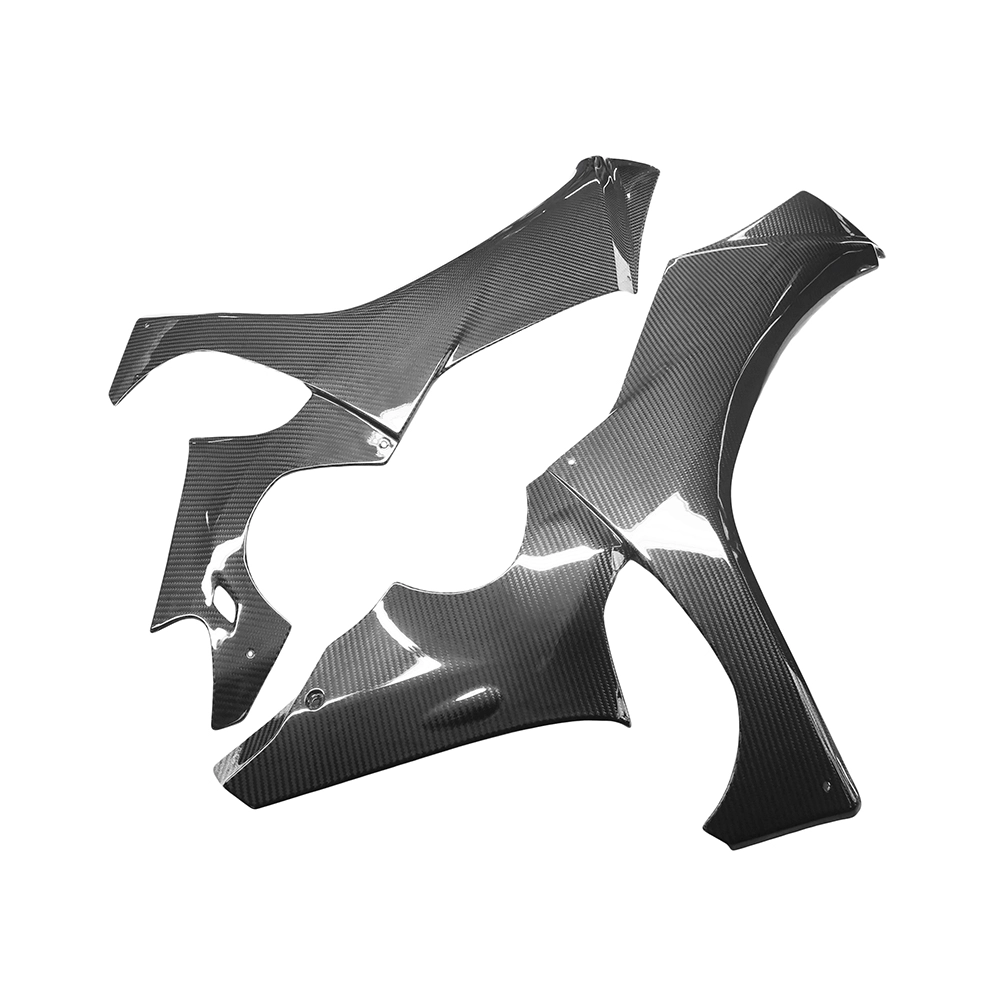
Yamaha R1 Carbon Fiber Side Fairings
Introducing the Supreem Carbon Fiber Long Side Panels for Yamaha R1. Crafted with precision and expertise, this front side fairing is designed to elevate the performance and aesthetics of your R1. Made from high-quality carbon fiber, this fairing is not only lightweight but also incredibly durable, providing optimal protection for your motorcycle.
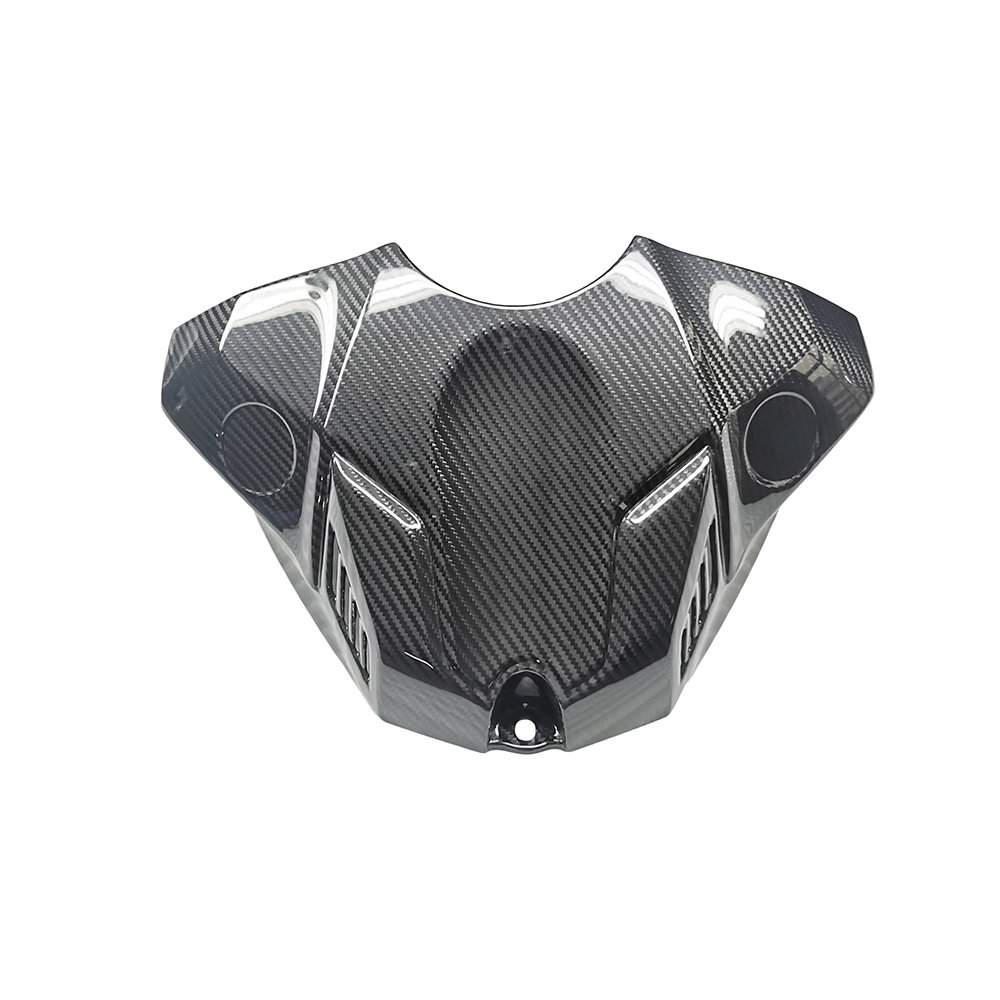
Yamaha R1 Carbon Fiber Airbox Tank Cover
The Supreem Carbon Yamaha R1 Carbon Fiber Airbox Tank Cover provides lightweight, durable protection with a sleek finish. Designed for R1 models, it enhances the style and performance of your bike. Its lightweight structure improves performance while maintaining the premium aesthetics necessary for high-end modification projects. As a dedicated manufacturer of carbon fiber parts, we provide stable production capacity, customization options, and strict quality control to support enterprise-level procurement and OEM/ODM needs.
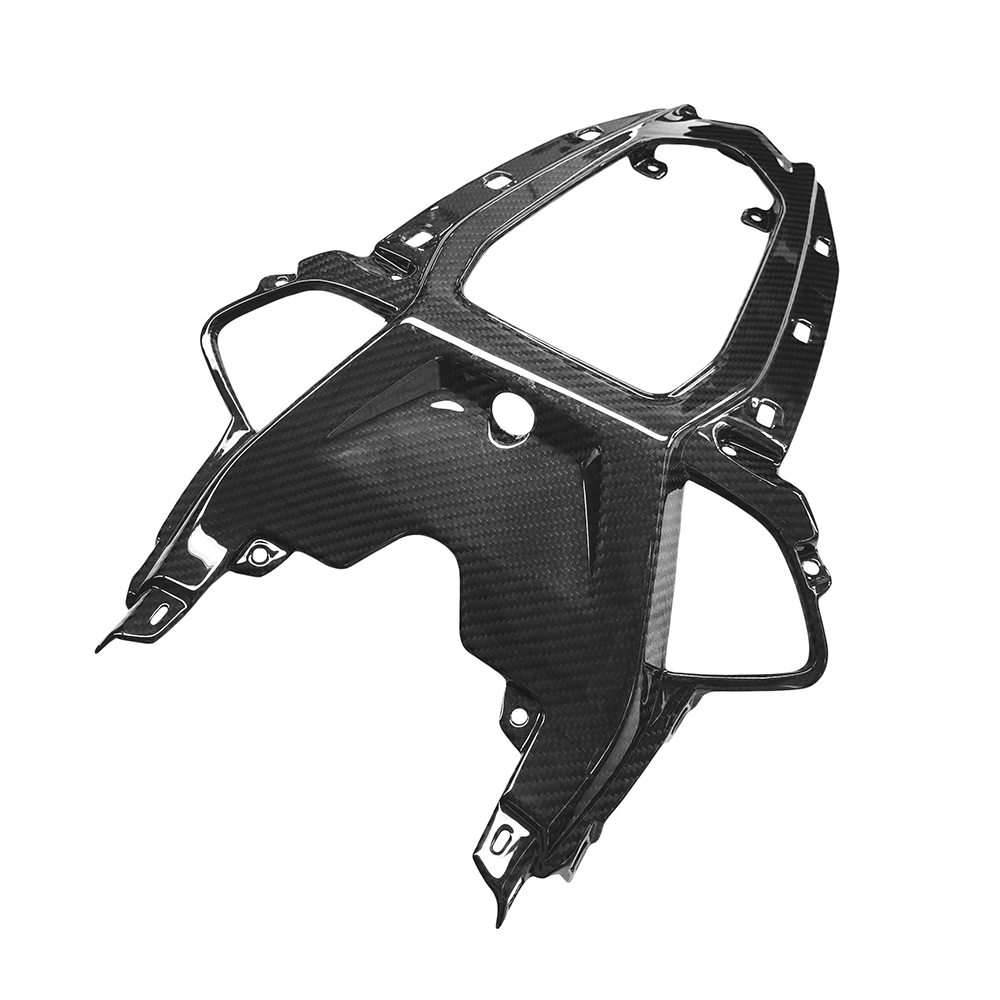
Carbon Fiber Rear Seat Panel for BMW S1000R & M1000RR – Lightweight Performance
This carbon fiber rear seat panel is engineered for the BMW S1000R and M1000RR, offering superior rigidity, reduced weight, and a premium racing finish. Produced with autoclave technology and strict QC standards, the part ensures consistent OEM-level fitment. Supreem Carbon provides wholesale supply, stable bulk production, and customized solutions for global clients.
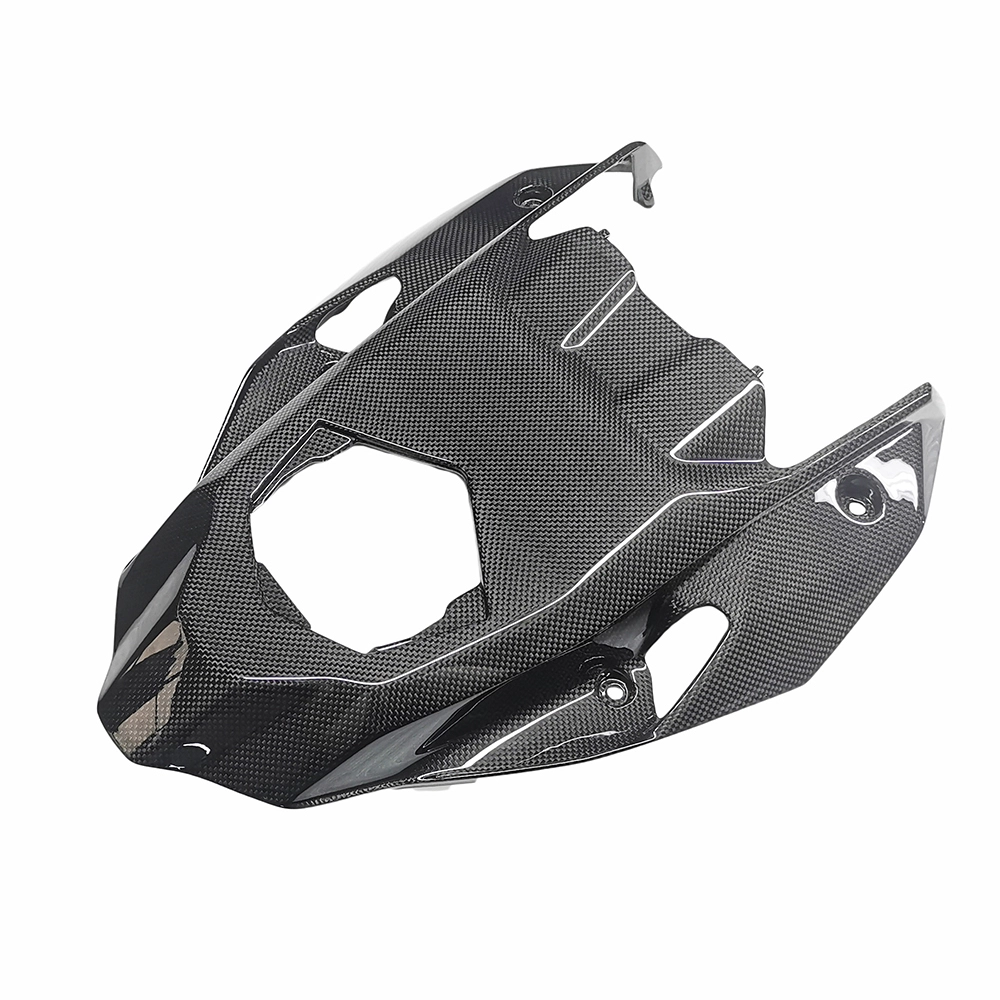
High-Performance Carbon Fiber Rear Undertail for BMW S1000R
Engineered for distributors, tuning brands, and motorcycle accessory businesses, the BMW S1000R Carbon Fiber Rear Undertail is a high-quality, durable, lightweight carbon fiber upgrade for the S1000R platform. This component is manufactured using aerospace-grade carbon fiber and precision molds to deliver superior stiffness, a seamless OEM-level fit, and a premium visual finish suitable for high-end aftermarket applications.

Supreem Carbon aiming to provide customers with high-performance carbon fiber products and quality services.
Contact Supreem Carbon
Address : Building 1 No.103, Yadi Nan 1st Road, QiaoTou Town, Dongguan City, China.
© 2024 Supreem Carbon All Rights Reserved.
Facebook
Pinterest
LinkedIn
Instagram