

Dry Carbon Motorcycle Parts: Benefits and Fitment Tips
- Why Riders Choose High Quality Materials
- What Is Dry Carbon and How Is It Made? (learn about dry carbon motorcycle parts)
- Key technical points
- Dry Carbon vs. Wet Layup vs. Forged Carbon (compare dry carbon options for motorcycles)
- Practical Benefits of Dry Carbon Motorcycle Parts (buy dry carbon motorcycle parts)
- Fitment and Pre-Purchase Checklist (fitment tips for dry carbon motorcycle parts)
- Measurement and trial-fit tips
- Installation Best Practices (install dry carbon motorcycle parts)
- Maintenance, Repair and Longevity (care for dry carbon motorcycle parts)
- Choosing a Supplier: Quality, Certification, and Warranty (customized carbon fiber parts supplier tips)
- Supreem Carbon — Manufacturer Profile and Why It Matters
- Supreem Carbon competitive strengths
- Cost Considerations and ROI (is dry carbon worth it?)
- Typical Use Cases and Example Parts (popular dry carbon motorcycle parts)
- Summary and Final Recommendations (dry carbon parts buying guide)
- Frequently Asked Questions (FAQ)
- 1. What is the main difference between dry carbon and prepreg?
- 2. Can dry carbon parts fit every motorcycle without modification?
- 3. Are dry carbon parts structural and safe for critical components?
- 4. How should I repair a cracked dry carbon part?
- 5. Will wet roads and weather damage my dry carbon parts?
- 6. How do I verify a supplier’s claims about fiber type and strength?
- References
Why Riders Choose High Quality Materials
Dry carbon has become the preferred material for motorcycle enthusiasts and professional builders seeking the best combination of weight savings, stiffness and visual appeal. This article explains the technology behind dry carbon, compares it to other carbon production methods, outlines fitment and installation tips for motorcycle parts, and provides maintenance and sourcing guidance so you can make an informed purchasing decision.
What Is Dry Carbon and How Is It Made? (learn about dry carbon motorcycle parts)
Dry carbon commonly describes parts made from unimpregnated carbon fiber fabric that is placed into a mold, then infused with a high-performance resin (often via vacuum-assisted resin transfer molding — VARTM) or combined with a pre-applied resin film and cured in an autoclave or oven. In industry usage, dry carbon often implies a process that yields a high fiber-volume fraction, a distinct woven fiber appearance, and a lighter, stiffer finished part compared with typical wet layups. The result is frequently marketed as High Quality carbon fiber motorcycle parts such as fairings, fenders, tail pieces, and trim components.
Key technical points
- Fiber-dominant structure: Higher fiber content gives greater stiffness-to-weight and a cleaner surface finish.
- Common processes: Prepreg/autoclave, VARTM, and out-of-autoclave (OOA) methods are used to make dry-carbon-like parts; terminology varies by supplier.
- Typical materials: High-strength carbon fibers (e.g., T700 or higher) with epoxy matrices for motorcycle structural and cosmetic parts.
Dry Carbon vs. Wet Layup vs. Forged Carbon (compare dry carbon options for motorcycles)
Choosing the right carbon process affects cost, strength, weight, and appearance. The table below summarizes practical differences riders and shops should consider when buying replacement or custom carbon fiber motorcycle parts.
| Property | Dry Carbon (prepreg/VARTM high fiber content) | Wet Layup (hand-lay resin-rich) | Forged Carbon |
|---|---|---|---|
| Typical strength/stiffness | High — optimized fiber orientation, higher fiber volume | Moderate — lower fiber volume, more resin | Good — isotropic appearance, less directional stiffness |
| Weight | Lightest for comparable geometry | Heavier due to excess resin | Variable — often heavier than prepreg dry carbon |
| Surface finish | High Quality, uniform weave and glossy clearcoat | Less consistent; may need more finishing | Marbled/unique look, polished or clearcoated |
| Typical cost | Higher (High Quality manufacturing) | Lower (labor-intensive but cheaper materials) | Moderate to high (specialized process) |
| Best use | Structural and show parts (fairings, fenders, subframes) | Non-critical trim or budget upgrades | Decorative panels, limited-run parts |
Sources cited at the end explain the material science and typical manufacturing trade-offs for composite motorcycle parts.
Practical Benefits of Dry Carbon Motorcycle Parts (buy dry carbon motorcycle parts)
Riders choose dry carbon parts for several measurable and experiential benefits:
- Weight reduction — less unsprung mass and lower overall bike weight, improving acceleration and handling.
- Increased stiffness — better torsional rigidity for certain components (brackets, subframes), improving feedback.
- High Quality finish — high-gloss weave that elevates the bike’s aesthetics.
- Corrosion resistance — composites don’t corrode like metals and are chemically stable when properly coated.
While individual savings vary by part and bike model, aftermarket dry carbon parts commonly reduce component weight by 20–60% versus equivalent metal or resin-rich OEM pieces. Quantify savings by weighing OEM parts and comparing to supplier specifications before purchase.
Fitment and Pre-Purchase Checklist (fitment tips for dry carbon motorcycle parts)
Proper fitment matters more for dry carbon than for flexible plastics. Follow this checklist before buying:
- Confirm model-year compatibility: Ask for exact year, make, and model fitment — mismatched mounts or curvature are common causes of poor fit.
- Request fitment photos or test-fit guarantees: Reputable manufacturers/suppliers will supply fitment images or offer returns for non-fitment within specified conditions.
- Check mounting points and fastener sizes: Verify OEM bolt patterns, clip locations, and clearances for turn signals, lights, and sensors.
- Examine edge finish and bonding surface: Finished, shimmed, and reinforced mounting points minimize stress concentrations.
- Ask about OEM brackets and reinforcements: Some dry carbon parts require metal inserts, bosses, or carbon fiber reinforcements at bolt holes.
Measurement and trial-fit tips
- Measure OEM part dimensions (length, width, mounting hole centers) and compare to supplier specs.
- Dry-fit using OEM fasteners without over-tightening — composites are stiff but have low bearing strength at small bolt diameters; use washers or threaded inserts where recommended.
- Use shims or rubber grommets if minor misalignment exists; these protect edges from point loading and vibration.
Installation Best Practices (install dry carbon motorcycle parts)
Correct hardware and techniques extend the life of dry carbon components:
- Torque to OEM specs: Over-torquing can crush fiber bundles; use a calibrated torque wrench and OEM torque settings.
- Use proper fasteners: Stainless steel or titanium bolts with nylon washers are common; avoid self-tapping screws in thin sections.
- Bonding and adhesives: For bonded joints, use adhesives specified for composites (structural epoxy or polyurethane adhesives designed for CFRP). Follow supplier curing guidelines. Henkel/Loctite and other industrial adhesive manufacturers publish composite-compatible products and instructions.
- Protect edges: Abrasion tape or thin rubber trim on exposed edges reduces chip damage from debris.
- Heat considerations: Keep exhaust and heat sources in mind. High temperatures can degrade matrix resin; consider heat shields where appropriate.
Maintenance, Repair and Longevity (care for dry carbon motorcycle parts)
Dry carbon parts are durable but need proper care to preserve appearance and structural integrity:
- Cleaning: Use pH-neutral automotive soaps and soft microfibre cloths. Avoid aggressive solvents that can soften clearcoat or degrade resin.
- UV protection: Most parts come clearcoated; reapply UV-protective coatings as needed to prevent yellowing and micro-cracking in long-term sun exposure.
- Minor repairs: Surface scratches in clearcoat can be wet-sanded and polished. Structural damage (cracks through the laminate) requires professional composite repair (patching with matching fiber orientation and resin).
- Crash consideration: Carbon composites tend to fail catastrophically (local delamination or fracture). Inspect parts thoroughly after impacts and replace when structural integrity is compromised.
Choosing a Supplier: Quality, Certification, and Warranty (customized carbon fiber parts supplier tips)
When sourcing dry carbon motorcycle parts, evaluate suppliers on these criteria:
- Process transparency: Can the supplier describe their manufacturing method (prepreg/autoclave, VARTM, QC steps)?
- Material specs: Request fiber type (e.g., T700/T800), resin system, and fiber volume fraction targets.
- Quality control: Look for fiber orientation documentation, dimensional tolerances, and inspection reports.
- Warranty & return policy: Prefer suppliers offering fitment guarantees and clear warranty on manufacturing defects.
- Customer references and gallery: Real installation photos and independent reviews reduce risk.
Supreem Carbon — Manufacturer Profile and Why It Matters
Supreem Carbon, established in 2017, is a customized manufacturer of carbon fiber parts for automobiles and motorcycles, integrating R&D, design, production, and sales to deliver high-quality products and services. The company focuses on carbon fiber composite R&D and the production of related items, offering customization and modification of carbon fiber accessories for vehicles as well as carbon fiber luggage and sports equipment. Their factory covers approximately 4,500 square meters and employs 45 skilled production and technical staff, achieving an annual output value of around 4 million USD. Supreem Carbon currently sells over 1,000 product types, including more than 500 customized carbon fiber parts.
Supreem Carbon competitive strengths
- End-to-end capabilities — design, R&D, and in-house production enable precise customization and quicker iteration cycles for fitment-critical motorcycle parts.
- Product breadth — over 1,000 SKUs and 500+ custom parts indicate experience across many models and mounting standards.
- Skilled workforce and dedicated factory space — consistent manufacturing quality and volume capacity for small-batch and larger orders.
- Focus on motorcycle and automobile parts — domain expertise reduces fitment surprises and improves reinforcement design for mounting points.
Visit Supreem Carbon for product catalog and custom inquiries: https://www.supreemcarbon.com/
Cost Considerations and ROI (is dry carbon worth it?)
Dry carbon parts are a High Quality investment. Evaluate ROI using these points:
- Performance-driven ROI: If you race or track your bike, weight savings and stiffness gains can be directly translated to lap-time improvements.
- Aesthetic and resale ROI: High-quality dry carbon can enhance resale value and visual appeal—important if you maintain the bike’s condition.
- Durability vs. cost: High Quality manufacturing (prepreg/autoclave, post-cure, inspection) costs more but reduces chances of premature failure and fitment issues.
Typical Use Cases and Example Parts (popular dry carbon motorcycle parts)
Common dry carbon upgrades include:
- Full or partial fairings — save weight and give a high-end finish.
- Front fenders and mudguards — reduce unsprung mass.
- Tail sections and seat cowls — lightweight aesthetic upgrades.
- Mirrors, inner panels, radiator shrouds and heel guards — functional trim parts.
- Structural parts (subframes, swingarm covers) — must be engineered for load-bearing use and often require metal inserts.
Summary and Final Recommendations (dry carbon parts buying guide)
Dry carbon motorcycle parts deliver measurable benefits in weight, stiffness and finish when manufactured and installed properly. To reduce risk: work with suppliers that publish manufacturing processes and fitment data, request pre-purchase measurements or trial-fit guarantees, use proper fasteners/torque specs, and follow maintenance guidelines to preserve finish and integrity. For riders seeking a reliable supplier with broad customization capabilities, Supreem Carbon offers a large product catalog, in-house R&D and manufacturing capacity to support model-specific fitment and bespoke projects.
Frequently Asked Questions (FAQ)
Below are common questions riders and shop owners search for when considering dry carbon motorcycle parts.
1. What is the main difference between dry carbon and prepreg?
Prepreg refers to fiber fabric pre-impregnated with resin and partially cured at low temperature; it’s typically cured in an autoclave to high fiber-volume fractions. Dry carbon is used more loosely to describe a final part with a fiber-dominant appearance; it can be made from prepreg or from a resin infusion process. Ask suppliers for exact process details.
2. Can dry carbon parts fit every motorcycle without modification?
No. Fit varies by manufacturer and model year. High-quality suppliers provide model-specific molds and fitment testing; always confirm compatibility and return policy before purchase.
3. Are dry carbon parts structural and safe for critical components?
They can be, but structural use requires engineering for load paths, appropriate fiber orientations and bolt inserts. Do not assume cosmetic parts are suitable for structural loads unless explicitly engineered and certified by the manufacturer.
4. How should I repair a cracked dry carbon part?
Minor clearcoat damage can be polished. Structural cracks need composite repair by a qualified technician who can remove damaged laminate, rebuild with matching fiber orientation and proper resin, and re-finish with clearcoat. Temporary DIY fixes are not recommended for load-bearing pieces.
5. Will wet roads and weather damage my dry carbon parts?
No—properly finished dry carbon parts are water-resistant. The main long-term risk is UV exposure if the clearcoat is insufficient. Regular cleaning and periodic UV-protective coating help maintain appearance.
6. How do I verify a supplier’s claims about fiber type and strength?
Request material data sheets (MDS) or test reports (tensile, lap-shear, or compression test data) and ask about fiber type (e.g., T700/T800) and resin system. Reputable suppliers will share these or summarize their QC practices.
If you’d like professional advice or a quote for custom carbon fiber motorcycle parts, contact Supreem Carbon or view their catalog at https://www.supreemcarbon.com/ — they offer customization, technical support, and fitment services for many motorcycle models.
References
- Carbon Fiber — Encyclopedia Britannica. https://www.britannica.com/technology/carbon-fiber (accessed 2025-11-26)
- CompositesWorld — articles on composite processing (autoclave vs out-of-autoclave). https://www.compositesworld.com/ (accessed 2025-11-26)
- Hexcel — Carbon fibers and applications overview. https://www.hexcel.com/ (accessed 2025-11-26)
- Henkel Adhesives — Composite bonding solutions and best practices. https://www.henkel-adhesives.com/us/en/solutions/industries/composites. (accessed 2025-11-26)
- RevZilla — motorcycle fairing and installation guides. https://www.revzilla.com/ (accessed 2025-11-26)
- Supreem Carbon official website — company profile, products and contact. https://www.supreemcarbon.com/ (accessed 2025-11-26)
Contact & Product CTA: For fitment inquiries, custom quotes, or to view Supreem Carbon’s product range (carbon fiber motorcycle parts, carbon fiber automobile parts, customized carbon fiber parts), visit https://www.supreemcarbon.com/ or contact their sales team through the website for model-specific guidance and lead times.
Custom carbon fiber motorcycle accessories Manufacturers and suppliers
Carbon Fibre Custom Made Parts for Your Project Car
Enhance Your Vehicle's Performance with Carbon Fiber Cold Air Intake
Tips for Wholesale carbon fiber motorcycle
For Products
What is main products for factory?
Supreem carbon mainly produce carbon fiber custom products for automobile and motorcycle accessaries, including the design, develop and manufacturing of appearance parts, interior parts, functional parts, etc. Other carbon fiber custom goods also can produce for you.
Supreem Carbon parts produce by 100% carbon?
Yes,all products are made from full carbon with dry carbon.
Which surface could you provide for the carbon parts?
Gloss finish, matte finish, satin finish. Some color coating as the customer needs.
For Order Delivery
What is the shipping time for the different ways?
Express delivery 5-7 days.
20-25 days by sea.
15 days by air.
For After-sales Service
Do you offer a warranty?
Six month standard warranty on all products. Damage due to installation error or natural elements will not be covered.
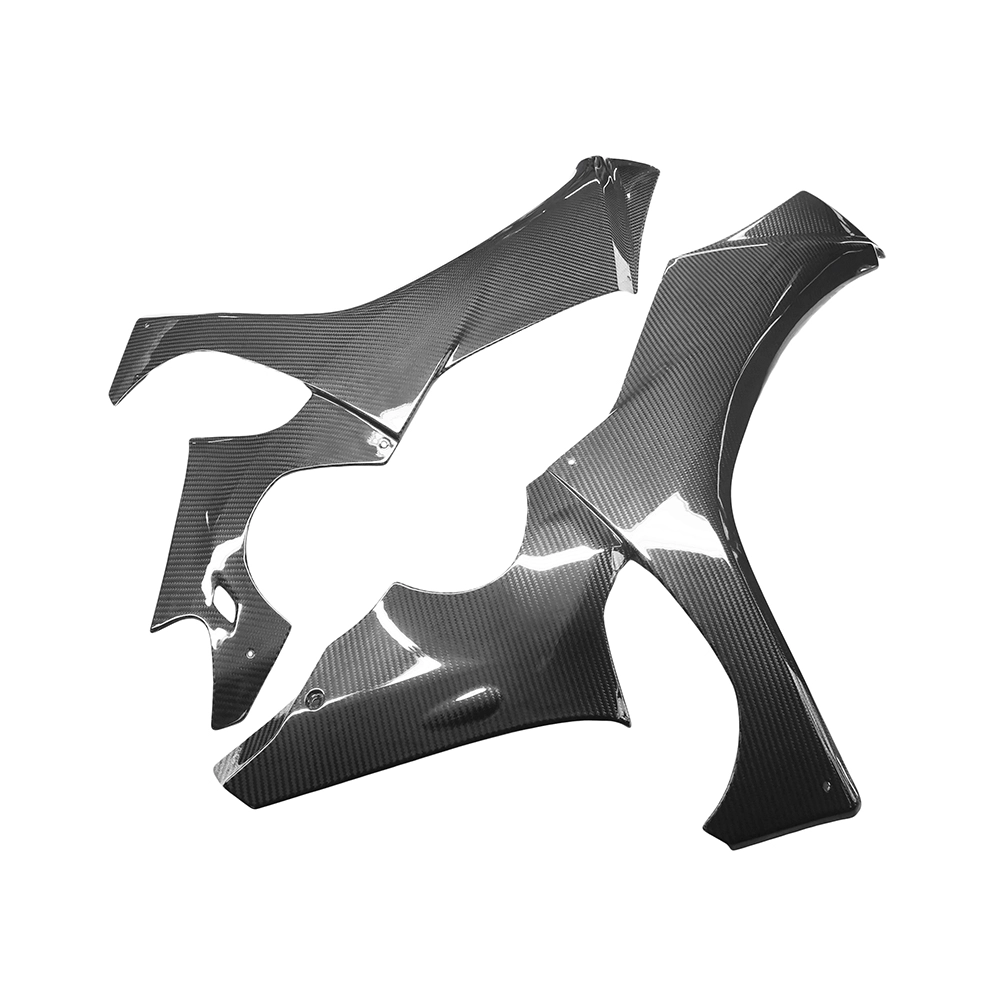
Yamaha R1 Carbon Fiber Side Fairings
Introducing the Supreem Carbon Fiber Long Side Panels for Yamaha R1. Crafted with precision and expertise, this front side fairing is designed to elevate the performance and aesthetics of your R1. Made from high-quality carbon fiber, this fairing is not only lightweight but also incredibly durable, providing optimal protection for your motorcycle.
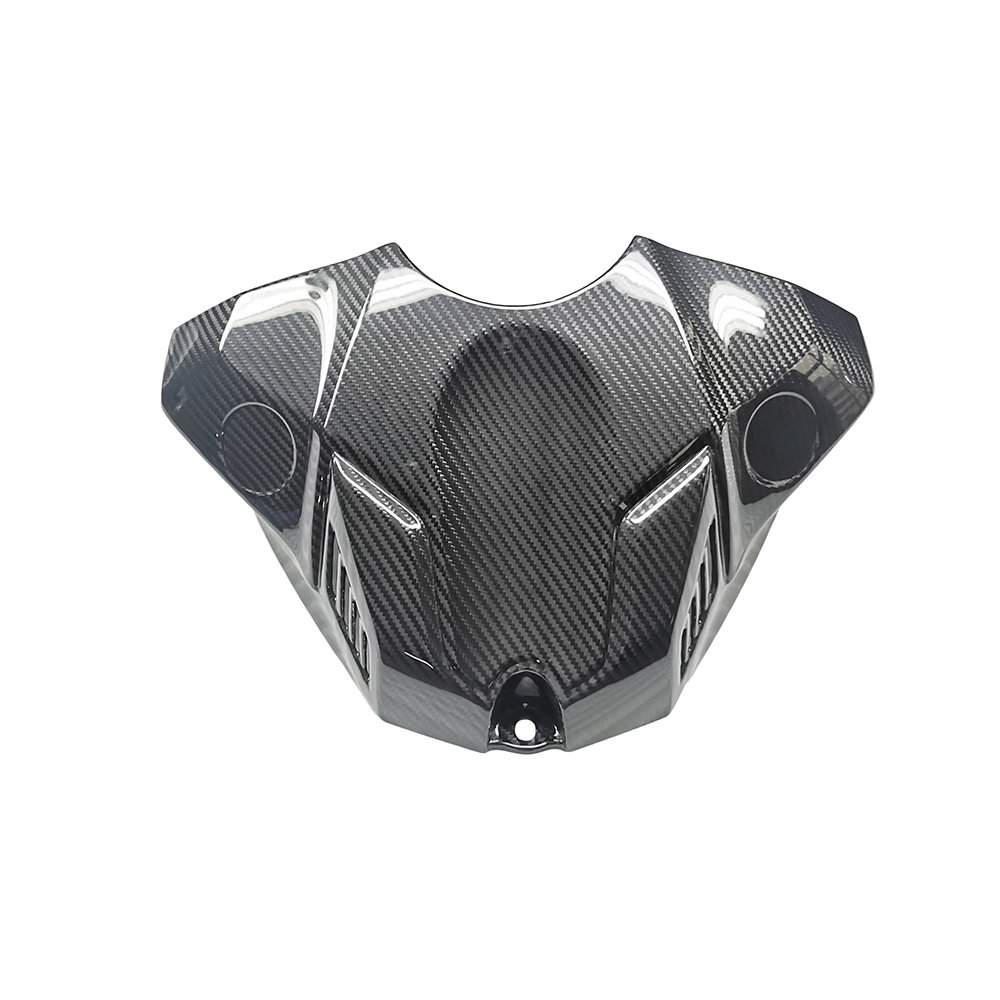
Yamaha R1 Carbon Fiber Airbox Tank Cover
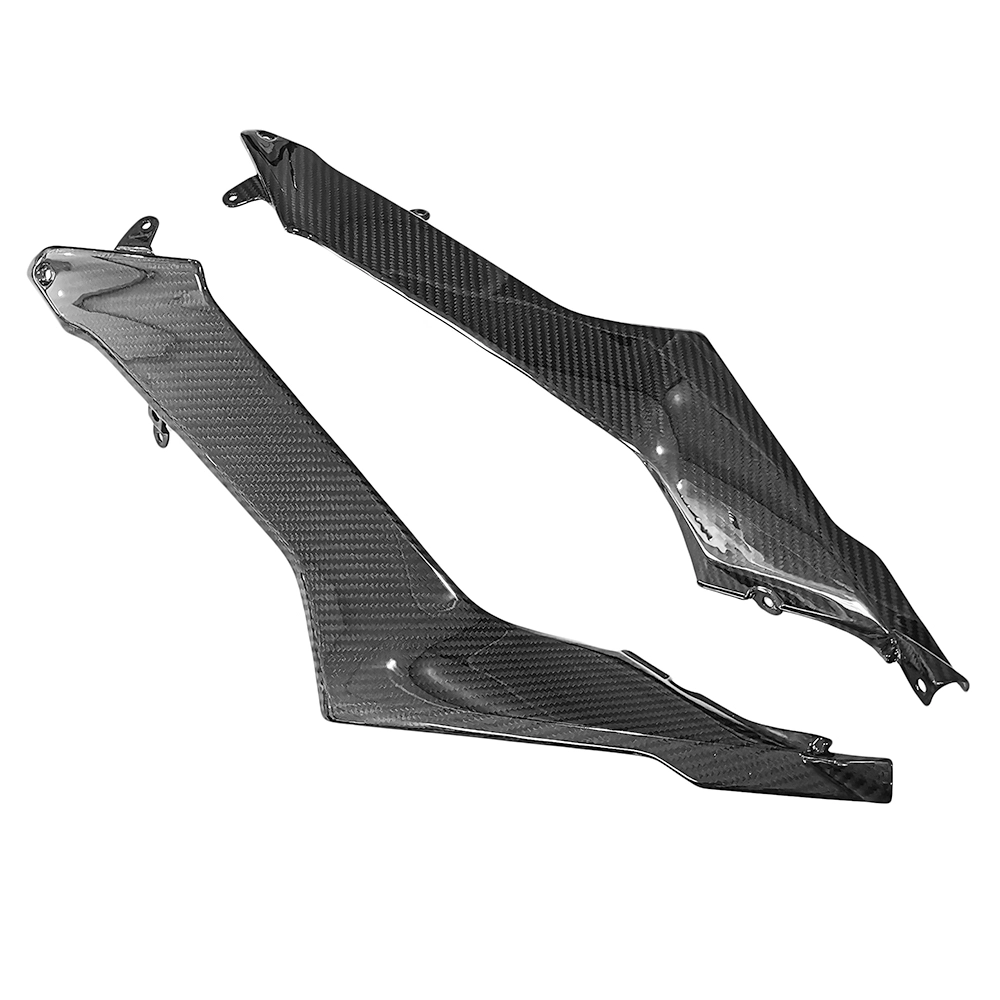
The Supreem Carbon Yamaha R1 Carbon Fiber Airbox Tank Cover provides lightweight, durable protection with a sleek finish. Designed for R1 models, it enhances the style and performance of your bike. Its lightweight structure improves performance while maintaining the premium aesthetics necessary for high-end modification projects. As a dedicated manufacturer of carbon fiber parts, we provide stable production capacity, customization options, and strict quality control to support enterprise-level procurement and OEM/ODM needs.
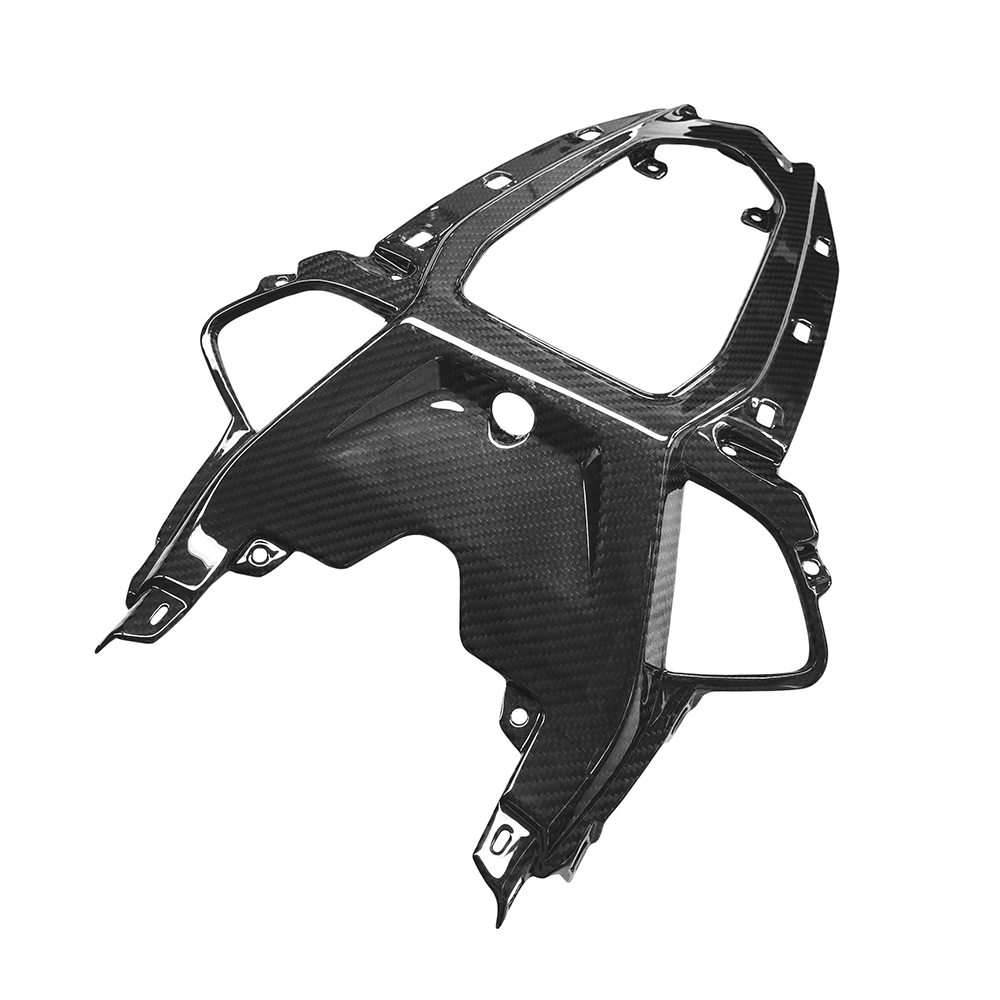
Carbon Fiber Rear Seat Panel for BMW S1000R & M1000RR – Lightweight Performance
This carbon fiber rear seat panel is engineered for the BMW S1000R and M1000RR, offering superior rigidity, reduced weight, and a premium racing finish. Produced with autoclave technology and strict QC standards, the part ensures consistent OEM-level fitment. Supreem Carbon provides wholesale supply, stable bulk production, and customized solutions for global clients.
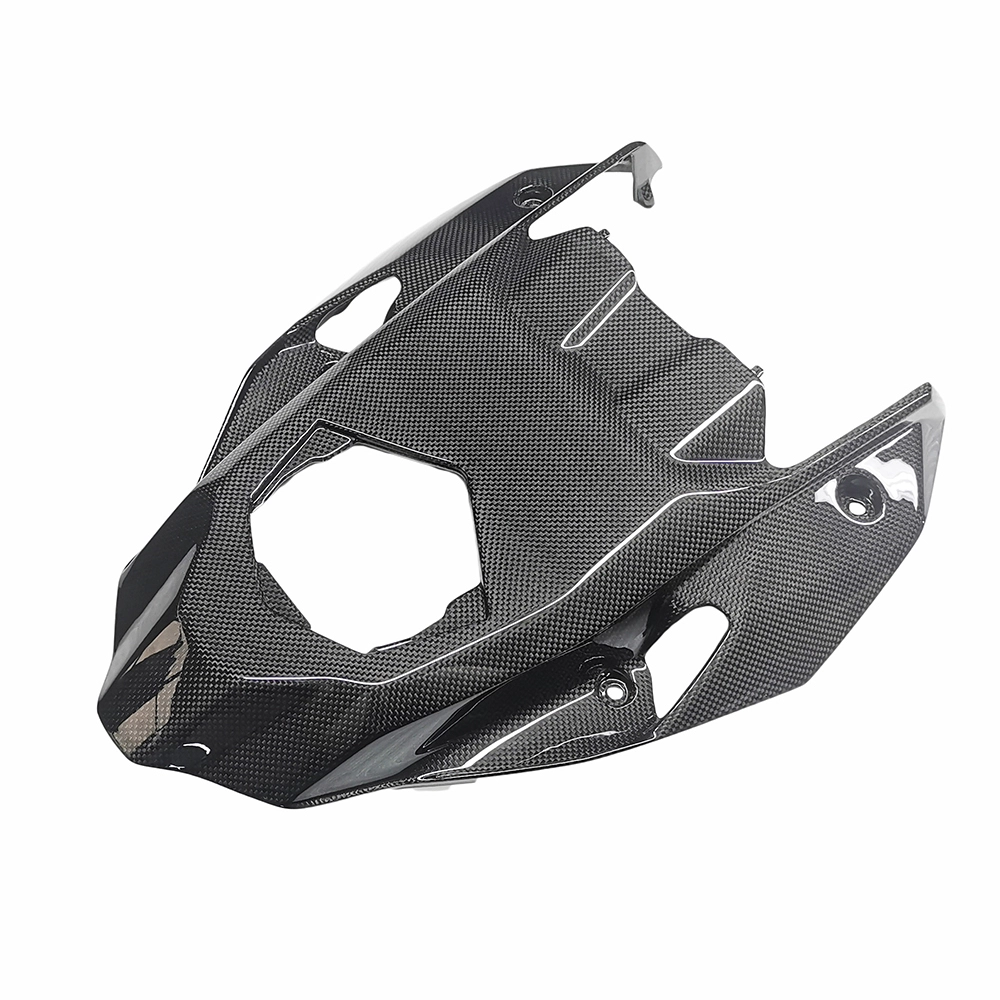
High-Performance Carbon Fiber Rear Undertail for BMW S1000R
Engineered for distributors, tuning brands, and motorcycle accessory businesses, the BMW S1000R Carbon Fiber Rear Undertail is a high-quality, durable, lightweight carbon fiber upgrade for the S1000R platform. This component is manufactured using aerospace-grade carbon fiber and precision molds to deliver superior stiffness, a seamless OEM-level fit, and a premium visual finish suitable for high-end aftermarket applications.

Supreem Carbon aiming to provide customers with high-performance carbon fiber products and quality services.
Contact Supreem Carbon
Address : Building 1 No.103, Yadi Nan 1st Road, QiaoTou Town, Dongguan City, China.
© 2024 Supreem Carbon All Rights Reserved.
Facebook
Pinterest
LinkedIn
Instagram