

Is carbon fiber lighter than plastic? Full comparison
- Lightweight materials in modern manufacturing
- Quick answer: is carbon fiber lighter than plastic?
- Material basics: density vs performance — embed : carbon fiber motorcycle parts
- Density (mass per unit volume) compared to mechanical performance
- Side-by-side data: densities, tensile strength, modulus — embed : custom carbon fiber parts
- Verified comparative table
- Why carbon fiber can be lighter than plastic for structural parts — embed : carbon fiber automobile parts
- Strength-to-weight and design freedom
- Practical example: replacing an ABS structural cover — embed : buy carbon fiber parts
- Illustrative calculation (verifiable)
- Cost, manufacturability, and production volume considerations — embed : customized carbon fiber parts
- When plastics win
- When carbon fiber is justified
- Durability, repair, and recyclability — embed : carbon fiber motorcycle parts
- Service life and repairability
- Industry use cases and real-world examples — embed : carbon fiber automobile parts
- Where CFRP is used today
- Comparative summary table — embed : custom carbon fiber parts
- Decision matrix at a glance
- How to choose: guidelines for engineers and buyers — embed : buy carbon fiber parts
- Decision flow (practical)
- Supreem Carbon: who we are and why we matter — embed : customized carbon fiber parts, carbon fiber motorcycle parts, carbon fiber automobile parts
- Company profile and core strengths
- Case examples: where Supreem Carbon adds value — embed : carbon fiber motorcycle parts
- Typical projects and outcomes
- Practical recommendations for buyers and engineers — embed : buy carbon fiber parts
- Checklist before selecting CFRP over plastic
- Conclusion and next steps — embed : custom carbon fiber parts
- Final summary
- FAQ — Frequently Asked Questions (with short answers)
- 1. Is carbon fiber always stronger than plastic?
- 2. Will a carbon fiber motorcycle fairing always be lighter than a plastic one?
- 3. Are carbon fiber parts more expensive than plastic parts?
- 4. Can carbon fiber parts be repaired like plastic ones?
- 5. How do I get custom carbon fiber parts for my vehicle?
- Contact & product inquiry — embed : buy carbon fiber parts, customized carbon fiber parts
- Get a quote or technical consultation
- References
Lightweight materials in modern manufacturing
Quick answer: is carbon fiber lighter than plastic?
Shortly: It depends on which plastic you compare and how you define lighter. By raw bulk density, many common engineering plastics (e.g., polypropylene at ~0.90 g/cm3) are less dense than typical carbon fiber reinforced polymers (CFRP) (≈1.5–1.6 g/cm3). But for structural parts requiring high stiffness and strength, carbon fiber often delivers much greater strength-to-weight and stiffness-to-weight, so a CFRP part can be lighter than a plastic part that meets the same load requirements. This article explains the key metrics, presents verified data, and shows real-world trade-offs for automotive and motorcycle applications where weight matters.
Material basics: density vs performance — embed : carbon fiber motorcycle parts
Density (mass per unit volume) compared to mechanical performance
Density is a simple property measured in g/cm3 (or kg/m3). Common unreinforced plastics have densities ranging roughly from 0.9 to 1.4 g/cm3. Carbon fiber composites are typically in the 1.5–1.6 g/cm3 range when using thermoset epoxy matrices and conventional fiber volume fractions. But density alone doesn’t capture what matters for structural parts: tensile strength, elastic modulus (stiffness), and crucially, specific strength and specific modulus (property divided by density). Carbon fiber composites can have specific strength and stiffness several times higher than engineering plastics, allowing much thinner or lighter designs to carry the same loads.
Side-by-side data: densities, tensile strength, modulus — embed : custom carbon fiber parts
Verified comparative table
| Material | Typical Density (g/cm3) | Tensile Strength (MPa) | Young's Modulus (GPa) | Typical Use |
|---|---|---|---|---|
| Polypropylene (PP) | ~0.90–0.92 | 25–40 | 1.0–2.0 | Non-structural trims, housings |
| ABS | ~1.02–1.10 | 30–55 | 1.5–2.5 | Panels, fairings |
| Polycarbonate (PC) | ~1.20–1.22 | 55–75 | 2.0–2.4 | Impact-resistant parts |
| Nylon (PA6/PA66) | ~1.13–1.15 | 60–90 | 2.0–3.5 | Gears, functional parts |
| Carbon fiber reinforced polymer (CFRP, typical epoxy matrix) | ~1.5–1.6 | 500–1500 (fiber-direction) | 70–150 (fiber-direction) | Structural panels, frames, fairings |
Sources: material datasheets and composites literature (see references).
Why carbon fiber can be lighter than plastic for structural parts — embed : carbon fiber automobile parts
Strength-to-weight and design freedom
If you need a part to carry a given load or meet stiffness targets, the design can often be made thinner with CFRP because of its higher modulus and strength. Example: to resist a bending load, required section modulus scales with modulus and thickness; using a material that is ~30–50x stiffer allows you to reduce cross-section significantly. In practice, a CFRP motorcycle fairing or an automobile body panel designed for stiffness can be 30–60% lighter than a plastics-based equivalent meeting the same structural criteria, even though CFRP's raw density is higher.
Practical example: replacing an ABS structural cover — embed : buy carbon fiber parts
Illustrative calculation (verifiable)
Assume an ABS cover requires 4 mm average thickness to meet stiffness and load requirements. With ABS density ~1.05 g/cm3, mass per m2 = 1.05 * 0.004 = 0.0042 kg/cm3 * 10000 cm2 = 4.2 kg/m2 (or directly: 1.05 g/cm3 * 4 mm = 4.2 kg/m2).
A similar CFRP panel oriented for load-carrying might be 1.5 mm thick (due to higher modulus). Using CFRP density 1.55 g/cm3: mass per m2 = 1.55 * 0.0015 = 2.325 kg/m2. Result: CFRP panel ≈2.33 kg/m2 versus ABS 4.2 kg/m2 — a ~45% weight reduction while maintaining or exceeding stiffness/strength.
Note: Real designs require finite element analysis and safety factors; this example is illustrative and based on typical densities and thicknesses (see references).
Cost, manufacturability, and production volume considerations — embed : customized carbon fiber parts
When plastics win
For high-volume, low-load parts (clips, nonstructural trims, simple housings), injection-molded plastics are almost always cheaper per piece and faster to produce. Plastics require lower tooling cost in some cases (or high upfront mold cost but low COGS at scale). If the part can be made from PP, ABS, or PC and meet lifecycle requirements, plastics will often be the right choice.
When carbon fiber is justified
Carbon fiber becomes the better economic choice when weight savings translate into system-level benefits (improved fuel economy, higher performance, load reduction for other systems), or when the part must meet high stiffness/strength/thermal requirements or aesthetic/High Quality positioning. Carbon fiber also allows tailored anisotropic properties (fiber orientation), enabling optimized designs not possible with isotropic plastics.
Durability, repair, and recyclability — embed : carbon fiber motorcycle parts
Service life and repairability
CFRP offers excellent fatigue resistance and dimensional stability, but impact damage can cause internal delamination that is less obvious than plastic cracking. Plastics often deform or crack visibly and can be easier to patch or replace cheaply. Recycling CFRP (thermoset-based) is more complex than recycling common thermoplastics; however, thermoplastic composites and emerging recycling processes (pyrolysis, solvolysis) are improving circularity for carbon fiber.
Industry use cases and real-world examples — embed : carbon fiber automobile parts
Where CFRP is used today
- High-performance motorcycle fairings, fenders, frame components (weight and stiffness critical)
- Automotive structural parts: roof panels, drive shafts, crash components, and increasingly body-in-white parts in High Quality vehicles
- Sporting goods and luggage where High Quality feel, low weight, and stiffness are important
Manufacturers often combine plastics and carbon fiber: plastics for complex geometry and low cost, CFRP for high-load, thin sections or where High Quality finish is required.
Comparative summary table — embed : custom carbon fiber parts
Decision matrix at a glance
| Criteria | Plastics (PP, ABS, PC, Nylon) | Carbon Fiber (CFRP) |
|---|---|---|
| Raw density | Lower (0.9–1.4 g/cm3) | Higher (≈1.5–1.6 g/cm3) |
| Strength-to-weight | Low–moderate | High (excellent) |
| Stiffness-to-weight | Low | Very high |
| Cost (per part, low volume) | Low | High |
| Manufacturing speed (high volume) | Fast (injection molding) | Slower (layup, RTM, autoclave), but improving |
| Repair & recycle | Easy (thermoplastics) | Challenging (thermoset CFRP), improving technologies exist |
How to choose: guidelines for engineers and buyers — embed : buy carbon fiber parts
Decision flow (practical)
- Define mechanical requirements (loads, stiffness, impact resistance).
- Estimate allowable mass and geometry constraints.
- Compare specific strength/stiffness: run simple thickness/mass estimates as illustrated above.
- Factor cost, production volume, surface finish, and repairability.
- Prototype with both materials where feasible and perform physical tests (fatigue, impact, environmental exposure).
For vehicle components where weight reduction yields tangible performance or efficiency gains, CFRP often wins despite higher material cost.
Supreem Carbon: who we are and why we matter — embed : customized carbon fiber parts, carbon fiber motorcycle parts, carbon fiber automobile parts
Company profile and core strengths
Supreem Carbon, established in 2017, is a customized manufacturer of carbon fiber parts for automobiles and motorcycles, integrating R&D, design, production, and sales to deliver high-quality products and services. We specialize in R&D of carbon fiber composite technology and produce a wide range of related items. Our main offerings include customization and modification of carbon fiber accessories for vehicles, as well as the manufacture of carbon fiber luggage and sports equipment.
Factory & capacity: our factory spans approximately 4,500 square meters and employs 45 skilled production and technical staff, achieving an annual output value of around 4 million dollars. We currently offer over 1,000 types of products, including more than 500 customized carbon fiber parts.
Competitive advantages: Supreem Carbon combines fast prototyping, experienced layup and molding teams, and a product catalog focused on carbon fiber motorcycle parts, carbon fiber automobile parts, and customized carbon fiber parts. Our technical strengths include tailored fiber orientation design, high-quality surface finishes (prepreg-style, clear-coated, or matte), tight dimensional control for fitment, and flexible production runs from prototypes to moderate volumes. Our vision is to become the world's leading carbon fiber products manufacturer. Visit our website: https://www.supreemcarbon.com/.
Case examples: where Supreem Carbon adds value — embed : carbon fiber motorcycle parts
Typical projects and outcomes
- Motorcycle fairings and aerodynamic parts: weight reductions of 30–50% versus ABS while improving rigidity and aesthetic High Quality.- Automobile decorative and structural trims: customized pieces that match OEM fitment and reduce overall vehicle mass.- Custom luggage and sports equipment: high-end feel with durability and low weight.
Practical recommendations for buyers and engineers — embed : buy carbon fiber parts
Checklist before selecting CFRP over plastic
- Verify that performance gains (weight, stiffness) justify higher per-part cost.
- Ask for material certificates, fiber layup schedules, and test data (tensile, fatigue, impact).
- Request prototypes and instrumented testing (strain gauges or modal tests) for parts that carry loads.
- Plan for potential repair or replacement strategies and end-of-life handling.
- Work with experienced suppliers (like Supreem Carbon) who can manage tooling, layup, and finishing to meet automotive/motorcycle tolerances.
Conclusion and next steps — embed : custom carbon fiber parts
Final summary
Is carbon fiber lighter than plastic? Not categorically by raw density — many plastics are less dense. But when judged by what matters for structural vehicle parts (strength-to-weight and stiffness-to-weight), carbon fiber often enables significantly lighter components for the same or better performance. Selecting CFRP versus plastic should be based on mechanical requirements, production volume, cost trade-offs, and lifecycle considerations. For automotive and motorcycle applications where weight and stiffness provide real benefits, carbon fiber—especially when supplied by experienced manufacturers—offers compelling value.
FAQ — Frequently Asked Questions (with short answers)
1. Is carbon fiber always stronger than plastic?
Yes in terms of specific strength and stiffness when comparing CFRP to common engineered plastics. However, plastic formulations can outperform CFRP in ductility and impact resistance in some applications.
2. Will a carbon fiber motorcycle fairing always be lighter than a plastic one?
Not always by raw mass if the plastic is very thin and non-structural. But for equal structural performance (stiffness and strength), a CFRP fairing typically weighs less.
3. Are carbon fiber parts more expensive than plastic parts?
Yes per part and per kg, especially at low volumes. Cost can be justified by performance, weight savings, or High Quality positioning.
4. Can carbon fiber parts be repaired like plastic ones?
Some damage to CFRP can be repaired by qualified technicians, but internal delamination is harder to detect and repair than visible plastic cracks. Repair complexity depends on resin system (thermoset vs thermoplastic).
5. How do I get custom carbon fiber parts for my vehicle?
Work with an experienced manufacturer that offers R&D, prototyping, and production. Supreem Carbon provides customized carbon fiber motorcycle parts, carbon fiber automobile parts, and other tailored components—visit https://www.supreemcarbon.com/ to request quotes and technical support.
Contact & product inquiry — embed : buy carbon fiber parts, customized carbon fiber parts
Get a quote or technical consultation
If you want to evaluate CFRP for a specific part, request a feasibility study or prototype from a manufacturer with composite R&D capability. Supreem Carbon can provide drawings review, layup design, prototype samples, and small-batch production. Visit https://www.supreemcarbon.com/ or contact Supreem Carbon through their website to discuss carbon fiber motorcycle parts, carbon fiber automobile parts, and customized carbon fiber parts tailored to your application.
References
- Engineering Toolbox — Density of materials. https://www.engineeringtoolbox.com/density-materials-d_1652.. Accessed 2025-06-01.
- MatWeb — Material Property Data (ABS, PC, Nylon, PP). https://www.matweb.com. Accessed 2025-05-30.
- CompositesWorld — Articles on carbon fiber properties and applications. https://www.compositesworld.com. Accessed 2025-04-15.
- Hexcel — Technical information on carbon fiber composite systems. https://www.hexcel.com. Accessed 2025-03-10.
- European Commission & industry reports on CFRP recycling and lifecycle (overview articles). https://op.europa.eu. Accessed 2025-02-20.
Best professional carbon fiber motorcycle helmet manufacturers and supplier brands
Custom carbon fibre motorbikes Manufacturers and suppliers in China
Top diy carbon fiber motorcycle parts Manufacturers and Suppliers
Top motorcycle carbon fiber parts Manufacturers and Suppliers
For Facotry
When is Supreem carbon founded?
Our company formally established in early 2017.
For After-sales Service
How can I cancel the order?
We may only cancel your order if it has not been fulfilled yet. We would be more than happy to assist you with any adjustments if you'd wish instead!
For Products
Are you parts have UV protected?
Absolutely! We use multiple layers of premium quality automotive clear (or matt) coats on our products, which ensure that they will remain super pretty for years to come.
For Order Delivery
What is the shipping time for the different ways?
Express delivery 5-7 days.
20-25 days by sea.
15 days by air.
For Carbon Fiber Material
What are the advantages of carbon fiber?
High Strength-to-Weight Ratio
It is stronger than many traditional materials, such as steel and aluminum.This high strength-to-weight ratio allows for the creation of lightweight components that maintain structural integrity and durability.
Lightweight
One of the most significant advantages of carbon fiber is its low density, contributing to lightweight structures. This property is particularly crucial in industries where weight reduction is a priority, such as aerospace, automotive, and sports equipment.
Resistant to corrosion and chemicals
Carbon fiber is inherently resistant to corrosion, making it an ideal material for applications exposed to harsh environments or corrosive substances. This property contributes to the longevity of components and reduces maintenance requirements. Carbon fiber has good chemical resistance, making it suitable for use in environments where exposure to chemicals or harsh solvents is a concern. This resistance enhances the material's durability in various industrial settings.
Tolerant of high temperature
Carbon fiber exhibits excellent thermal stability and resistance to high temperatures. This makes it suitable for applications where components are exposed to elevated temperatures, such as in the aerospace and automotive industries.
Low thermal expansion
Carbon fiber has a low coefficient of thermal expansion, meaning it expands or contracts minimally with changes in temperature. This property contributes to dimensional stability, making carbon fiber components reliable in varying temperature conditions.
Aesthetic Appeal
Carbon fiber has a modern and high-tech appearance, contributing to its aesthetic appeal. This property is leveraged in consumer goods, automotive components, and sporting equipment where visual appeal is important.
Yamaha R1 Carbon Fiber Side Fairings
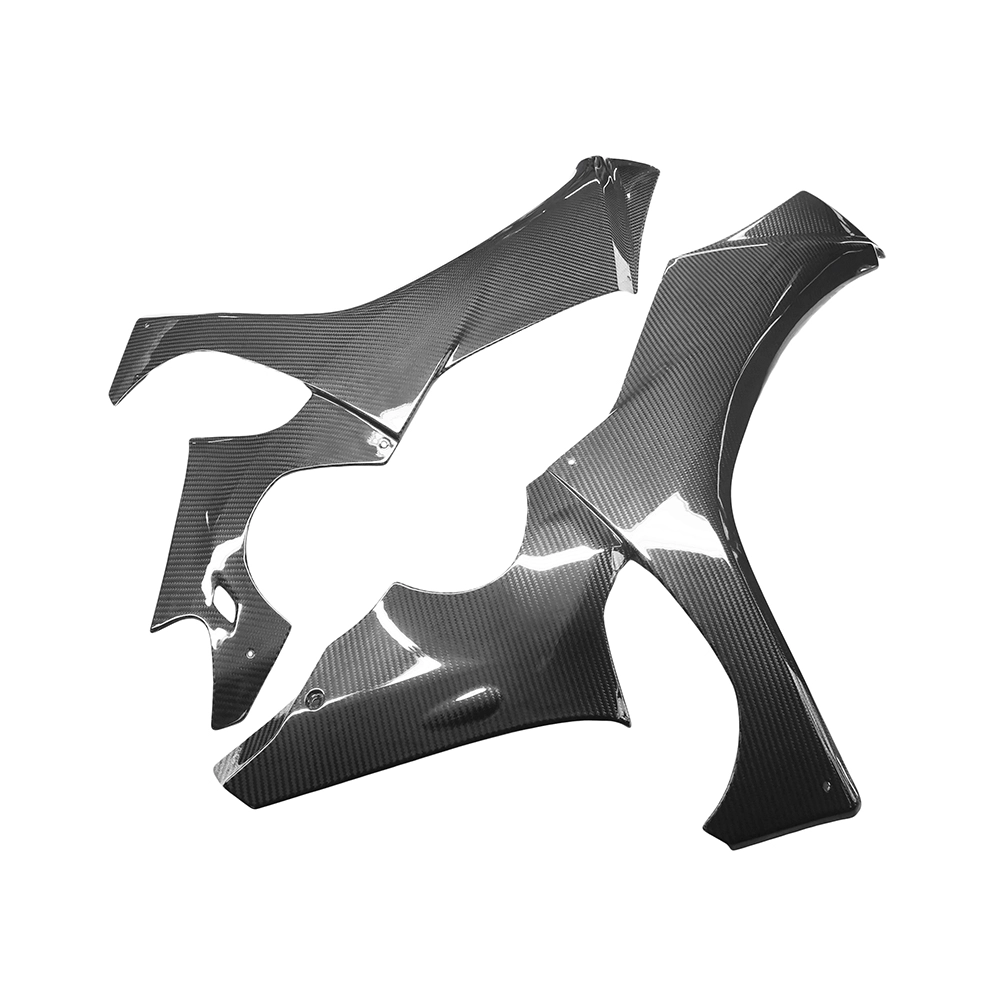
Introducing the Supreem Carbon Fiber Long Side Panels for Yamaha R1. Crafted with precision and expertise, this front side fairing is designed to elevate the performance and aesthetics of your R1. Made from high-quality carbon fiber, this fairing is not only lightweight but also incredibly durable, providing optimal protection for your motorcycle.
Yamaha R1 Carbon Fiber Airbox Tank Cover
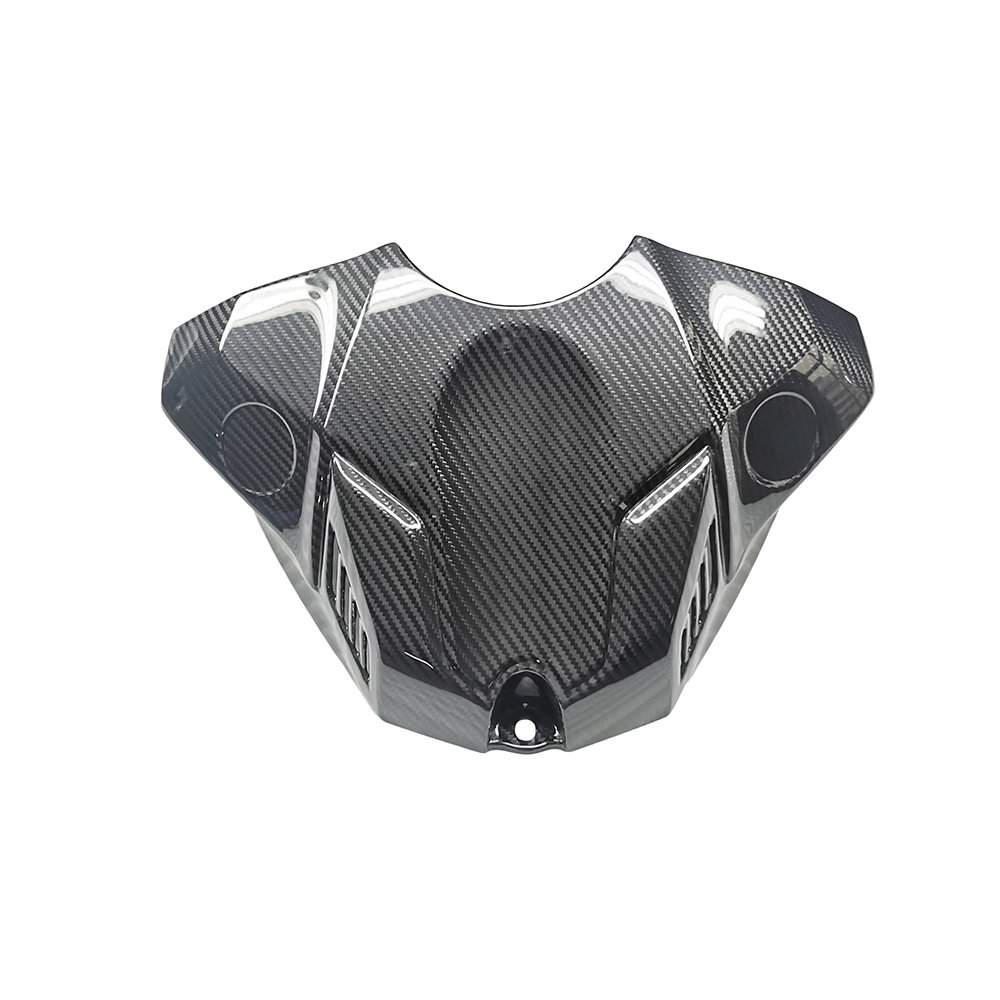
The Supreem Carbon Yamaha R1 Carbon Fiber Airbox Tank Cover provides lightweight, durable protection with a sleek finish. Designed for R1 models, it enhances the style and performance of your bike. Its lightweight structure improves performance while maintaining the premium aesthetics necessary for high-end modification projects. As a dedicated manufacturer of carbon fiber parts, we provide stable production capacity, customization options, and strict quality control to support enterprise-level procurement and OEM/ODM needs.
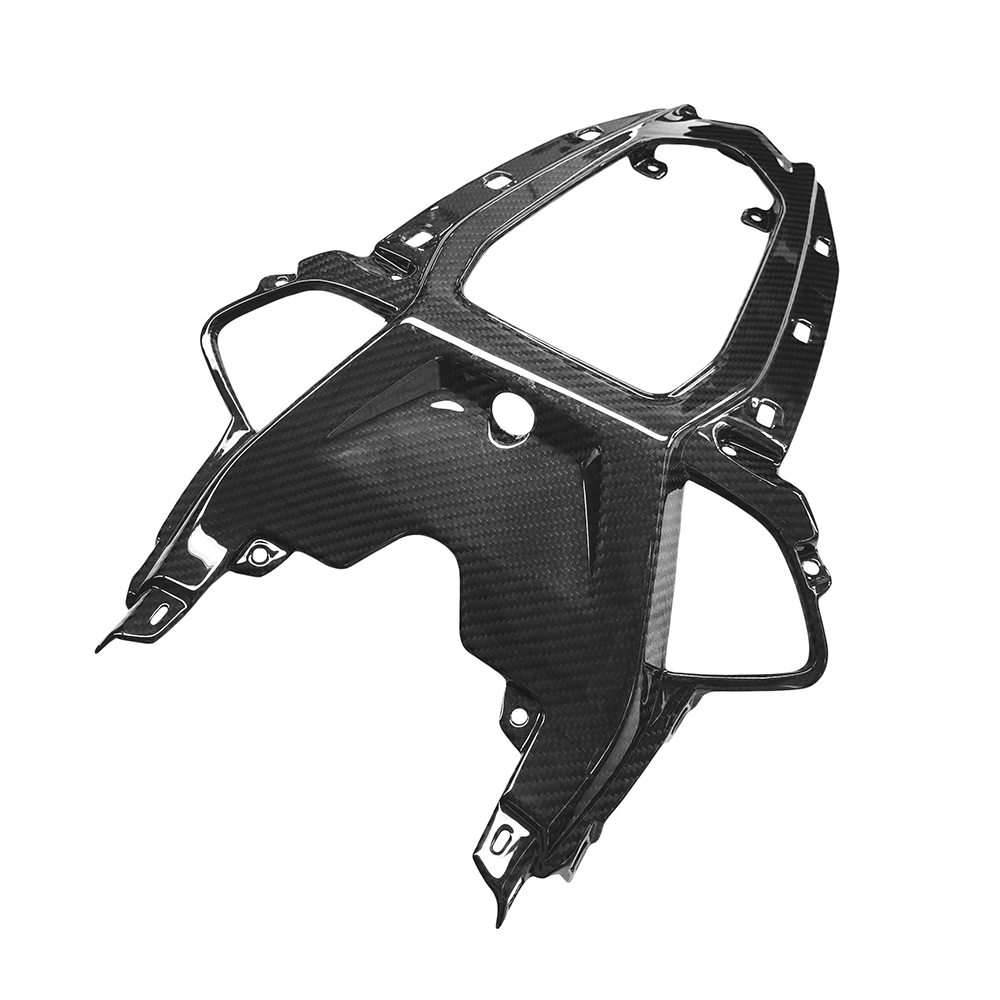
Carbon Fiber Rear Seat Panel for BMW S1000R & M1000RR – Lightweight Performance
This carbon fiber rear seat panel is engineered for the BMW S1000R and M1000RR, offering superior rigidity, reduced weight, and a premium racing finish. Produced with autoclave technology and strict QC standards, the part ensures consistent OEM-level fitment. Supreem Carbon provides wholesale supply, stable bulk production, and customized solutions for global clients.
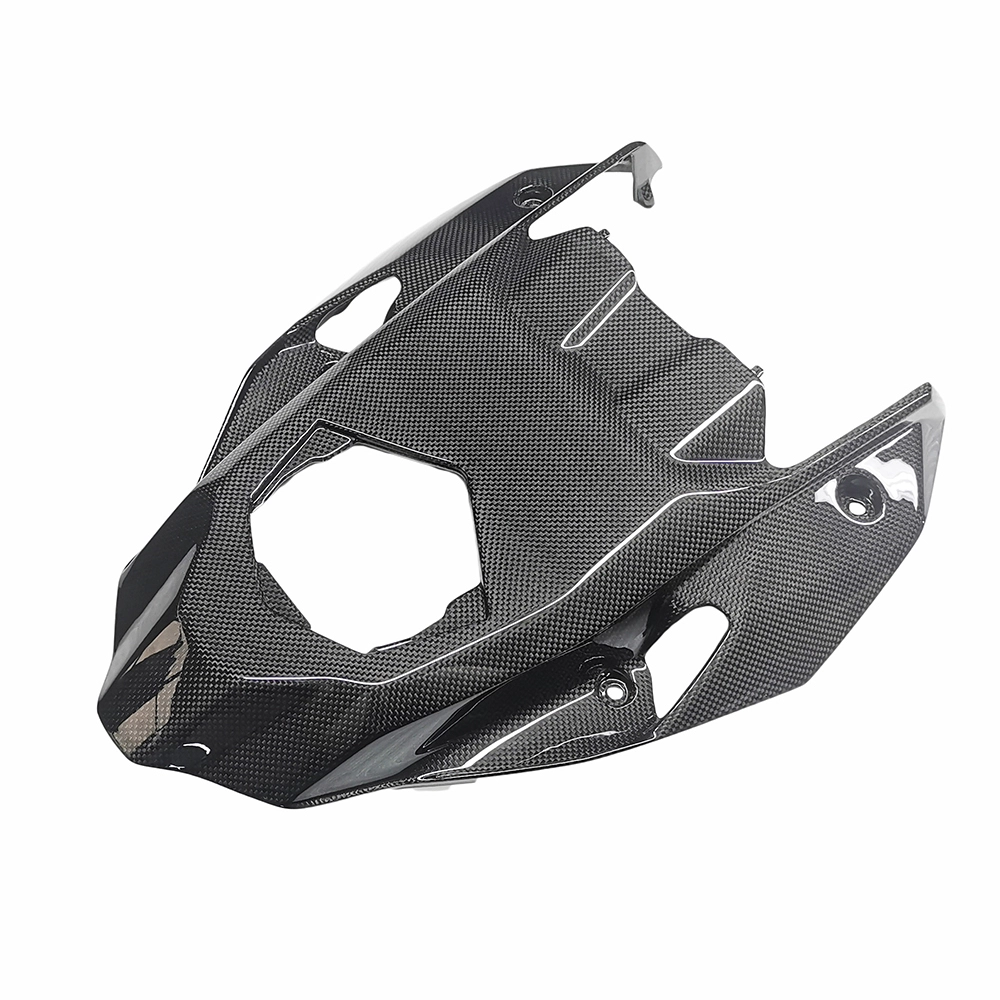
High-Performance Carbon Fiber Rear Undertail for BMW S1000R
Engineered for distributors, tuning brands, and motorcycle accessory businesses, the BMW S1000R Carbon Fiber Rear Undertail is a high-quality, durable, lightweight carbon fiber upgrade for the S1000R platform. This component is manufactured using aerospace-grade carbon fiber and precision molds to deliver superior stiffness, a seamless OEM-level fit, and a premium visual finish suitable for high-end aftermarket applications.

Supreem Carbon aiming to provide customers with high-performance carbon fiber products and quality services.
Contact Supreem Carbon
Address : Building 1 No.103, Yadi Nan 1st Road, QiaoTou Town, Dongguan City, China.
© 2024 Supreem Carbon All Rights Reserved.
Facebook
Pinterest
LinkedIn
Instagram